Elon Musk’s SpaceX carries out first-ever recovery of a spaceship with successful Starship catch
Source Entity
Latest News: Todays Latest News Headlines from India & World | Hindustan Times
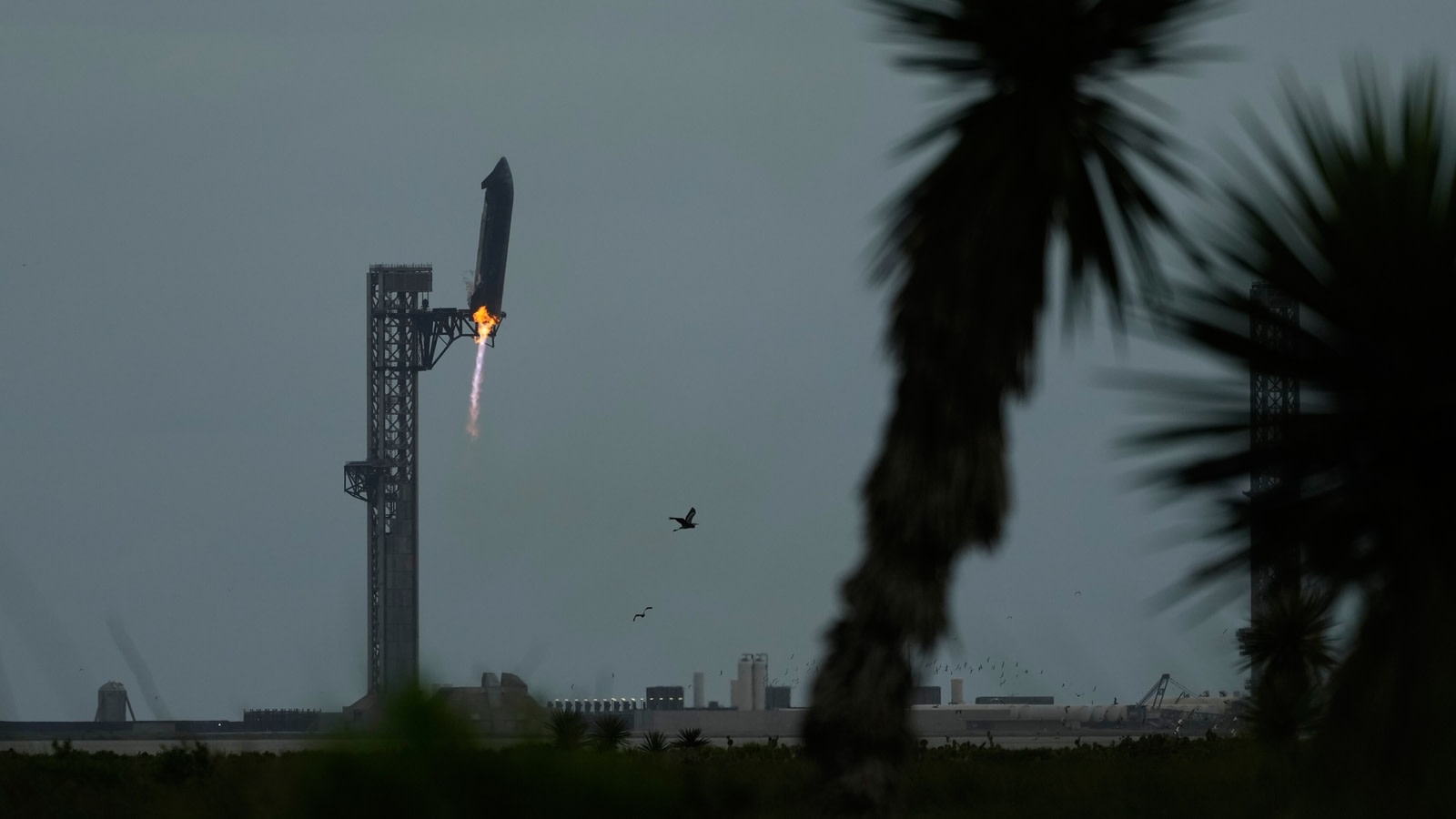
SpaceX successfully achieved a historic milestone during Starship Test Flight 15 by catching the rocket's upper stage using mechanical 'chopstick' arms. Despite a booster failure and subsequent explosion, this recovery marks a major leap toward fully reusable space transportation.
A New Era for Orbital Recovery
SpaceX has achieved a monumental milestone in aerospace engineering with the successful mid-air capture of the Starship upper stage during the company's 15th test flight. Launched from the Orbital Launch Pad 2 at Starbase, Texas, on November 13, 2026, this mission represented the most ambitious attempt to date to prove the viability of rapid, full-scale rocket reusability. By utilizing the mechanical arms colloquially known as "chopsticks," SpaceX has demonstrated a capability that could fundamentally alter the economics of space travel.
The Mechanics of the Catch
The "chopsticks" system, integrated into the launch tower at the Boca Chica facility, is designed to arrest the momentum of descending vehicle components with surgical precision. While the booster recovery attempt on Friday resulted in an offshore splashdown and subsequent explosion in the Gulf of Mexico, the success of the upper-stage capture on Saturday serves as a validation of the complex guidance, navigation, and control systems required for such a maneuver. This dual-component recovery strategy is the cornerstone of Elon Musk’s vision for a fully and rapidly reusable transportation system.
Overcoming Operational Hurdles
The path to this achievement was not without significant setbacks. The failure to recover the booster, which ended in a fiery eruption just above the water's surface, highlights the inherent volatility of experimental spaceflight. However, in the context of the Starship program, these failures are often viewed as iterative data points. The transition from a failed booster landing to a successful upper-stage recovery within a single test campaign underscores the agility of the SpaceX engineering team.
Broader Implications for Space Exploration
The successful recovery of the "Ship" from orbit is a critical step toward reducing the cost-per-kilogram of payload delivery. Historically, space launch vehicles have been expendable, leading to prohibitive costs for lunar and Martian exploration. By perfecting the ability to catch hardware directly from the sky, SpaceX reduces the need for expensive refurbishment and lengthy turnaround times, effectively transforming the rocket into an aircraft-like asset.
Future Trends and Sustainability
Looking ahead, the success of Test Flight 15 will likely accelerate the timeline for Starship to become operational for commercial and government missions. As the company refines its capture logic and structural integrity, we can expect a shift toward more frequent orbital sorties. This development is not merely a technical triumph but a signal to the global space industry that the era of reusable, heavy-lift orbital logistics has arrived, setting a new benchmark for competitive spaceflight performance.
Multiple Citing Sources
Verification Required?