Watch: SpaceX's Starship completes first-ever midair catch on return from orbit
Source Entity
YASHASVI VASISTHA
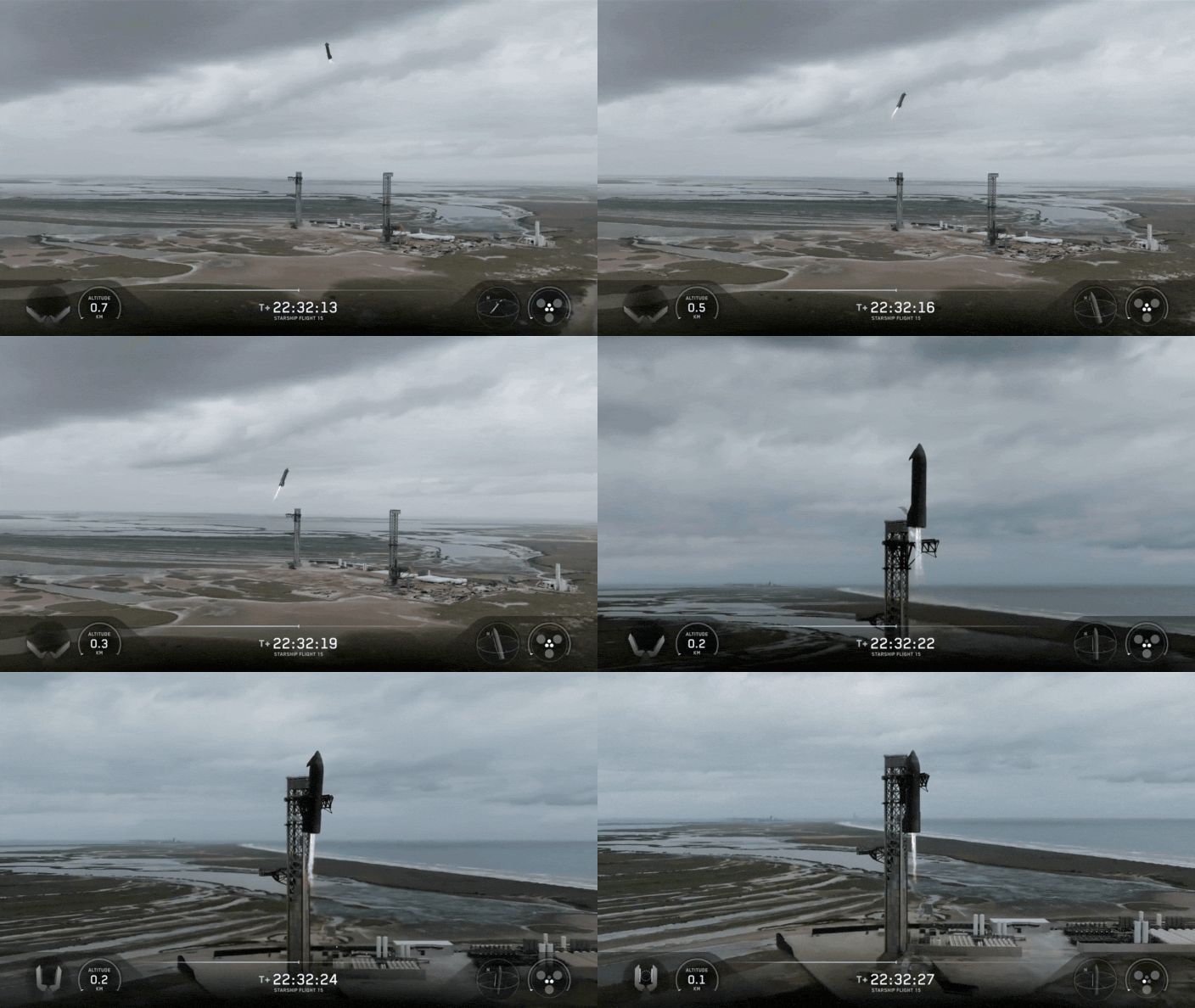
SpaceX achieved a historic milestone during Starship Test Flight 15 by successfully catching the spacecraft with mechanical arms. While the mission saw the destruction of the Super Heavy booster after a failed recovery, the successful spacecraft landing marks a major step toward full reusability.
A New Era in Orbital Recovery
SpaceX has reached a monumental milestone in aerospace engineering with the successful midair recovery of the Starship spacecraft during Test Flight 15. By utilizing the mechanical arms—colloquially known as "chopsticks"—attached to the launch tower at Starbase, Texas, SpaceX demonstrated a level of precision in orbital return that has never before been achieved. This feat represents the culmination of years of iterative development aimed at transforming the logistics of space travel.
The Engineering Challenge of Reusability
The pursuit of full and rapid reusability is the cornerstone of the Starship program. Historically, orbital rockets were largely expendable, leading to prohibitive mission costs. By catching the spacecraft mid-descent, SpaceX aims to eliminate the need for traditional landing gear and complex splashdown recovery operations. The fact that the spacecraft’s heat shield performed well during this mission is a critical validation of the vehicle's design, confirming that the ship can endure the extreme thermal stresses of atmospheric reentry and return to the launch site in a functional state.
The Booster Setback
Despite the triumph of the spacecraft recovery, the mission highlighted the extreme difficulty of the "double catch" maneuver. The Super Heavy booster failed to reach its planned catch point, resulting in a diversion to the Gulf of Mexico where it exploded upon impact. This outcome underscores the narrow margins for error inherent in such ambitious flight profiles. SpaceX’s attempt to synchronize the recovery of two massive, high-velocity components simultaneously remains one of the most complex tasks in modern engineering.
Strategic Implications for Global Spaceflight
This mission, which included 14 orbits and the deployment of 26 satellites, proves that Starship is evolving from a prototype into a functional orbital workhorse. The ability to deploy a significant satellite constellation while maintaining the integrity of the primary spacecraft for recovery provides a blueprint for high-frequency, low-cost space missions. Such capabilities could fundamentally alter the economics of satellite deployment, deep space exploration, and human transport.
Looking Toward Future Flights
While the loss of the booster was a setback, the overall success of the flight signifies that the technology is maturing rapidly. Future iterations of the Starship system will likely focus on increasing the reliability of the booster landing sequence to achieve the original goal of a twin catch. As SpaceX continues to refine its mechanical arm infrastructure and guidance systems, the industry moves one step closer to making orbital transit as routine as commercial aviation, fulfilling the long-held dream of fully reusable, rapid-turnaround rocket systems.
Multiple Citing Sources