Elon Musk’s SpaceX catches Starship spacecraft mid-air, achieves historic first: Video
Source Entity
The Indian Express
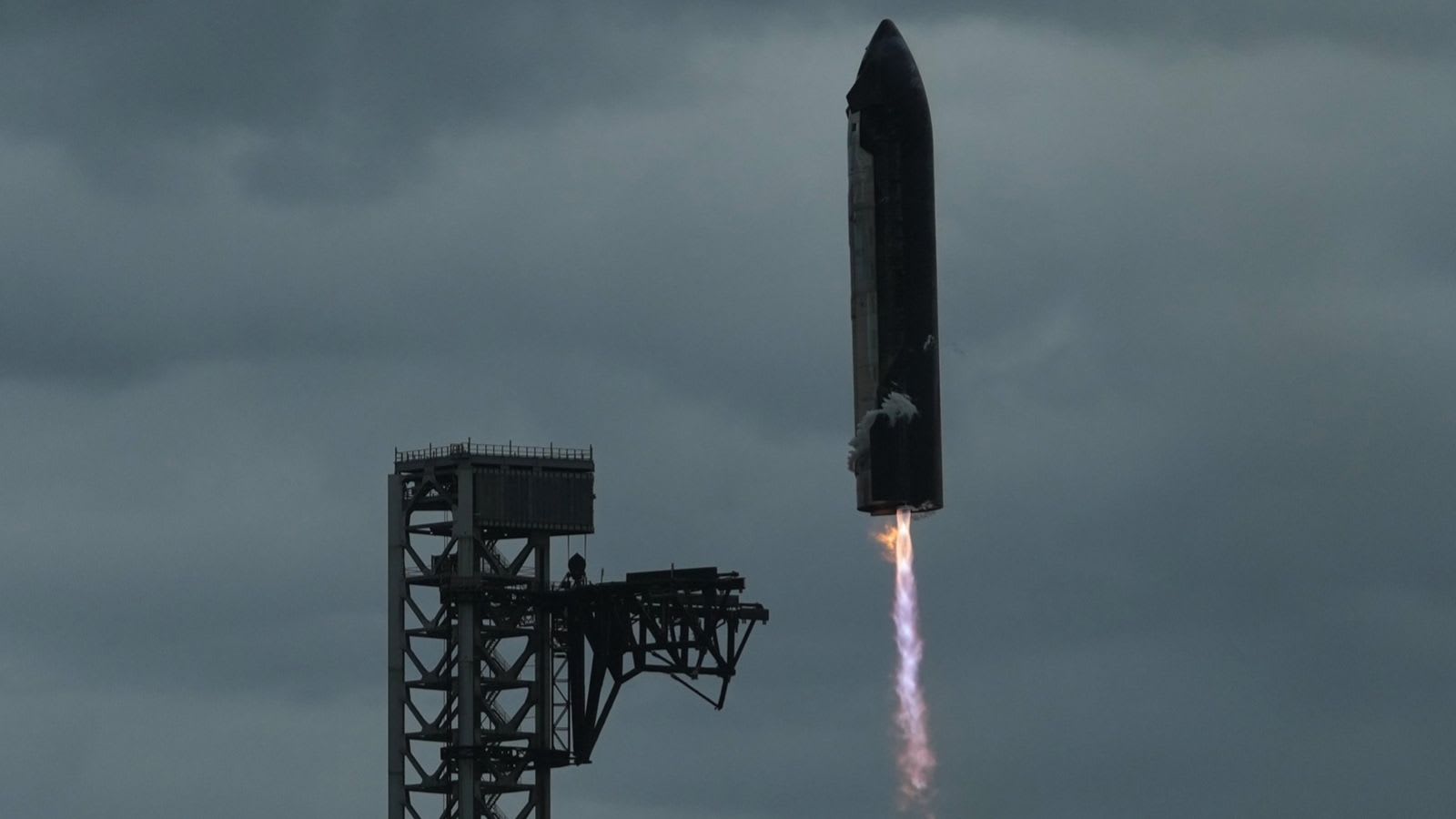
SpaceX has successfully achieved a historic milestone by catching its Starship spacecraft mid-air using mechanical arms at its Texas facility. This breakthrough marks a significant advancement in the development of fully reusable rocket systems, promising to lower costs and increase launch frequency.
A Historic Leap in Aerospace Engineering
SpaceX has officially entered a new era of space exploration following the successful mid-air recovery of its Starship spacecraft at the Starbase facility in Texas. On Saturday, the massive 171-foot (52-meter) vehicle performed a precision maneuver, emerging from cloud cover to reignite its Raptor engines. This orchestrated descent allowed the rocket to transition from a horizontal flight profile to a vertical position, ultimately being secured by giant mechanical arms attached to the launch tower. This "catch" represents a monumental achievement in the history of aerospace engineering.
The Mechanics of the Catch
The technical complexity of this maneuver cannot be overstated. As the Starship descended, it relied on two small nubs protruding only about one foot from its sides to interface with the launch tower's arms. The margins for error were incredibly narrow, requiring the spacecraft to align perfectly with the structure while its engines fired to maintain stability. The success of this operation demonstrates an unprecedented level of control, effectively turning a launch tower into a recovery mechanism and eliminating the need for traditional landing legs.
Towards Full Reusability
For decades, the space industry has sought to perfect fully reusable rocket systems to solve the prohibitive costs associated with space travel. By recovering the Starship upper stage intact, SpaceX is significantly reducing the overhead of future missions. Unlike expendable rockets that are discarded after a single use, the ability to catch and rapidly refurbish the Starship vehicle paves the way for a sustainable model of spaceflight where hardware can be reused for multiple successive missions.
Broader Industry Implications
The implications of this success extend far beyond SpaceX’s internal operational goals. By lowering the cost per launch, this technology potentially democratizes access to orbit, enabling a higher frequency of satellite deployments, scientific research missions, and eventually, human exploration of the Moon and Mars. This milestone serves as a proof-of-concept that could force a shift in how competitors approach rocket design, likely accelerating the industry-wide move toward rapid reusability.
Historical Context and Future Trends
Nearly a quarter of a century after its founding, SpaceX has moved from a disruptive startup to the primary architect of modern space logistics. This catch is the culmination of years of iterative testing, where each flight provided critical data on thermal protection and engine performance. Looking ahead, we can expect this recovery method to become the standard for the Starship program. As SpaceX continues to refine the speed at which these vehicles can be turned around for subsequent flights, the frequency of orbital launches will likely increase, fundamentally changing the economics of the space economy.
Multiple Citing Sources