Spain attacks 'selfish' response of some EU countries to Ceuta migrant crossings
Source Entity
BBC News
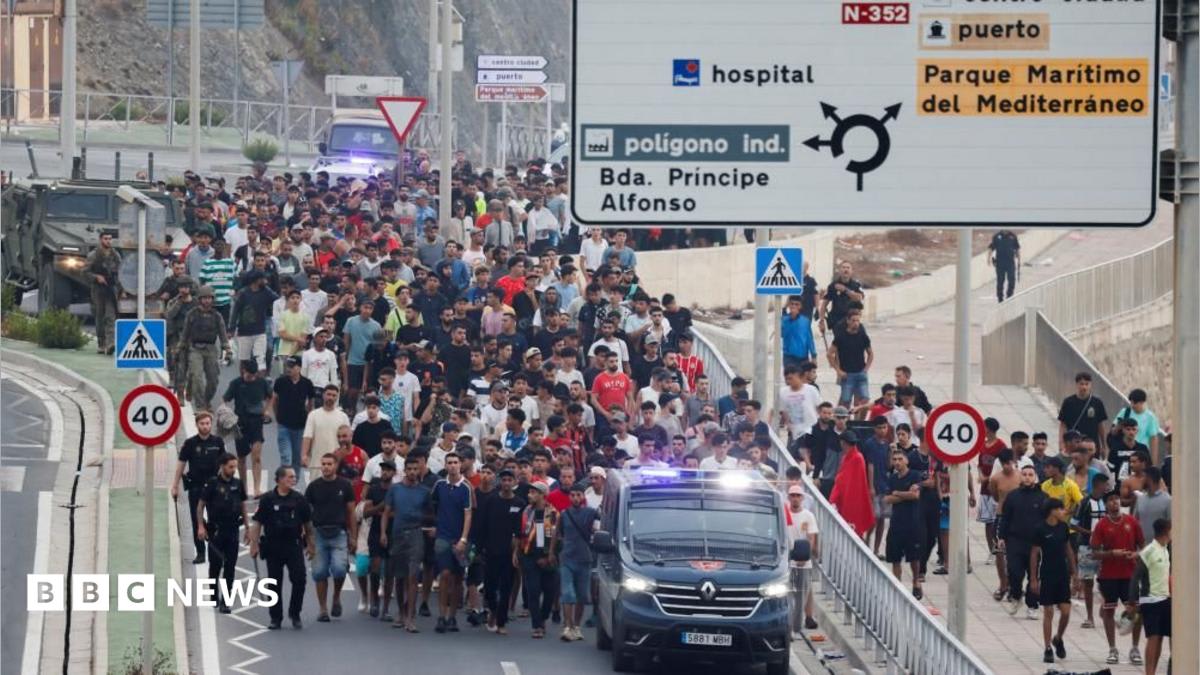
Spain is facing a diplomatic crisis within the EU following a massive influx of migrants into the enclave of Ceuta, which resulted in 67 deaths. Several member states, led by Italy, have criticized Spain’s migration policies and demanded a suspension of its Schengen status.
The Ceuta Crisis: A Fractured European Response
The recent surge of approximately 60,000 migrants into the Spanish enclave of Ceuta has ignited a profound political firestorm within the European Union. The crisis, which unfolded over a period of days, resulted in a harrowing death toll of 67 individuals who perished while attempting to navigate the breakwater barrier or drowning at sea. While the majority of those who arrived have since returned to Morocco, the event has exposed deep-seated divisions among EU member states regarding border management and humanitarian responsibility.
The Diplomatic Fallout
In the wake of the crossings, Prime Minister Pedro Sánchez has expressed "serious concern" regarding the "selfish, polarising and unlawful" reactions from his European counterparts. Italy, under the leadership of Prime Minister Giorgia Meloni, took the drastic step of temporarily suspending the Schengen arrangement with Spain, a move supported by Denmark and Finland. Czech Prime Minister Andrej Babiš went further, publicly calling for a complete suspension of Spain’s Schengen membership, citing the crisis as evidence of a failure to secure external EU borders.
The 'Pull Factor' Debate
At the heart of the tension is the accusation from nearly two dozen EU heads of state that Spanish policies act as "pull factors" for irregular migration. Critics specifically point to Spain's recent efforts to regularize the status of undocumented migrants as a policy that encourages further arrivals. While the Spanish government maintains that its policies are a pragmatic response to an aging domestic workforce, other EU leaders argue that such measures undermine the integrity of the border-free zone and incentivize dangerous sea crossings.
Legal Complexities and Sovereignty
Adding to the complexity is the internal legal landscape in Spain. Prime Minister Sánchez has highlighted a recent Spanish Supreme Court ruling that prohibits the immediate, summary pushback of individuals arriving by sea. This judicial mandate places the Spanish government in a difficult position; they are legally bound by national courts to provide due process, while simultaneously facing immense political pressure from EU neighbors who prioritize immediate border deterrence.
Future Implications for the Schengen Zone
This crisis highlights the fragility of the Schengen Agreement when faced with localized migration pressures. The demand for an urgent meeting of EU interior ministers signals that the bloc is at a crossroads regarding how it manages its external frontiers. If countries continue to unilaterally suspend border-free travel in response to specific crises, the foundational principle of free movement within Europe faces a significant threat of erosion.
Conclusion
The situation in Ceuta is more than a border management issue; it is a fundamental test of European solidarity. As the death toll of 67 serves as a tragic reminder of the human cost of these disputes, the upcoming diplomatic meetings will be pivotal. Whether the EU can reconcile its member states' security concerns with the humanitarian and legal obligations of its individual members will determine the future stability of the Schengen area.
Multiple Citing Sources