NASA’s Curiosity rover found a ‘sea of polygons’ on Mars
Source Entity
Stevie Bonifield
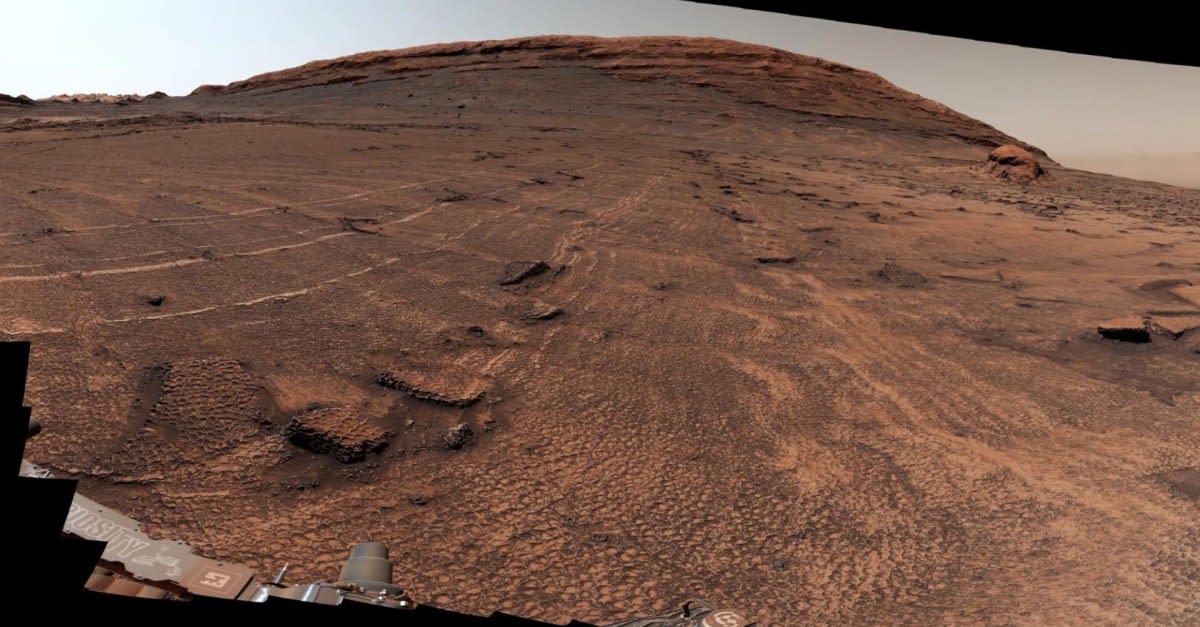
NASA's Curiosity rover has discovered an expansive field of honeycomb-shaped polygonal fractures in the Valle Grande region of Mars. This unique geological formation suggests significant environmental shifts on the Martian surface compared to previously observed isolated patches.
Unveiling the Martian Honeycomb: A Geological Breakthrough
NASA’s Curiosity rover has recently documented a remarkable geological feature within the Valle Grande region of Mars, characterized by an expansive field of honeycomb-shaped polygons. While the rover has encountered polygonal fractures previously, these sightings were limited to minor, isolated patches. The sheer scale of the discovery at Valle Grande represents a significant departure from these earlier observations, offering scientists a new perspective on the planet’s complex surface history.
Understanding Polygonal Fractures
These hexagonal structures, measuring roughly 1.5 to 3 inches in width, are known as polygonal fractures. On Earth, similar patterns often emerge in environments where mud dries and shrinks, creating stress fractures that result in distinct geometric shapes. By identifying these patterns on such a massive scale on Mars, researchers are provided with critical data points regarding the moisture and evaporation cycles that once defined the Martian landscape.
The Significance of Scale
The discovery, captured via a 360-degree panorama on June 19th and 20th (Martian sols 4,930 and 4,931), underscores the importance of the Curiosity mission's ongoing exploration of Gale Crater. Finding a 'sea of polygons' rather than fragmented clusters suggests that the environmental conditions required to form these structures were once widespread and sustained across this specific valley, rather than localized, ephemeral events.
Implications for Martian History
This finding is essential for piecing together the environmental evolution of Mars. The presence of these fractures indicates that the area underwent periodic wetting and drying cycles. Such cycles are key indicators of an environment that may have once been conducive to supporting life, or at the very least, possessed a dynamic hydrological system that has long since vanished.
Future Trends in Planetary Exploration
As Curiosity continues to traverse the Martian surface, the data collected from Valle Grande will likely serve as a benchmark for future missions. Understanding how these polygons formed helps scientists better map the paleoclimate of Mars. This discovery reaffirms the necessity of long-term robotic exploration, as it is only through sustained, high-resolution imaging that such massive, subtle geological features can be identified and analyzed.
Conclusion
The 'sea of polygons' in Valle Grande serves as a tangible reminder of Mars's active and changing past. By documenting the extent of these fractures, NASA continues to refine our understanding of the Martian environment, proving that even small-scale geological features can hold the key to unlocking the planet's broader history.