Physicists Solve a Muon Mystery. Now, Old Results Don't Add Up
Source Entity
Hacker News
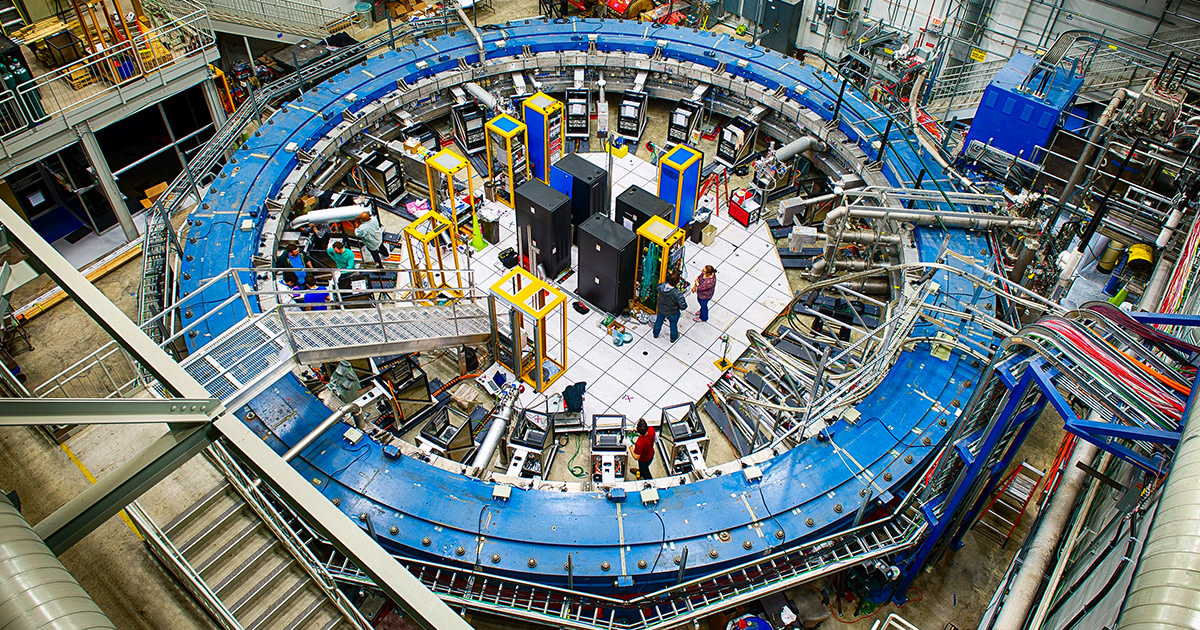
Physicists are re-evaluating the muon's magnetic 'g-2' factor after refined measurements challenge previous findings. This discrepancy suggests that our current understanding of the quantum world may be incomplete, potentially hinting at hidden particles.
The Muon Anomaly: Unlocking the Quantum Frontier
For decades, the subatomic world has been governed by the Standard Model, a robust framework describing the fundamental particles and forces of nature. However, the muon—a heavier, unstable cousin of the electron—has long been a source of intrigue. The measurement of the muon’s magnetic moment, known as the "g-2" factor, has served as a critical barometer for testing the limits of this model. As Alex Keshavarzi of University College London notes, the precision of this measurement acts as a proxy for the total number of particles existing in the universe, making any deviation from theoretical predictions a potential gateway to new physics.
The Brookhaven Legacy
The mystery gained significant momentum following an experiment at the Brookhaven National Laboratory in 2001. Researchers observed that the muon’s "g-2" value was larger than the Standard Model predicted. This "excess wobble" ignited excitement within the scientific community, as it suggested that unknown particles might be interacting with the muon. These hypothetical particles could potentially explain phenomena like dark matter, which remains one of the most significant enigmas in modern cosmology, providing a tangible lead in the search for physics beyond the current paradigm.
Relocating the Quest for Precision
To confirm the 2001 findings, the scientific community demanded higher precision. In 2013, a monumental logistical effort was undertaken to transport Brookhaven’s 50-foot-wide magnetic ring to the Fermi National Accelerator Laboratory (Fermilab). This move was not merely a change of location but a strategic escalation in the pursuit of accuracy. By leveraging the advanced capabilities at Fermilab, researchers aimed to eliminate the uncertainties that plagued earlier measurements and determine if the anomalous wobble was a definitive signature of new physics or an artifact of experimental limitations.
The Collision of Theory and Observation
As new data emerges from these upgraded facilities, the narrative has shifted from simple confirmation to a complex re-evaluation. The latest results have introduced a new layer of uncertainty, as the refined measurements do not align perfectly with the original Brookhaven projections. This creates a "Muon Mystery," where the discrepancy forces physicists to reconsider the calculations that underpin the Standard Model. If the experimental results do not match the expected theoretical values, the foundations of our quantum understanding are effectively being stress-tested.
Implications for Future Discovery
This ongoing research represents a fundamental shift in how we observe the universe at its smallest scales. If the "g-2" value continues to deviate from expectations, it will force a revision of the Standard Model, potentially leading to the discovery of entirely new classes of particles. Conversely, if discrepancies are resolved through more rigorous calculation, it highlights the incredible difficulty of measuring such minute quantum interactions. Regardless of the outcome, the muon remains our most sensitive tool for probing the unseen architecture of the cosmos, promising to redefine our understanding of the universe for years to come.