General strikes to paralyze Spain as protestors clash with police ahead of election campaign
Source Entity
US Top News and Analysis
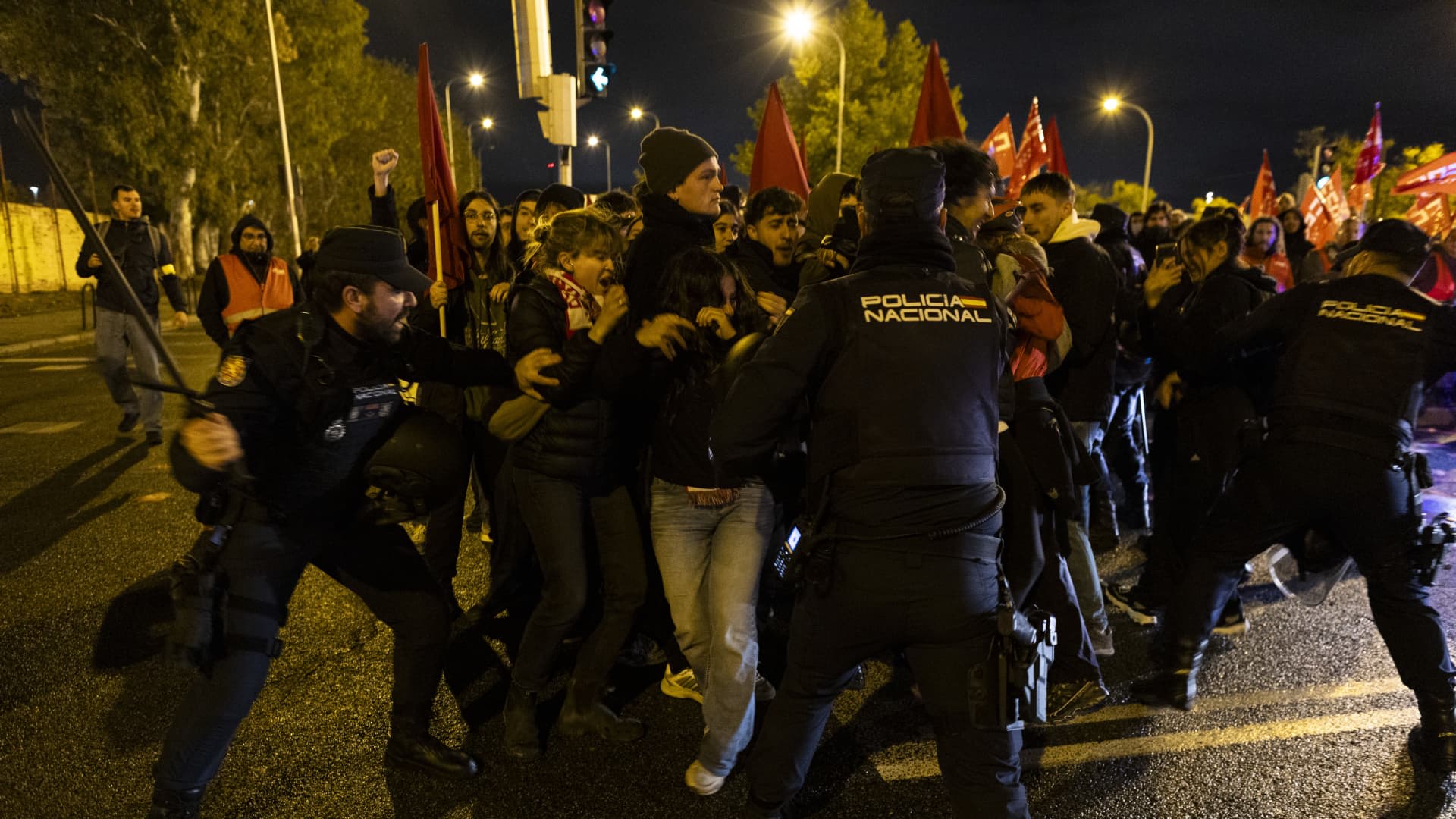
Spain is experiencing its first general strike in 14 years, led by major unions protesting the housing crisis and cost of living. The industrial action has caused widespread transport disruption and clashes between demonstrators and police ahead of the November 29 snap election.
Spain Paralyzed: The First General Strike in 14 Years
On November 11, 2026, Spain witnessed its first national general strike in over a decade, signaling a period of extreme social and political turbulence. Organized by the country’s two primary trade unions, the Unión General de Trabajadores (UGT) and Comisiones Obreras (CCOO), the 24-hour industrial action brought significant disruption to transport networks and public services across major industrial hubs, most notably Madrid and Barcelona.
The Catalyst: A Crisis of Housing and Cost of Living
At the heart of this unrest is a deep-seated frustration with the national housing affordability crisis. The movement gained significant momentum in September following the eviction of 87-year-old Maricarmen Abascal, who was removed from her Madrid home of 70 years. This event served as a lightning rod for public anger, transforming localized protests into a nationwide call for structural change regarding tenant rights and the rising cost of living.
Political Instability and the Snap Election
The timing of this strike is critical, occurring just weeks before a snap general election scheduled for November 29. The election was triggered after Prime Minister Pedro Sánchez’s left-wing minority coalition failed to pass emergency housing legislation. This failure left the government vulnerable, creating a volatile political landscape where the inability to legislate has directly translated into street-level confrontation.
Diverging Views on the Strike's Impact
There is a notable divide regarding the effectiveness of the mobilization. Union leaders, including Pepe Álvarez of the UGT and Unai Sordo of the CC OO, have characterized the turnout as "massive" and "very significant." Conversely, the Spanish Confederation of Business Organisations has dismissed the participation as "low and uneven," highlighting the friction between labor organizers and the corporate sector regarding the economic impact of the disruption.
Escalation and Public Order
The situation reached a boiling point in major cities, particularly in Barcelona, where tensions manifested in physical conflict. Reports indicate that tens of thousands gathered, with some incidents involving masked protesters setting fire to refuse, smashing shop windows, and clashing with police. Law enforcement responded with tear gas to disperse crowds, leading to a heavy police presence that persisted into the night.
Future Implications
As Spain approaches the November 29 parliamentary elections, the intensity of these protests suggests that housing and economic security will be the primary electoral battlegrounds. The failure of the current administration to address these grievances has created a vacuum of confidence that opposition forces will likely exploit. The outcome of the upcoming vote will determine whether the government can stabilize the nation or if this general strike marks the beginning of a sustained period of civil disobedience.
Multiple Citing Sources