Starlink from 1984
Source Entity
Hacker News
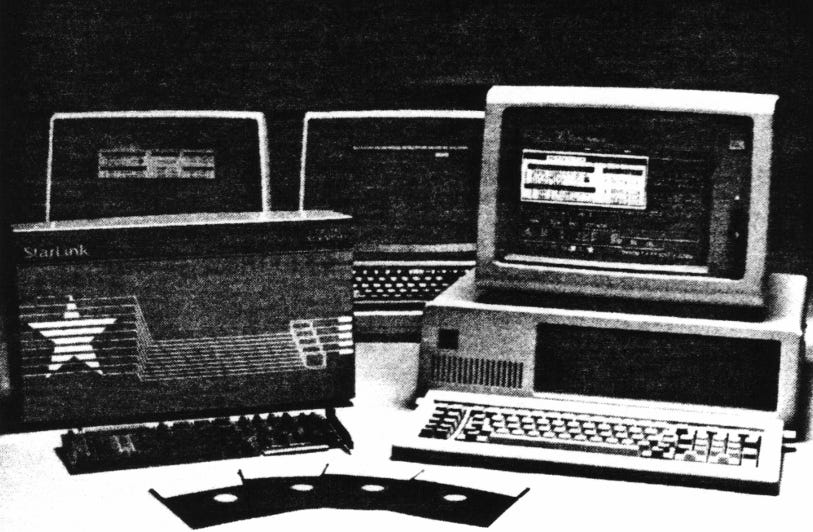
In May 1984, Digital Research Inc. introduced StarLink, a pioneering hardware and software solution designed to transform the IBM PC into a multi-user system. By leveraging Concurrent DOS, it allowed up to five users to share a single PC's resources via inexpensive terminals, offering a cost-effective alternative to dedicated multi-user systems.
The Legacy of DRI's StarLink: A Multi-User Vision
In the landscape of early personal computing, the mid-1980s were defined by a struggle between the rise of the standalone desktop PC and the established dominance of centralized multi-user systems. In May 1984, Digital Research Inc. (DRI) introduced a bold solution to bridge this divide: StarLink. Positioned as a hardware and software hybrid, StarLink was engineered to expand the capabilities of the IBM PC, effectively transforming a single workstation into a robust multi-user environment.
Architecture of an Early Multi-User System
The technical design of StarLink was a masterclass in resource optimization. The system comprised a dedicated hardware board equipped with an Intel 8088 CPU and 64KB of RAM, complemented by four RS-232 interfaces. When paired with DRI’s Concurrent DOS operating system, this hardware enabled the host PC to serve up to five concurrent users. One user operated directly from the PC console, while four additional users accessed the system via "dumb" terminals, effectively offloading processing tasks while maintaining a centralized data structure.
Economic Considerations in 1984
To understand the significance of StarLink, one must consider the prohibitive costs of computing during that era. An IBM PC XT, equipped with 512 KB of RAM, commanded a price tag of approximately $5,000 in 1984. Adding the StarLink expansion pushed the total capital expenditure toward the cost of specialized systems like those from Altos. However, the value proposition of StarLink was its software compatibility; unlike dedicated multi-user systems, StarLink enabled users to run industry-standard applications such as WordStar, Multiplan, and MBA Accounting, providing a familiar environment for business professionals.
Solving the I/O Bottleneck
Prior to the implementation of StarLink, a PC running Concurrent DOS was limited by the hardware constraints of the era, specifically the reliance on two standard COM ports. While rudimentary terminal support was possible, it was severely restricted. StarLink effectively broke this bottleneck by providing four additional interfaces while leaving the original COM ports free for other peripherals. This allowed for a more flexible and scalable configuration that was previously unattainable on a standard IBM PC architecture.
Market Implications and Historical Context
The philosophy behind StarLink was rooted in the transition from mainframe computing to personal computing. By utilizing the multitasking capabilities of Concurrent DOS, DRI aimed to provide the efficiency of a centralized server at a fraction of the cost of traditional minicomputers. It represented a unique moment in history where companies were attempting to "squeeze" more utility out of the expensive hardware that businesses had already invested in, effectively pioneering the concept of thin-client computing long before the term became industry standard.
Concluding Thoughts
While the industry eventually shifted toward networked PCs and distributed computing, StarLink stands as a testament to the ingenuity of 1980s software engineering. By identifying the need for multi-user access in an era where hardware was scarce and expensive, Digital Research Inc. provided a viable pathway for businesses to maximize their existing assets. The legacy of StarLink remains a fascinating case study in how software-driven innovation can alter the utility of foundational hardware, influencing the trajectory of computing long before the internet era redefined connectivity.