Will Russia's answer to the Falcon 9 rocket ever take flight?
Source Entity
Eric Berger
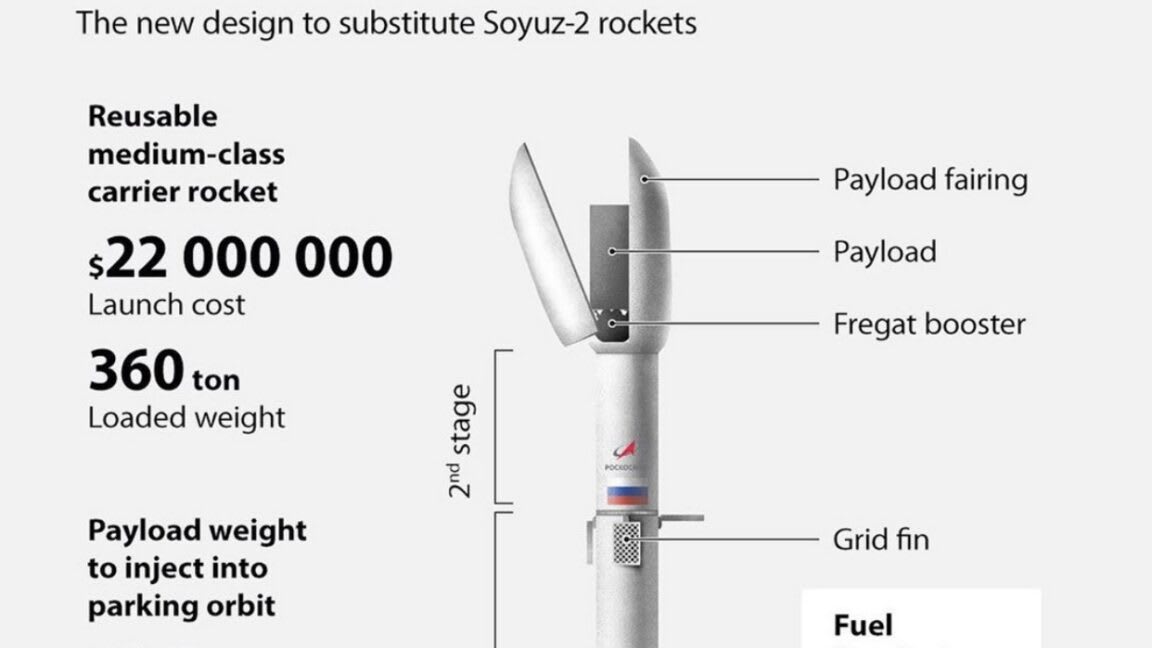
As global space agencies and private firms accelerate reusable rocket development, Russia is trailing behind with plans for its own Falcon 9-style vehicle. While competitors in the US, China, and Japan achieve successful landings, Russia aims to begin testing its reusable technology by 2028.
The Global Race for Reusable Rocketry
The space industry is currently undergoing a paradigm shift, moving away from the era of expendable launch vehicles toward a future defined by rapid reusability. The ability to launch a rocket, land it, and prepare it for a subsequent flight is no longer a theoretical pursuit but a commercial necessity. As SpaceX continues to normalize the landing of Falcon 9 boosters, a global cohort of nations and private entities has scrambled to replicate this architecture to drive down the cost of access to orbit.
The Competitive Landscape
Recent developments underscore the urgency of this transition. China has successfully demonstrated the recovery of an orbital booster, signaling an aggressive push into both state-led and private space ventures. Meanwhile, Japan’s space agency and engineering firms like Honda are conducting vertical takeoff and landing (VTVL) hop tests to master the complex flight dynamics required for recovery. In the United States, the ecosystem is even more mature; beyond SpaceX, companies such as Blue Origin, Stoke Space, Rocket Lab, and Relativity Space are actively refining partial and full reusability, creating a high-pressure environment for any nation looking to remain relevant in the aerospace sector.
Russia’s Lagging Trajectory
In contrast to this rapid international progress, Russia’s timeline appears significantly delayed. While the rest of the world is currently conducting flight tests, Russia’s proposed response to the Falcon 9 is not slated for its initial 'grasshopper-style' hop tests until 2028. This four-year gap is substantial in the fast-moving aerospace industry, where iterative testing cycles typically occur on a much shorter basis. The delay raises questions about the technical hurdles and resource allocation challenges currently facing the Russian space program.
Challenges and Strategic Implications
Reusability is not merely a feat of engineering; it is an economic imperative. The cost-per-kilogram to orbit is the primary metric by which modern launch providers are measured. By trailing behind in the development of reusable boosters, Russia risks being sidelined in the global satellite launch market. The reliance on legacy, expendable rocket designs may soon become a strategic liability, potentially forcing the nation to rely on more expensive launch options while competitors enjoy the financial benefits of hardware recycling.
Future Outlook and Conclusion
The road to 2028 will be a critical test for Russian aerospace engineers. Developing a vertical landing system requires precise guidance, navigation, and control software, as well as resilient thermal protection systems and throttlable engines—technologies that SpaceX and its peers have spent over a decade perfecting. Unless Russia can accelerate its R&D cycle or find a way to bypass the traditional development hurdles, the 2028 timeline may prove difficult to meet, leaving the nation further behind in the escalating global space race.