Virginia governor creates an AI task force and moves to restrain data centers
Source Entity
Lauren Feiner
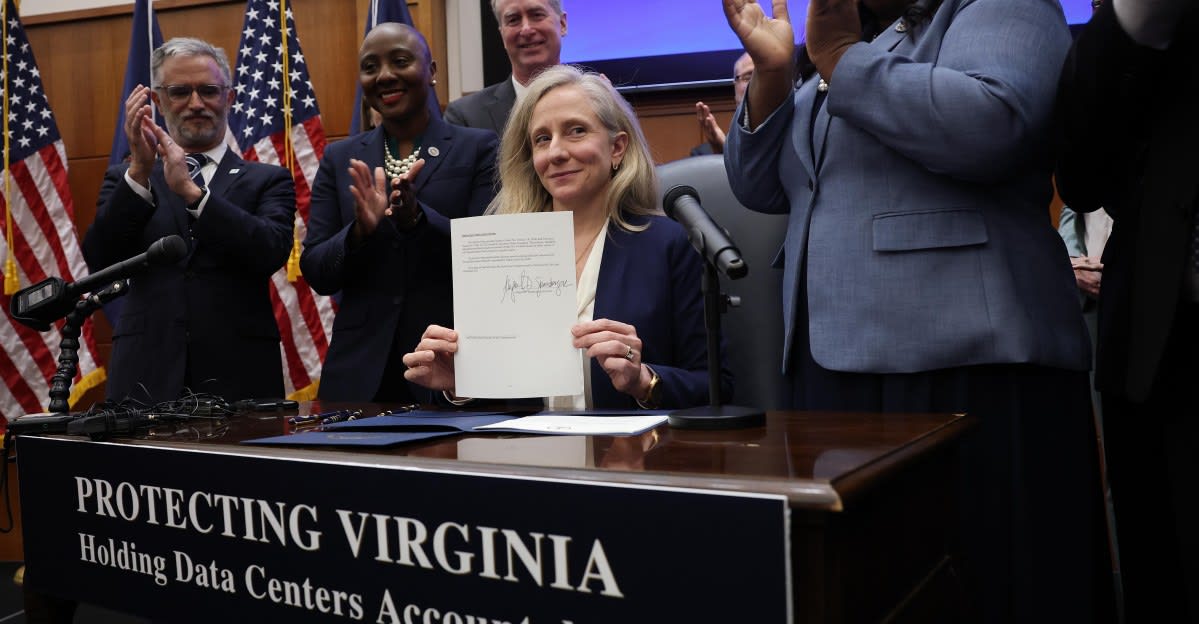
Governors in Virginia and California are implementing executive orders to increase oversight of data centers and artificial intelligence development. These moves reflect a growing trend among political leaders to address environmental, safety, and transparency concerns surrounding the rapid expansion of AI infrastructure.
The Shift Toward State-Level Oversight of AI and Infrastructure
Recent legislative actions in Virginia and California signal a pivotal shift in how state governments are approaching the rapid expansion of artificial intelligence and its underlying physical infrastructure. As the primary hubs for both data center capacity and AI research, these states are moving to assert greater control over an industry that has historically operated with significant autonomy. By utilizing executive orders, Governors Abigail Spanberger and Gavin Newsom are attempting to bridge the gap left by federal inaction, addressing local environmental concerns and existential safety risks simultaneously.
Virginia’s Move to Curb Data Center Expansion
Virginia, often referred to as the data center capital of the world, is facing the physical consequences of the digital age. Governor Abigail Spanberger’s Executive Order 22 represents a significant pushback against the rapid, often opaque, approval processes for these facilities. By banning the use of nondisclosure agreements (NDAs) for executive branch officials regarding data center projects, the administration is prioritizing public transparency. This move is designed to empower local communities, who have increasingly voiced concerns regarding the land use, water consumption, and energy demands of massive server clusters.
Addressing Infrastructure and Noise Pollution
Beyond transparency, the Virginia executive order mandates stricter oversight of backup-generation operations and expedited noise regulations. Data centers require massive amounts of power and often rely on industrial-grade diesel generators as a fail-safe, which create significant acoustic and environmental footprints. By forcing a rigorous review of these operations, the state is signaling that the economic benefits of being a global data hub must be balanced against the quality of life for residents living in the shadow of these facilities.
California’s Aggressive Stance on AI Safety
On the other side of the country, California Governor Gavin Newsom is focusing on the existential and safety implications of the AI models themselves. Following warnings from industry researchers regarding the potential for catastrophic outcomes, Newsom’s executive order aims to install guardrails that the federal government has yet to implement. This proactive stance reflects a broader political strategy among 2028 presidential hopefuls who are increasingly positioning themselves as the primary architects of AI safety policy.
The Political Calculus of Technology Regulation
There is a notable overlap between these state-level actions and national political ambitions. With Congress appearing gridlocked and unlikely to pass meaningful AI legislation before the 2026 midterms, state governors are stepping into the vacuum. By taking a more aggressive approach, these leaders are shaping the regulatory narrative, forcing tech companies to engage with state-level mandates that could eventually serve as blueprints for federal policy.
Future Trends and Implications
Looking ahead, the tension between the tech industry’s need for rapid scaling and the public’s demand for safety and accountability will likely intensify. As Virginia moves to slow down data center approvals and California explores mechanisms like mandatory 'kill switches' for AI, the industry may face a more fragmented regulatory landscape. Companies will need to navigate these varying state-level requirements, which could lead to a 'race to the top' in terms of safety and transparency standards, or conversely, a relocation of facilities to states with more lenient oversight.