The State of Simulation for Physical AI: An Overview
Source Entity
Hugging Face - Blog
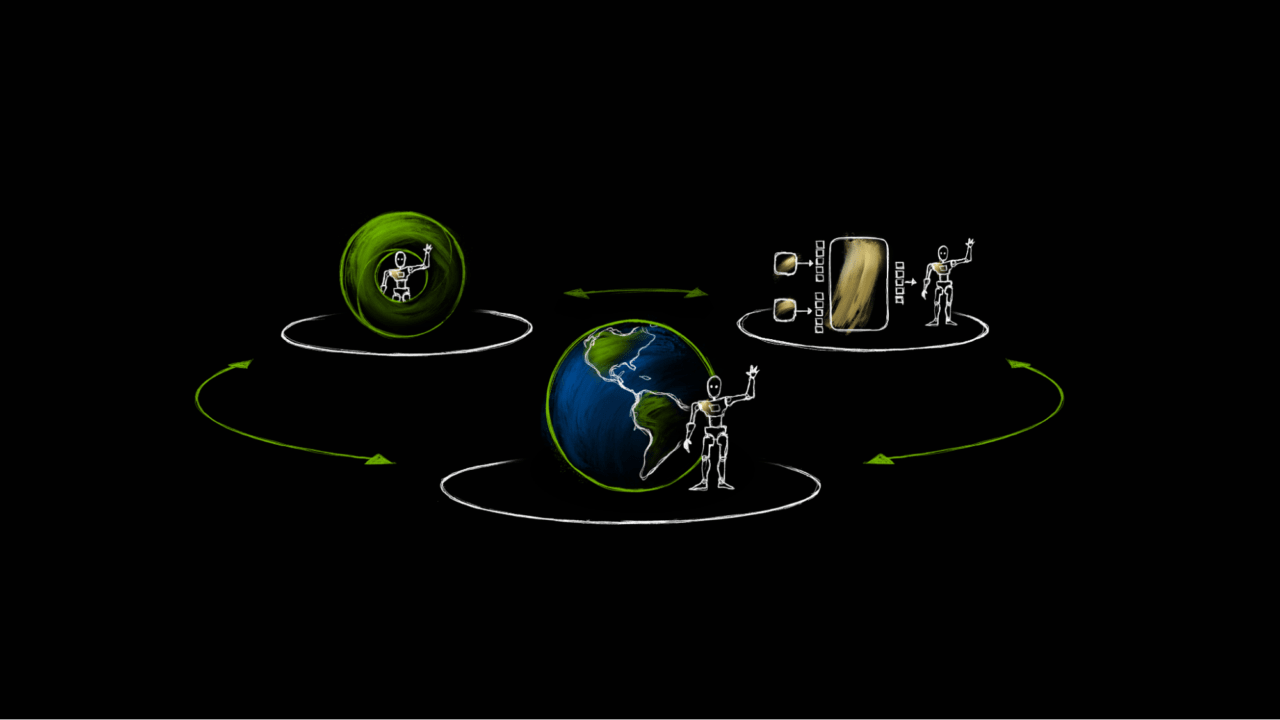
The field of physical AI is currently overcoming critical data bottlenecks by utilizing high-fidelity physics-based simulation environments. These tools allow humanoid robots to learn locomotion and control policies safely before deployment in the real world.
The Evolution of Physical AI: Overcoming the Data Bottleneck
As of July 2026, the development of physical AI has reached a pivotal juncture where the traditional methods of machine learning are being adapted to meet the rigorous demands of robotics. Unlike Large Language Models (LLMs) or Vision-Language Models (VLMs) that benefit from the vast, pre-existing corpus of internet-scale data, physical AI systems operate under a severe data scarcity constraint. Because physical robots must interact with the tangible world—where every action has immediate, irreversible consequences—the industry has turned toward advanced simulation as the primary crucible for development.
The Role of Physics-Based Simulation
Simulation environments serve as a virtual laboratory where robots can iterate through millions of movement cycles without the risk of hardware damage. By utilizing tracked body keypoints—as evidenced in current humanoid locomotion models—engineers can map precise movements and evaluate control policies in a controlled digital space. These simulations allow for the testing of complex physics, gravity, and friction, providing the necessary feedback loops that are otherwise impossible to gather at scale in real-world environments.
Challenges in Robot Locomotion
Training a robot to walk or navigate requires a deep understanding of cause and effect. In the real world, collecting this data is slow, expensive, and potentially dangerous to the machinery. Simulation bridges this gap by allowing researchers to apply 'commanded motion'—represented by directional arrows in current models—to observe how a robot's pose evolves over time. This cycle of commanding, observing, and correcting is the bedrock of modern physical AI training.
Broader Implications for Industry
The ability to train in simulation has massive implications for the future of industrial automation and humanoid robotics. If robots can reach a high level of proficiency in virtual environments, the time-to-market for autonomous systems in logistics, manufacturing, and healthcare will drastically decrease. This shift marks a transition from 'hand-coded' robotics to 'learned' physical AI, where the system adapts its own locomotion policies based on the physics-based feedback it receives during its training phase.
Future Trends and Outlook
Looking ahead, the convergence of simulation technology and generative AI will likely lead to more robust physical systems. As simulators become more photorealistic and physically accurate, the 'sim-to-real' gap—the discrepancy between virtual training and physical performance—will continue to shrink. The ongoing development of these environments is not merely a convenience but a fundamental requirement for the scaling of physical AI, ensuring that robots can move from the laboratory to the field with unprecedented reliability and control.