Why stubble fires keep coming back
Source Entity
India Latest News: Top National Headlines Today & Breaking News | The Hindu
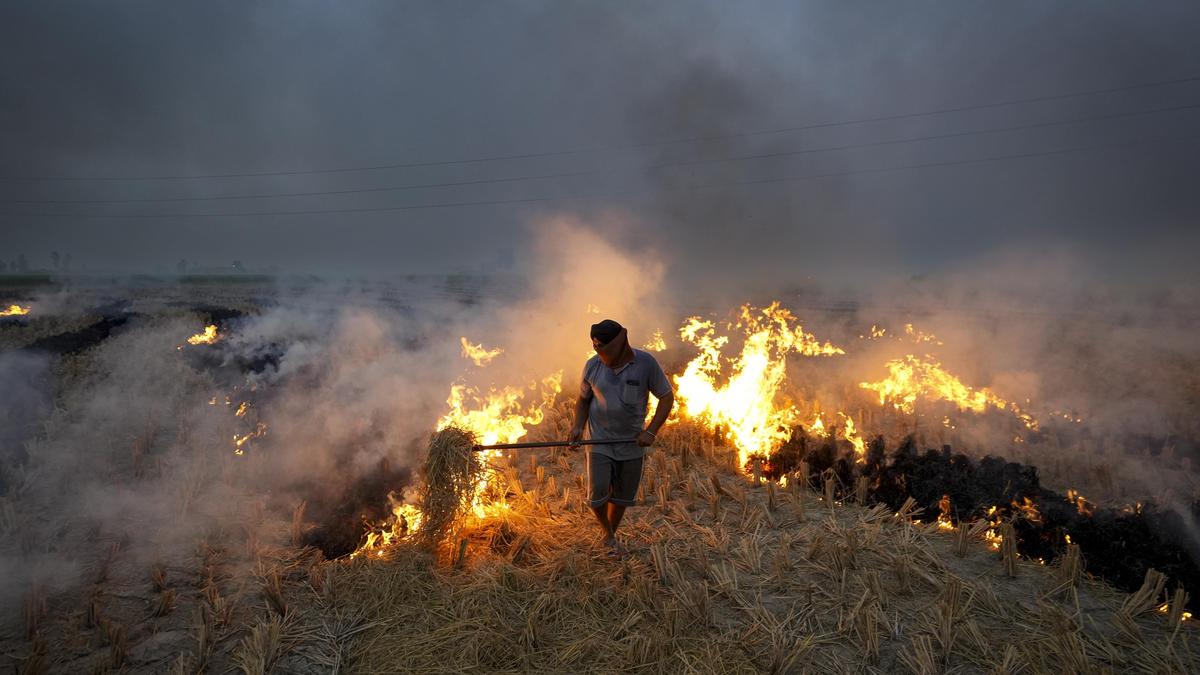
Stubble burning in North India remains a persistent crisis driven by the rigid paddy-wheat crop cycle and economic constraints. Addressing this requires a systemic shift toward crop diversification and improved residue management technology.
The Persistent Crisis of Stubble Burning
Every year, as autumn transitions to winter in North India, the region faces a severe public health crisis defined by hazardous air quality levels. Central to this annual phenomenon is the practice of stubble burning, where farmers ignite the remains of paddy crops to clear fields quickly. While this is often viewed as a localized agricultural issue, it has far-reaching implications for public health, environmental sustainability, and regional governance.
The Structural Roots of the Problem
The persistence of stubble burning is not merely a matter of farmer preference but a symptom of a rigid agricultural system. The paddy-wheat crop rotation, incentivized by government-assured procurement policies, dictates the timing of planting and harvesting. Farmers are left with an extremely narrow window between harvesting paddy and sowing wheat, creating an urgent economic pressure to clear fields immediately. With 29 million metric tons of paddy straw produced annually in Punjab and Haryana alone, the sheer volume of waste makes manual clearance both time-consuming and prohibitively expensive.
Technological and Economic Barriers
Technological solutions, such as the use of specialized machinery for residue management, exist but have not reached the scale necessary to replace burning entirely. The economic burden of these machines, combined with the lack of reliable, large-scale commercial demand for paddy straw, keeps farmers tethered to the burning cycle. Without strong financial incentives for crop diversification—moving away from water-intensive paddy—or a robust market for straw-based products, burning remains the most 'efficient' option for the individual producer.
The Impact on Air Quality and Health
The environmental consequences are severe. The combustion of millions of tons of straw releases massive quantities of particulate matter, carbon monoxide, and volatile organic compounds into the atmosphere. When combined with meteorological conditions in North India during October and November, these pollutants become trapped, leading to the toxic smog that plagues Delhi and surrounding areas. This creates a cycle of degradation that impacts millions, placing an immense strain on the healthcare infrastructure.
Path to a Sustainable Future
Moving forward, a lasting solution must look beyond punitive measures. Policymakers must prioritize the reliable measurement of burning events to better understand regional hotspots while simultaneously implementing stronger incentives for farmers to adopt alternative residue management. Diversification away from the paddy-wheat cycle is arguably the most critical long-term strategy. By decoupling agricultural income from the current procurement model, the state can provide the flexibility farmers need to transition to more sustainable, less labor-intensive crops.
Conclusion
In summary, the stubble burning crisis is a complex interplay of legal frameworks, economic incentives, and environmental necessity. While the current situation remains dire, a multidimensional approach—focusing on better technology, crop diversification, and economic support—is essential to breaking the cycle and ensuring cleaner air for the region.
Verification Required?