Can’t English be considered an indigenous Indian language, asks Supreme Court
Source Entity
India Latest News: Top National Headlines Today & Breaking News | The Hindu
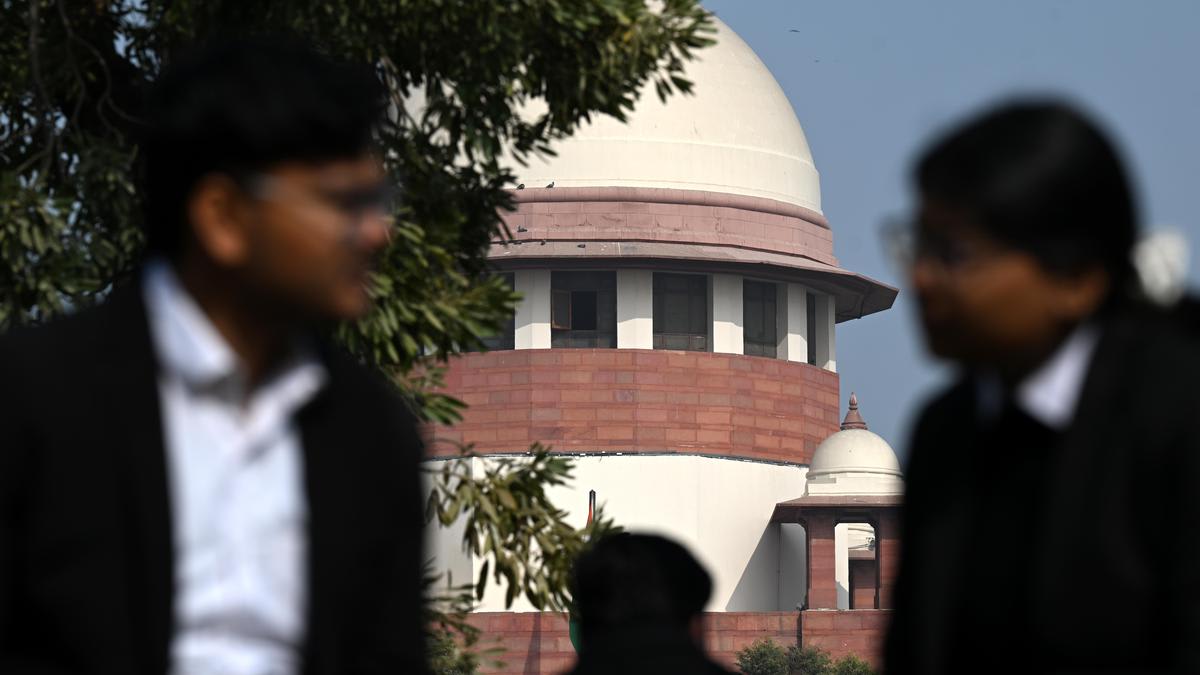
The Supreme Court of India has questioned the CBSE's use of the term 'native' in a circular, suggesting that English, due to its deep integration into Indian society and governance, could be considered an indigenous Indian language.
The Linguistic Evolution: Supreme Court Questions the Status of English in India
In a significant judicial observation, the Supreme Court of India has raised provocative questions regarding the classification of the English language within the national educational framework. The court's inquiry stems from a CBSE circular that utilized the term 'native' to describe certain languages, a move the Court found potentially exclusionary and colonially loaded. By questioning whether English can be considered an 'indigenous' Indian language, the Supreme Court is not merely debating semantics but is addressing the complex sociolinguistic identity of a post-colonial nation.
Deconstructing the 'Native' vs. 'Indigenous' Binary
The Court's critique of the term 'native' highlights a deep-seated tension between colonial history and contemporary reality. Historically, 'native' was often used by colonial administrators to differentiate the colonized subjects from the imperial rulers. By challenging the CBSE's use of this terminology, the Supreme Court suggests that the binary of 'foreign' versus 'native' is no longer applicable to English in the Indian context. English has evolved from being the language of the oppressor to a tool of empowerment, governance, and global connectivity, effectively becoming woven into the cultural and professional fabric of the country.
The Three-Language Formula and Constitutional Goals
Central to this discussion is the 'Three-Language Formula,' a policy designed to balance the promotion of regional languages, the official status of Hindi, and the utility of English. The Supreme Court noted that the push for this scheme aligns with the Constitutional goal of utilizing Indian languages for official purposes. However, the Court's nuance lies in the suggestion that English, while not originating in India, functions as an Indian language in practice. This perspective acknowledges that for millions of Indians, English is a primary medium of instruction, law, and administration, thereby fulfilling a role that is functionally indigenous.
English as a Bridge Language in a Diverse Polity
From a sociopolitical perspective, English often serves as a critical 'bridge language' (lingua franca) in a country characterized by immense linguistic diversity. In many instances, English is preferred over Hindi in non-Hindi speaking states to avoid perceived linguistic imperialism, making it a neutral ground for inter-state communication. By potentially recognizing English as an indigenous asset, the Court acknowledges the pragmatic reality that English facilitates national integration and provides a level playing field for citizens accessing the higher judiciary and central government services.
Implications for Educational Policy and Identity
This judicial observation could lead to a paradigm shift in how the CBSE and other educational boards draft their policies. If the legal understanding of 'indigenous' expands to include languages that have been naturalized over centuries, it may reduce the stigma associated with English-medium education and redefine the 'native' identity. It suggests a move toward a more inclusive definition of Indianness—one that embraces the hybridity of the country's history rather than attempting to purge all colonial remnants, recognizing that some tools of the colonial era have been repurposed for national growth.
Future Trends: Towards a Hybrid Linguistic Identity
Looking forward, it is likely that India will continue to move toward a hybrid linguistic identity where the distinction between 'foreign' and 'local' languages becomes increasingly blurred. The Supreme Court's intervention signals a judicial willingness to accept the pragmatic evolution of language. We may see future policy shifts where the emphasis moves away from the origin of a language and toward its utility and accessibility. This could result in a more flexible implementation of the three-language scheme, focusing on functional literacy and global competitiveness rather than rigid categorical definitions.
Summary
The Supreme Court's questioning of the CBSE circular marks a pivotal moment in India's linguistic discourse. By challenging the term 'native' and proposing that English be viewed as indigenous, the Court recognizes the organic integration of English into the Indian state. This analysis underscores the transition of English from a colonial imposition to a national necessity, bridging the gap between constitutional ideals of indigenous language promotion and the practical requirements of a globalized, multilingual democracy.
Verification Required?