Big Oil asks Supreme Court to kill climate lawsuits before trial
Source Entity
Nicholas Kusnetz, Inside Climate News
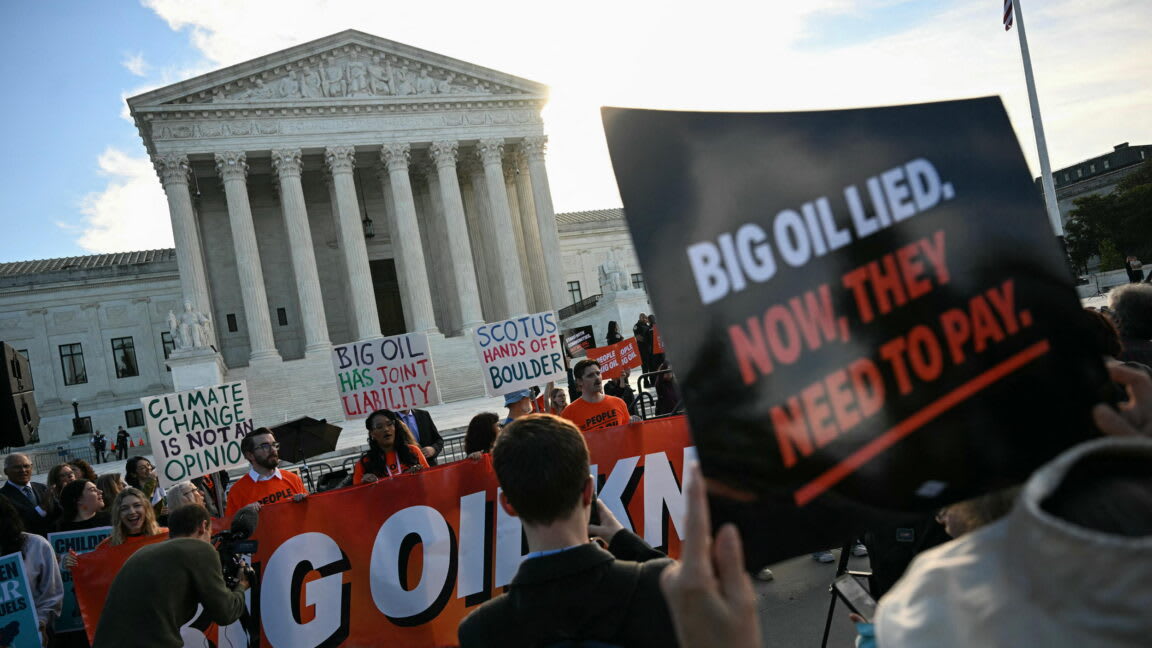
The U.S. Supreme Court is hearing arguments from oil giants seeking to dismiss climate deception lawsuits. These cases involve billions in potential damages for extreme weather costs, currently testing the boundaries of federal versus state legal jurisdiction.
The Legal Battle Over Climate Accountability
The U.S. Supreme Court has begun hearing pivotal arguments that could fundamentally alter the landscape of climate change litigation. At the heart of the matter is a concerted effort by major oil corporations to halt more than two dozen pending lawsuits that accuse the industry of systematically deceiving the public regarding the environmental risks of fossil fuels. These cases, which seek billions of dollars in damages to offset the economic burdens of extreme weather, represent a significant legal threat to the energy sector's long-term financial stability.
Procedural Hurdles vs. Substantive Merits
Despite the gravity of the accusations, the current proceedings before the Supreme Court are not centered on the veracity of the climate claims themselves. Instead, the court is addressing complex technical legal questions regarding jurisdiction. Oil companies, including ExxonMobil and Suncor Energy, are pushing for a ruling that federal law preempts state-level claims. By moving these cases from state courts—where plaintiffs often find more favorable terrain—to federal courts, the industry hopes to leverage federal statutes to effectively neutralize the litigation before it ever reaches a trial phase.
The Colorado Precedent
The specific case under scrutiny, initiated in 2018 by the city and county of Boulder, Colorado, serves as a bellwether for dozens of similar actions nationwide. For years, these lawsuits have navigated a treacherous procedural path, surviving numerous challenges in both state and federal appellate courts. The oil companies' current petition to the Supreme Court marks a desperate effort to finalize a jurisdictional blockade that would render these local and state-level efforts moot, regardless of the evidence presented.
Broader Implications for Climate Policy
The implications of a Supreme Court ruling in favor of the oil industry are profound. If the court determines that federal law preempts state-level deception claims, it would effectively strip municipalities of their ability to hold energy corporations financially accountable for the localized costs of climate change. This would shift the fiscal burden of disaster recovery, infrastructure adaptation, and environmental mitigation entirely onto taxpayers, potentially insulating the fossil fuel industry from the externalized costs of their products.
Future Trends and Judicial Strategy
Looking ahead, this case underscores a growing trend where corporate entities utilize high-level procedural maneuvers to bypass the merits of environmental litigation. As climate-related extreme weather events increase in frequency and intensity, the financial stakes for both the oil industry and the public will continue to escalate. Should the Supreme Court decide that federal law acts as a shield against these claims, it may trigger a shift in how climate advocacy groups frame their legal strategies, potentially forcing a move toward federal legislation or international human rights frameworks to achieve the accountability they seek.
Conclusion
In summary, the ongoing Supreme Court deliberations represent a critical juncture in the intersection of environmental law and corporate liability. While the immediate focus remains on technical jurisdictional arguments, the outcome will dictate whether local governments maintain the legal standing to pursue damages for climate-related damages. The decision will not only affect the Boulder case but will likely set a binding precedent for the entire national strategy of climate litigation, defining the limits of corporate responsibility for decades to come.