“Probe Meaningless Without Fixing Responsibility”: Supreme Court On CJP March Violence
Source Entity
NDTV News Search Records Found 1000
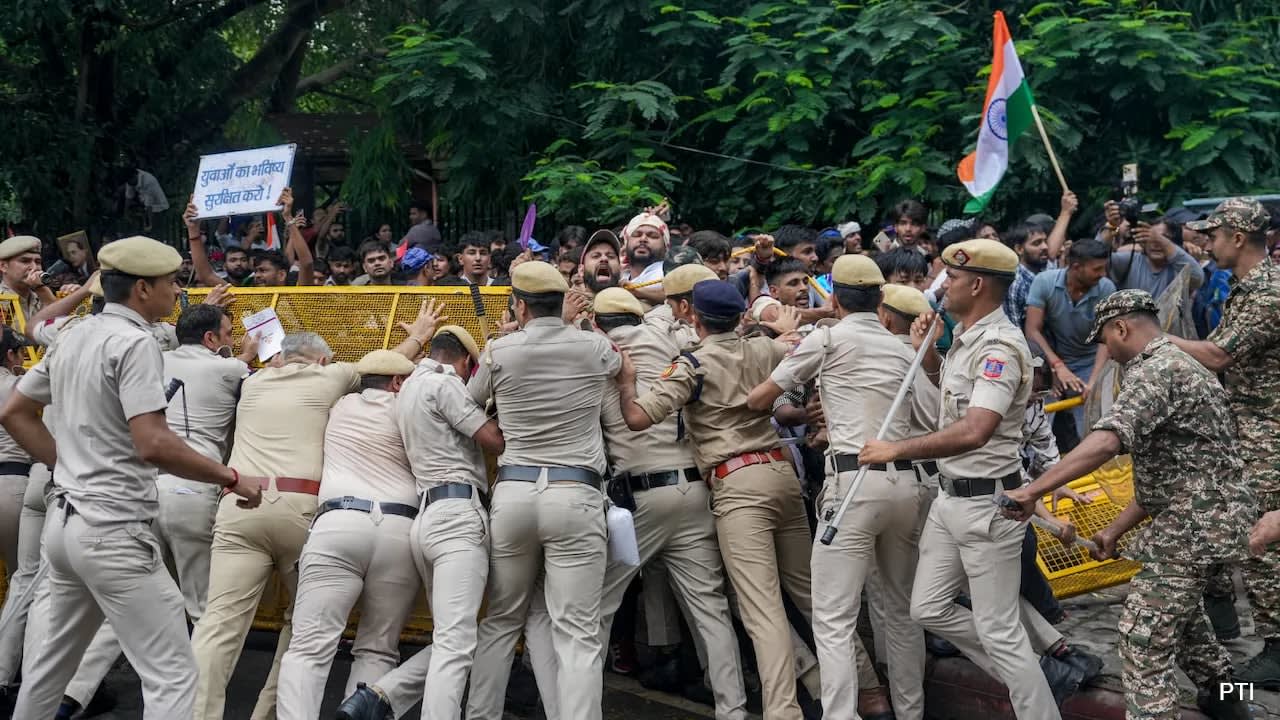
The Supreme Court has ordered a transparent inquiry into allegations of police excesses against students protesting NEET paper leaks. A Special Investigation Team (SIT) may be established to ensure accountability for violence reported during the July 20 demonstrations.
Supreme Court Intervenes in NEET Protest Violence
The Mandate for Accountability
The Supreme Court of India has taken a firm stance regarding the recent wave of student protests centered around NEET paper leak allegations. During a recent hearing, the bench, led by Chief Justice Surya Kant and including Justices Joymalya Bagchi and V Mohana, unequivocally stated that "whosoever committed excesses, took law in their hands should be taken to task." This judicial intervention underscores the necessity of maintaining the sanctity of peaceful protest while ensuring that law enforcement agencies adhere to established protocols.
Establishing a Special Investigation Team (SIT)
Recognizing the gravity of the allegations—which include the reported use of pellet guns and, in some instances, claims of an AK-47 being brandished by police in Bihar—the court has signaled that a Special Investigation Team (SIT) may be necessary. The objective is to conduct a fair, independent, and transparent probe into the incidents that occurred on July 20. By pushing for a commission-led inquiry, the court aims to strip away political bias and focus strictly on the procedural violations that occurred when demonstrators marched from Jantar Mantar toward Parliament.
Contextualizing the July 20 Clashes
The protests, spearheaded by the CJP, reached a flashpoint on July 20 when demonstrators attempted to march toward the Parliament building. The subsequent use of tear gas and baton charges by the police resulted in widespread clashes and detentions. Rajya Sabha MP Manoj Kumar Jha’s petition to the Supreme Court highlights the growing legislative concern regarding the state’s response to student grievances, emphasizing that an inquiry is effectively meaningless unless individual responsibility is fixed for the violence.
Procedural Protocols and Future Implications
A critical aspect of the Supreme Court's observation is the focus on framing a future protocol. The court noted that once a defined protocol is violated, the law must take its course. This suggests that the judiciary is looking to create a framework that balances the right to peaceful assembly with the state's duty to maintain order, preventing future escalations where police force might be deemed disproportionate or excessive.
Conclusion
The Supreme Court’s insistence on a transparent inquiry serves as a check on executive power and a safeguard for student protesters. By demanding accountability, the court is not only addressing the specific grievances related to the NEET paper leak protests but is also reinforcing the democratic right to dissent. The potential formation of an SIT represents a significant step toward ensuring that the rule of law applies equally to those in uniform as it does to the citizenry.
Multiple Citing Sources
Verification Required?