Gujarat Govt orders withdrawal of cases against participants of NEET paper leak protests
Source Entity
India Latest News: Top National Headlines Today & Breaking News | The Hindu
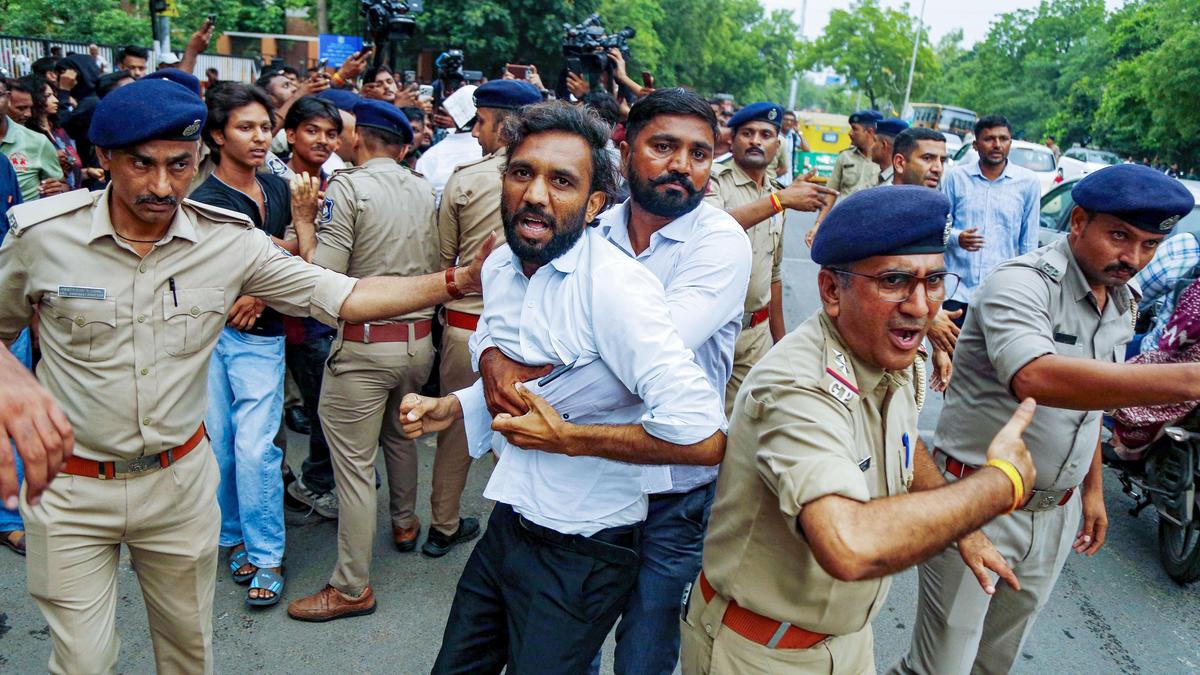
The Supreme Court is reviewing a petition to relocate protests from Jantar Mantar due to logistical concerns. Concurrently, the court has clarified that states may withdraw FIRs against student protesters, a move already adopted by the Gujarat government regarding NEET-UG demonstrations.
Rethinking Public Protest Spaces in the Capital
On August 3, 2026, the Supreme Court of India initiated a significant dialogue regarding the operational viability of Jantar Mantar as the primary venue for public demonstrations. A three-judge Bench, led by Chief Justice Surya Kant, acknowledged a petition filed by Satish Chand Kaushik arguing that the site is no longer suitable for large-scale gatherings. The petition highlights critical infrastructure failures, including ingress-egress impediments, inadequate supply chains for medical essentials, and sanitation issues like sewage management. By directing Solicitor General Tushar Mehta to consult with the Union government, the Court has signaled a willingness to explore designating more secure and expansive alternatives, such as Ramlila Maidan, to balance democratic expression with urban functionality.
The Intersection of Protest and Legal Protection
In a parallel development on the same day, the Supreme Court provided a crucial clarification regarding its July 28 interim order concerning student protests. The court affirmed that state governments retain the legal authority to withdraw FIRs against student protesters, provided they follow established legal procedures. This clarification serves as a vital safeguard, ensuring that the judicial process does not inadvertently criminalize dissent. Furthermore, the Court narrowed the definition of "criminal antecedents," specifying that it applies only to "grave and heinous offences," thereby preventing the misuse of minor legal infractions to deny students interim protection from coercive state action.
State-Level Implementation: The Gujarat Precedent
The effectiveness of the Supreme Court’s oversight is evidenced by the proactive response from the Gujarat government. Following the July 28 judicial guidance, the state’s Home Department issued a formal directive on July 31 to withdraw all criminal cases registered against participants of the NEET-UG examination paper leak protests. By instructing the Director General of Police to halt all adverse legal actions, the Gujarat administration has demonstrated a shift toward de-escalation, aligning local executive policy with the judiciary’s emphasis on protecting the rights of youth and students involved in civil agitation.
Balancing Civil Liberties and Urban Governance
These events underscore the complex interplay between the fundamental right to protest and the logistical challenges of modern urban governance. The transition of protests from historical sites like Jantar Mantar to more regulated environments reflects a growing need for infrastructure that can accommodate the health, safety, and movement of both protesters and the general public. As the Supreme Court continues to oversee these matters, the focus remains on ensuring that regulatory changes do not infringe upon the constitutional rights of citizens to gather and voice grievances.
Future Implications and Policy Trends
Looking forward, the potential relocation of protest venues could set a national precedent for how Indian cities manage public assembly. If the Union government supports the transition to designated grounds like Ramlila Maidan, it may necessitate new national guidelines for protest management that prioritize public health and safety. Simultaneously, the court’s clear stance on the withdrawal of FIRs for non-heinous offenses against students suggests a future trend where judicial intervention acts as a buffer against punitive state responses, fostering a more constructive environment for peaceful civil discourse across the country.
Multiple Citing Sources
Verification Required?