3 New Supreme Court Judges Take Oath, Strength Rises To 37
Source Entity
NDTV News Search Records Found 1000
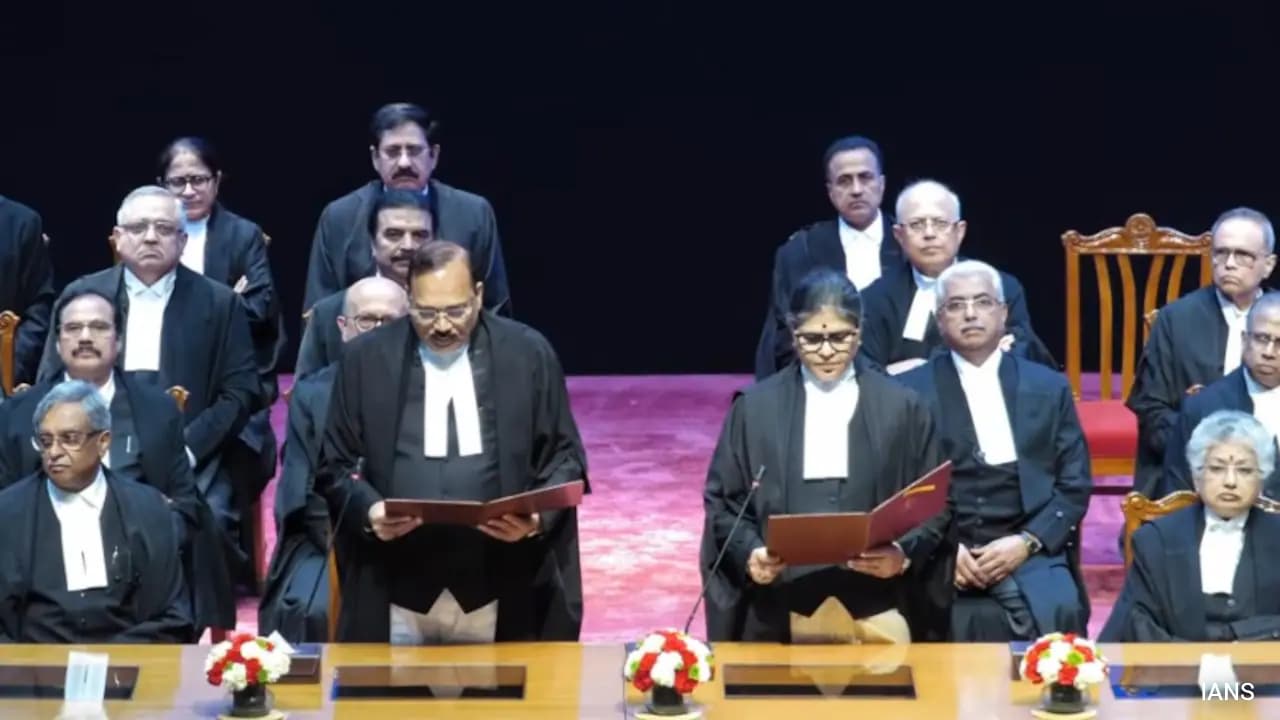
The Supreme Court of India has increased its working strength to 37 judges following the appointment of three High Court Chief Justices. This move leaves only one vacancy against the total sanctioned capacity of 38.
Strengthening the Judiciary: New Appointments to the Supreme Court
In a significant development for the Indian judicial system, the Central government has formally elevated three sitting Chief Justices of High Courts to the Supreme Court of India. The appointments of Justice Sunita Agarwal, Justice Devendra Kumar Upadhyaya, and Justice Aparesh Kumar Singh mark a concerted effort to optimize the functional capacity of the apex court. By administering the oath of office to these distinguished jurists, the judiciary moves closer to its full sanctioned strength, reflecting a commitment to addressing the mounting backlog of cases that characterizes the Indian legal landscape.
The Impact of Judicial Capacity
With these latest appointments, the working strength of the Supreme Court has risen to 37. Given that the sanctioned strength of the court is 38, this leaves only a single vacancy, a notable achievement in administrative efficiency. The elevation process, confirmed by Union Law Minister Arjun Ram Meghwal via social media, underscores the collaborative mechanism between the executive and the judiciary in filling high-level constitutional positions. A near-full bench is essential for the court to effectively handle the diverse range of litigation—from constitutional challenges to civil and criminal appeals—that it oversees.
Profiles of the Appointed Jurists
Each of the newly appointed judges brings extensive experience from various High Courts. Justice Sunita Agarwal, who previously served as the Chief Justice of the Gujarat High Court since July 2023, originates from the Allahabad High Court. Her tenure, which is expected to extend until her retirement in April 2031, adds a wealth of experience to the bench. Alongside her, Justice Devendra Kumar Upadhyaya and Justice Aparesh Kumar Singh bring their respective expertise from the Delhi and Telangana High Courts, ensuring that the Supreme Court benefits from a broad spectrum of jurisdictional insights.
Broader Implications for the Legal System
The importance of these appointments extends beyond mere numbers; it touches on the efficiency of the justice delivery system. The Supreme Court serves as the final arbiter of law in India, and its ability to function with a full complement of judges directly impacts the speed and quality of justice. By filling these vacancies, the judiciary is better positioned to constitute larger benches for significant constitutional matters, thereby providing clarity on complex legal issues that affect the entire nation.
Historical Context and Future Trends
Historically, the process of judicial appointments in India has been a subject of intense scrutiny and occasional friction between the executive and the judiciary. However, the current trend of proactive appointments suggests a functional alignment aimed at reducing judicial vacancies. Looking forward, the focus will likely shift toward the eventual appointment of the final judge to reach the full sanctioned strength of 38, as well as addressing the broader issue of vacancies in the lower courts, which remains a critical challenge for the long-term health of the Indian legal system.
Conclusion
In summary, the induction of these three judges is a positive step toward ensuring the institutional robustness of the Supreme Court. By bringing the court to within one seat of its full capacity, the government and the judiciary have demonstrated a shared priority in maintaining the functional integrity of India’s highest court. As these judges begin their tenure, the legal community will look to their contributions in upholding the rule of law and navigating the complexities of a modern, evolving democracy.
Verification Required?