Staines triple murder case: Supreme Court gives ultimatum to Odisha on Dara Singh’s remission plea
Source Entity
India Latest News: Top National Headlines Today & Breaking News | The Hindu
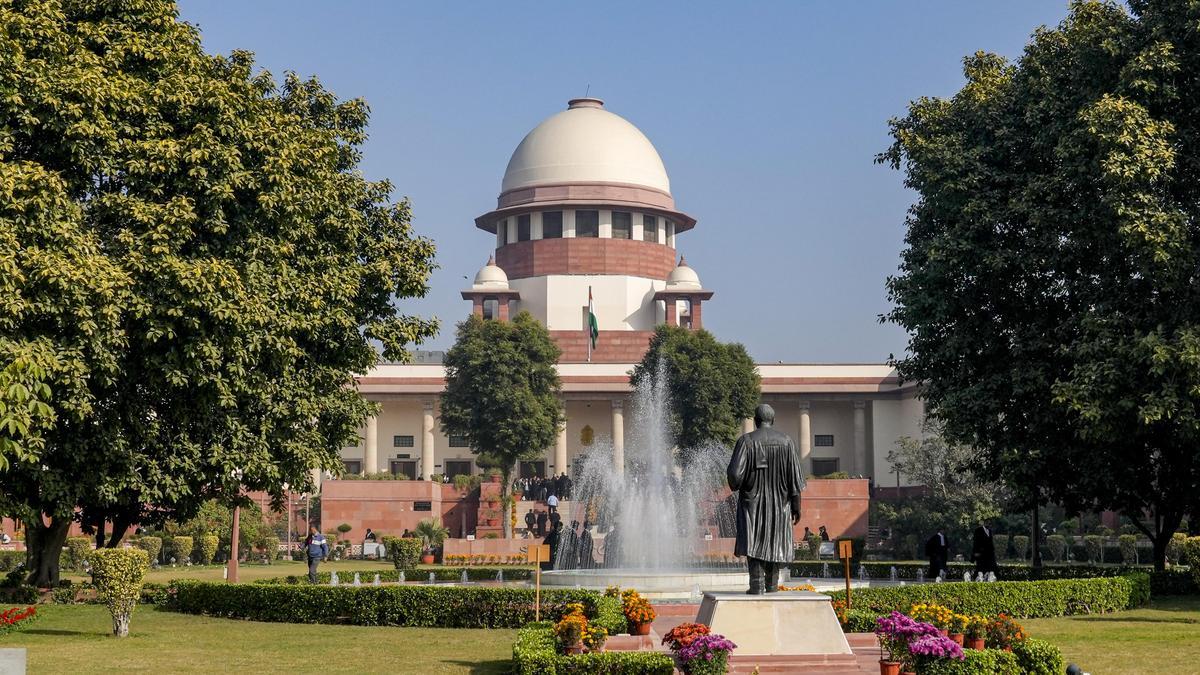
The Supreme Court has issued an ultimatum to the Odisha government regarding the delayed remission plea of Dara Singh, convicted for the 1999 murder of Graham Staines. The Court threatened to intervene directly if the state fails to make a timely decision on the life convict's petition.
The Supreme Court Ultimatum: Addressing the Staines Case Remission
The Supreme Court of India has issued a stern warning to the Odisha state government concerning the prolonged delay in addressing the remission petition filed by Rabindra Kumar Pal, widely known as Dara Singh. Singh is currently serving a life sentence for his involvement in the 1999 triple murder of Australian missionary Graham Staines and his two young sons. The Bench, led by Justice Manoj Misra, signaled that the judiciary’s patience with administrative inertia is wearing thin, setting a clear precedent that the state cannot indefinitely defer its statutory responsibilities.
Historical Context of the 1999 Tragedy
To understand the gravity of this legal development, one must revisit the events of January 1999. Graham Staines, a missionary who had dedicated years to working with leprosy patients in Odisha, was sleeping in his vehicle with his sons, aged six and ten, outside a church. A mob surrounded the vehicle and set it ablaze, physically preventing the victims from escaping the burning car. This act of extreme violence sent shockwaves through the international community and served as a dark chapter in the history of communal relations in India.
The Legal Impasse of Remission
Remission, the reduction of a sentence, is a prerogative often managed by state governments under the prison manual and criminal procedure codes. However, when a case involves crimes of such significant public interest and moral weight, the process becomes highly scrutinized. By failing to process Dara Singh's plea, the Odisha government has effectively created a legal vacuum. The Supreme Court's intervention serves as a reminder that executive discretion regarding prisoner release is not absolute and must be exercised within reasonable timeframes.
Judicial Oversight vs. Executive Delay
Justice Manoj Misra’s remarks—explicitly stating, "If you do not decide, we will"—highlight a shift toward stricter judicial oversight. The Court is asserting that procrastination in sensitive criminal matters is not merely a bureaucratic failure but a dereliction of duty that risks undermining the rule of law. By threatening to take over the decision-making process, the Supreme Court is pressuring the state to adhere to standard procedural timelines, regardless of the political or social sensitivity surrounding the convict.
Broader Implications for Criminal Justice
This case highlights the broader tension between administrative autonomy and judicial accountability. When state governments avoid making difficult decisions on high-profile convicts, they essentially force the judiciary to intervene, which can complicate the separation of powers. Moving forward, this ultimatum may set a standard for how state governments handle long-pending remission pleas, potentially forcing a more transparent and time-bound mechanism for evaluating the release of life-term convicts.
Concluding Outlook
The Supreme Court’s ultimatum to the Odisha government is a decisive step in ensuring that the legal process surrounding the Staines murder case reaches a logical conclusion. Whether the state moves to grant or deny the remission remains to be seen, but the Court has made it clear that the era of indefinite waiting is over. This development underscores the judiciary's role as the final arbiter in ensuring that justice, even years after a crime, is neither denied nor unnecessarily delayed.
Verification Required?