Palaniswami accuses Vijay of speaking contrary to truth on ‘Gem’ Veeramani’s arrest
Source Entity
India Latest News: Top National Headlines Today & Breaking News | The Hindu
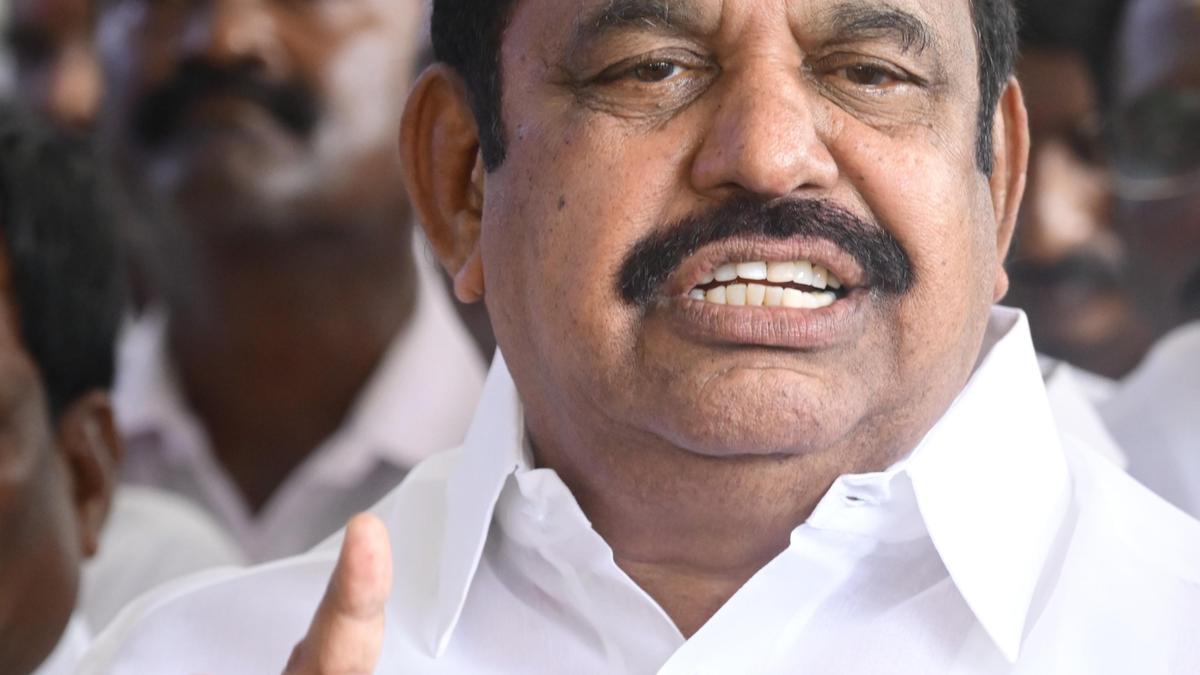
Tamil Nadu Chief Minister C. Joseph Vijay and opposition leaders are embroiled in a heated dispute over the arrest of Gem Granites owner R. Veeramani under the POCSO Act. Each party accuses the other of shielding the accused and mishandling the legal proceedings during their respective tenures.
Political Turmoil in Tamil Nadu: The Gem Granites POCSO Controversy
Recent political discourse in Tamil Nadu has been dominated by a high-stakes confrontation surrounding the arrest of R. Veeramani, the owner of Gem Granites, under the Protection of Children from Sexual Offences (POCSO) Act. The controversy erupted during a campaign meeting in the Madurantakam (SC) Assembly constituency, where Tamilaga Vettri Kazhagam (TVK) president and Chief Minister C. Joseph Vijay accused the DMK of suppressing the case despite it being registered during their administration. This allegation has ignited a fierce cycle of finger-pointing among the state's major political factions.
The Chief Minister’s Allegations
Chief Minister C. Joseph Vijay has leveled serious charges against the DMK, asserting that the party deliberately covered up the case against Veeramani to protect him. According to Mr. Vijay, the accused had been exploiting young girls for years, and the failure to act decisively when the case first surfaced points to a "behind the scenes" deal. He further extended his criticism to the AIADMK, questioning the party's silence and suggesting a tacit understanding between the two opposition forces regarding this sensitive matter.
The DMK’s Counter-Narrative
In response, the DMK has vehemently denied these claims, shifting the focus back to the current administration. DMK Rajya Sabha member Constantine Ravindran asserted that the arrest of Veeramani on August 27, 2026, was not a voluntary act by the TVK government but a forced reaction following judicial intervention. Ravindran claimed that the court had expressed severe displeasure over the case on August 25, implying that the state government had previously attempted to dismiss the case four times on the grounds of a lack of prima facie evidence.
The AIADMK’s Critique
Adding to the complexity, the AIADMK, led by Edappadi K. Palaniswami, has accused the Chief Minister of distorting the truth. Mr. Palaniswami argued that the arrest was only executed due to the insistence of a special court, noting that the government had previously filed a "further action dropped" report. The AIADMK leader contends that the TVK government is guilty of the very same shielding it accuses the DMK of, citing repeated adjournments sought by government pleaders as evidence of delay.
Broader Implications for Governance
This standoff highlights a troubling intersection of criminal justice and electoral politics. By weaponizing a sensitive POCSO case for political gain in the Madurantakam byelection, all three major parties risk undermining the gravity of the crimes committed against children. The dispute over who is truly "shielding" the accused reflects a deeper systemic issue where legal proceedings are increasingly viewed through the lens of political leverage rather than objective justice.
Future Trends and Judicial Oversight
As the Election Commission of India (ECI) reviews complaints regarding the rhetoric used in the Madurantakam campaign, the case underscores the necessity for independent judicial oversight in high-profile criminal matters. The reliance on court intervention to compel state action—as alleged by both the DMK and AIADMK—suggests a lack of public faith in the executive's impartiality. Moving forward, the resolution of the legal case against R. Veeramani will serve as a critical litmus test for the integrity of the state’s law enforcement and the judiciary’s ability to remain insulated from political pressure.
Verification Required?