I held the first truly bezel-free phone
Source Entity
Dominic Preston
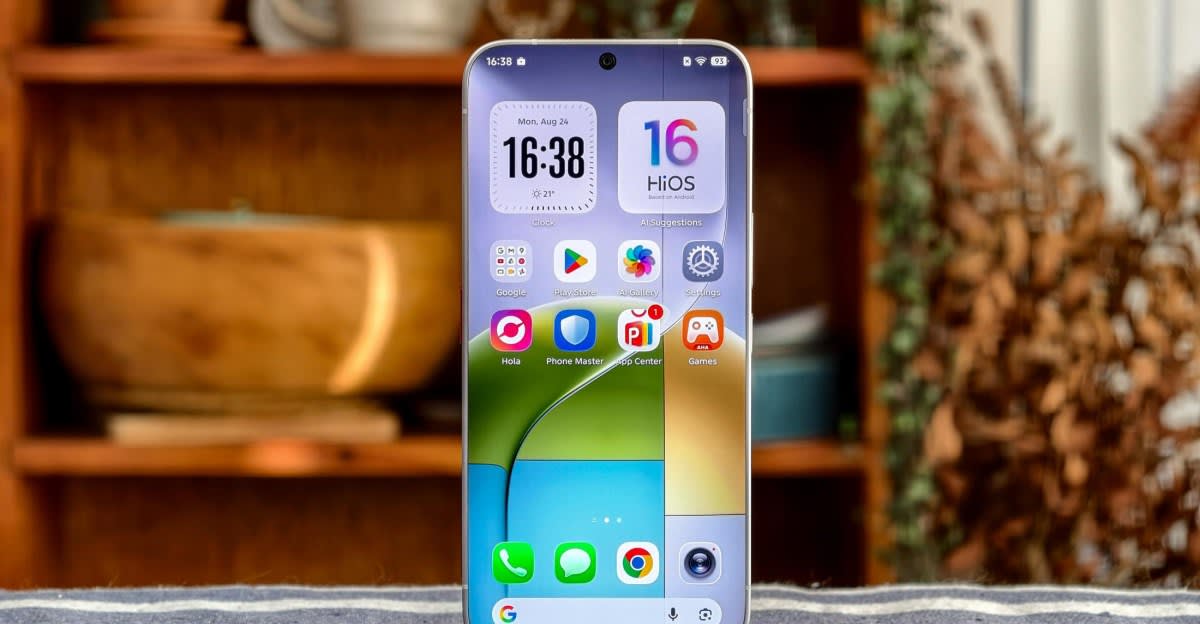
Tecno has unveiled a concept smartphone called the 'Bezelless' that pushes display boundaries beyond current industry standards. While it is not intended for commercial sale, the device serves as a technical proof-of-concept for edge-to-edge screen design.
The Quest for the Infinite Display
For the past decade, the smartphone industry has been locked in an architectural arms race to maximize screen-to-body ratios. Early smartphones were characterized by bulky, prominent frames, but consumer preference rapidly shifted toward immersive, edge-to-edge experiences. This transition saw the gradual reduction of black bars, or bezels, which house essential hardware like front-facing cameras, proximity sensors, and structural bracing.
The Plateau of Design
Around the mid-2010s, progress reached a functional plateau. Engineers and manufacturers seemingly reached a consensus that a millimeter-thick perimeter was the limit for structural integrity and component placement. For years, the industry settled into a status quo where nearly every flagship device featured nearly identical bezel dimensions, prioritizing manufacturing consistency and durability over the pursuit of a truly invisible frame.
Tecno's Experimental Breakthrough
Tecno, a brand under the Transsion Holdings umbrella alongside Itel and Infinix, has recently disrupted this stagnation with the unveiling of its 'Bezelless' concept device. By bypassing the constraints of mass-market retail, Tecno was able to experiment with structural design in ways that typical consumer electronics companies avoid due to supply chain and durability concerns. This device serves as a deliberate challenge to the industry's self-imposed design limitations.
Challenges of the Bezel-Free Form Factor
True bezel-free design introduces significant engineering hurdles that go beyond mere aesthetics. Without a frame to grip, the device faces issues regarding accidental touch rejection—where the user's palm inadvertently triggers screen actions—as well as the placement of internal components. The 'Bezelless' concept acts as a laboratory for these problems, proving that the physical hardware is capable of reaching the absolute edge, even if the technology is not yet ready for the rigors of daily consumer use.
Future Implications and Industry Trends
While the Tecno Bezelless is explicitly stated as a non-commercial concept, its existence suggests a potential shift in R&D focus. As foldable and rollable screen technologies mature, the lessons learned from this concept may eventually inform future production models. By pushing the boundaries of what is physically possible, Tecno is forcing a conversation about whether the industry's decade-long pause on bezel reduction is a permanent technical limitation or merely a choice driven by manufacturing efficiency.
Conclusion
Ultimately, the Tecno Bezelless represents an important milestone in smartphone evolution. It reminds the market that the current 'standard' for display aesthetics is a choice rather than a technical impossibility. While we may not see this specific device on store shelves, the proof-of-concept ensures that the dream of the truly infinite, edge-to-edge screen remains a tangible goal for future hardware cycles.