Committee recommends replacing Telangana’s three-tier tax slab for contract carriages with single tax system
Source Entity
India Latest News: Top National Headlines Today & Breaking News | The Hindu
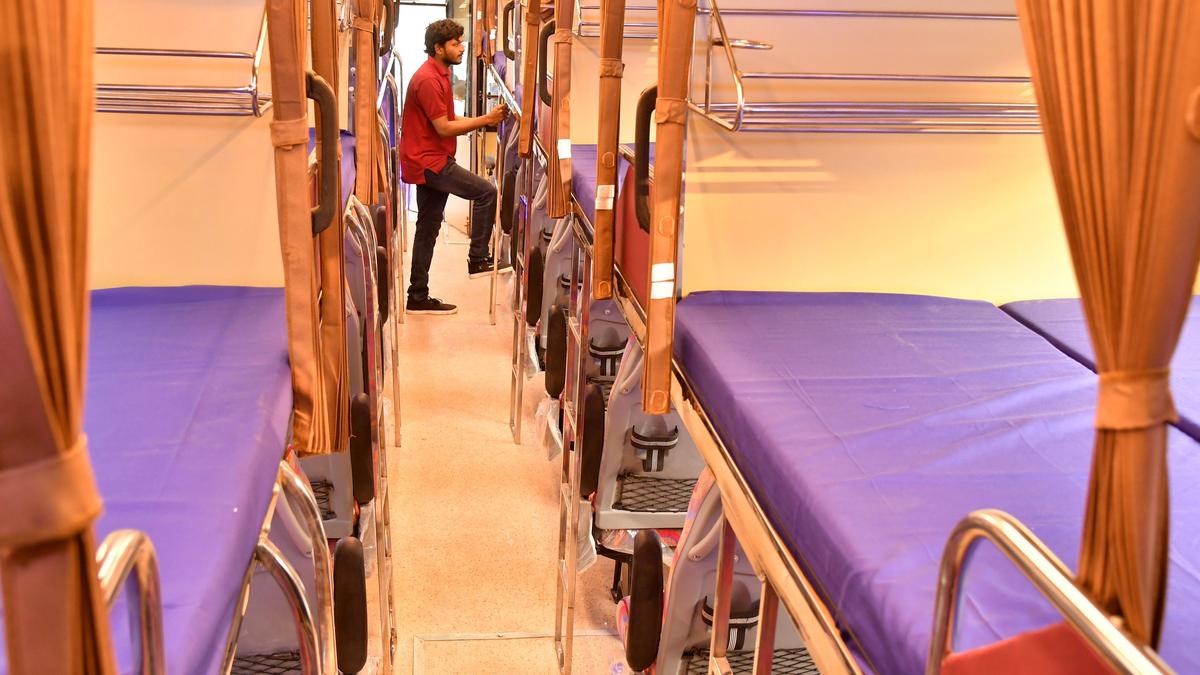
A Telangana government committee has proposed a uniform tax of ₹1,510 per seat for contract carriage buses to replace the current three-tier system. This reform aims to curb permit misuse and standardize tax collection across the state.
Reform in Telangana's Transport Taxation
A committee led by Transport Commissioner K Ilambarithi has officially recommended a significant overhaul of the taxation framework for contract carriage buses in Telangana. The report, titled ‘Rationalisation of Tax on Contract Carriage Buses Plying within Telangana,’ advocates for the elimination of the current three-tier tax system, replacing it with a singular, uniform levy of ₹1,510 per seat per quarter for State-wide permits. This policy shift targets vehicles designed to carry more than 12 passengers, excluding the driver, and marks a potential turning point in the state’s regulatory approach to public and private transportation.
The Problem: Tax Evasion and Permit Misuse
At the heart of this proposal lies the issue of systemic administrative abuse. The committee identified that the current tiered structure—which charges ₹1,120 for One District permits, ₹1,510 for Two District permits, and ₹3,285 for full State permits—has been exploited by operators. By securing lower-tier permits while operating across a wider geographical scope, bus operators have effectively bypassed higher tax obligations. This move toward a uniform tax is designed to plug these revenue leaks and ensure equitable fiscal contributions from transport operators.
Comparative Regulatory Analysis
To ensure the proposed rate is both competitive and sustainable, the committee conducted a rigorous comparative analysis of tax regimes in neighboring and peer states, including Kerala, Karnataka, Maharashtra, and Odisha. By benchmarking against these jurisdictions, the committee sought to balance the need for state revenue with the economic viability of private bus operators. The selection of ₹1,510 as the uniform rate suggests an attempt to find a middle ground that simplifies compliance while maintaining existing revenue streams from mid-tier operators.
Broader Economic Implications
If implemented, this rationalization could significantly reduce the administrative burden on both the Transport Department and bus operators. Currently, the complexity of managing permit-wise tax collections requires extensive oversight to prevent violations. A single-rate system simplifies the audit process and reduces the incentive for operators to misrepresent their operational zones. This shift is expected to foster a more transparent business environment where market competition is based on service quality rather than regulatory arbitrage.
Future Trends in State Transportation
This policy proposal signals a growing trend toward digital and uniform regulatory frameworks in Indian state transport sectors. By standardizing the tax burden, Telangana is aligning itself with broader national goals of 'Ease of Doing Business' while tightening enforcement against illegal permit usage. If successful, this model could serve as a template for other states struggling with similar challenges in the contract carriage segment, ultimately leading to a more unified national standard for bus transit taxation.
Conclusion
The proposed transition to a uniform tax system is a proactive step toward fiscal discipline and regulatory clarity. By addressing the specific loopholes in permit usage, the Telangana government is positioning itself to stabilize transport revenue while creating a more predictable operational environment for bus operators across the state.
Verification Required?