Pune-Bengaluru highway blocked by sugarcane farmers demanding better prices, resignation of Union Minister
Source Entity
India Latest News: Top National Headlines Today & Breaking News | The Hindu
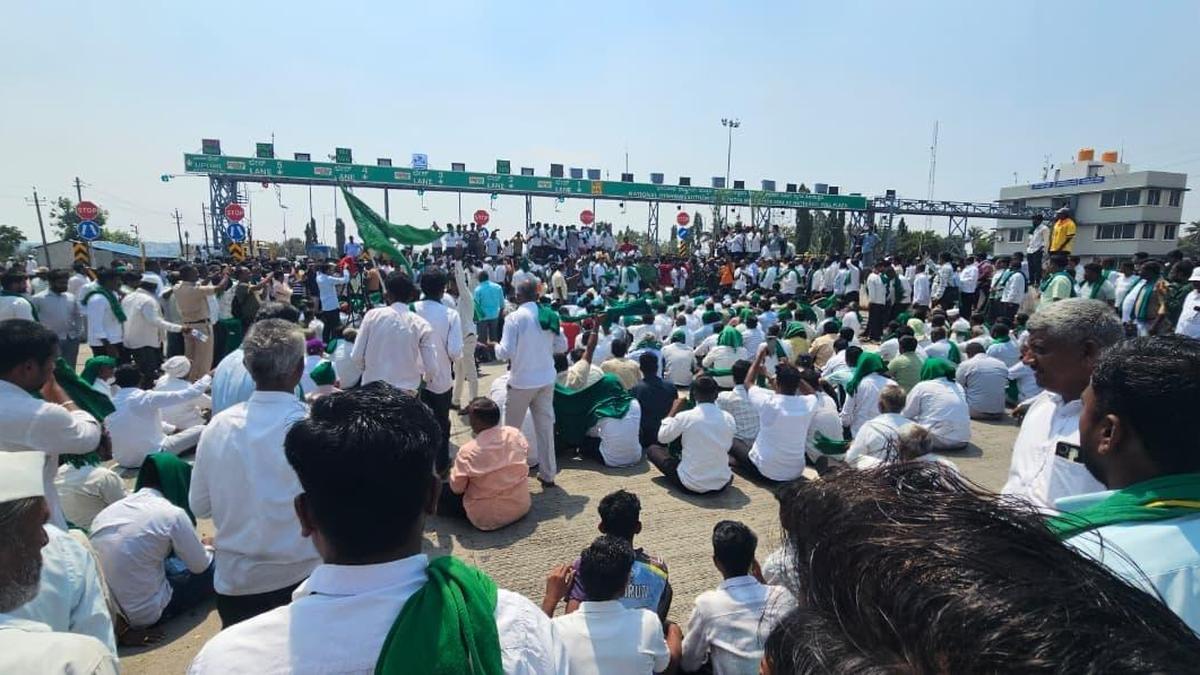
Sugarcane farmers in Karnataka have blocked the Pune-Bengaluru National Highway to demand higher prices and policy reforms. The protest centers on dissatisfaction with Union Minister Pralhad Joshi, though BJP officials maintain that constructive dialogue is ongoing.
Escalating Tensions on the Pune-Bengaluru Highway
Recent developments in the Belagavi district of Karnataka have seen a significant escalation in agricultural unrest, as sugarcane farmers launched a blockade on the vital Pune-Bengaluru National Highway. Centered at key transit points like Hirebagevadi and Hattaragi, the protests highlight a deep-seated frustration within the farming community regarding economic sustainability. This disruption serves as a physical manifestation of the farmers' dissatisfaction with current pricing structures and their perceived lack of engagement from central authorities.
The Core Economic Demands
The protestors have articulated a comprehensive list of financial and regulatory demands aimed at restructuring the sugar industry. Key among these is the call for a revision of the Minimum Support Price (MSP) for sugar to ₹60 per kg and an increase in the Fair and Remunerative Price (FRP) to ₹5,500 per tonne. Furthermore, farmers are advocating for structural changes, including greater transparency in weighing processes and recovery assessments at factories. They are also pushing for the government to mandate that sugar factories—whether public, co-operative, or private—operate under a model that treats farmers as shareholders, allowing them to share in profits generated from by-products like ethanol, molasses, and co-generated power.
Political Friction and the Minister's Role
The political dimension of this agitation is underscored by the explicit demand for the resignation of Union Minister Pralhad Joshi. Farmers have accused the Minister of failing to address their grievances adequately after inviting them to New Delhi for discussions. This perceived dismissal has become a rallying point for the protest, casting a shadow over the government’s efforts to maintain agricultural stability in the region.
The Government’s Perspective
Contrasting the farmers' narrative, the BJP Raitha Morcha has stepped forward to defend the administration’s track record. Basavaraj Kundagolmath, a State secretary and governing council member of the University of Agricultural Sciences, Dharwad, emphasized that a high-level meeting took place in New Delhi involving approximately 100 farmers' leaders and Union Agriculture Minister Shivraj Singh Chouhan. According to the BJP, the government is actively engaged in addressing complex issues such as State Advisory Prices (SAP), minimum selling prices, and technical deductions in sugar recovery calculations.
Broader Implications and Future Trends
This standoff illustrates the ongoing tension between agricultural producer interests and industrial sugar production models in India. As the demand for ethanol increases, farmers are asserting that they must receive a larger share of the value chain. If these negotiations remain deadlocked, it is likely that protests will continue to disrupt key logistics corridors, potentially impacting supply chains between Karnataka and Maharashtra. Moving forward, the resolution of these grievances will depend on whether the government can reconcile the farmers' demands for profit-sharing and price hikes with the economic realities of the sugar industry's current operational framework.
Verification Required?