Telangana hospital fire: Meet the four doctors who risked their life to rescue 25 newborns
Source Entity
Nikhila Henry
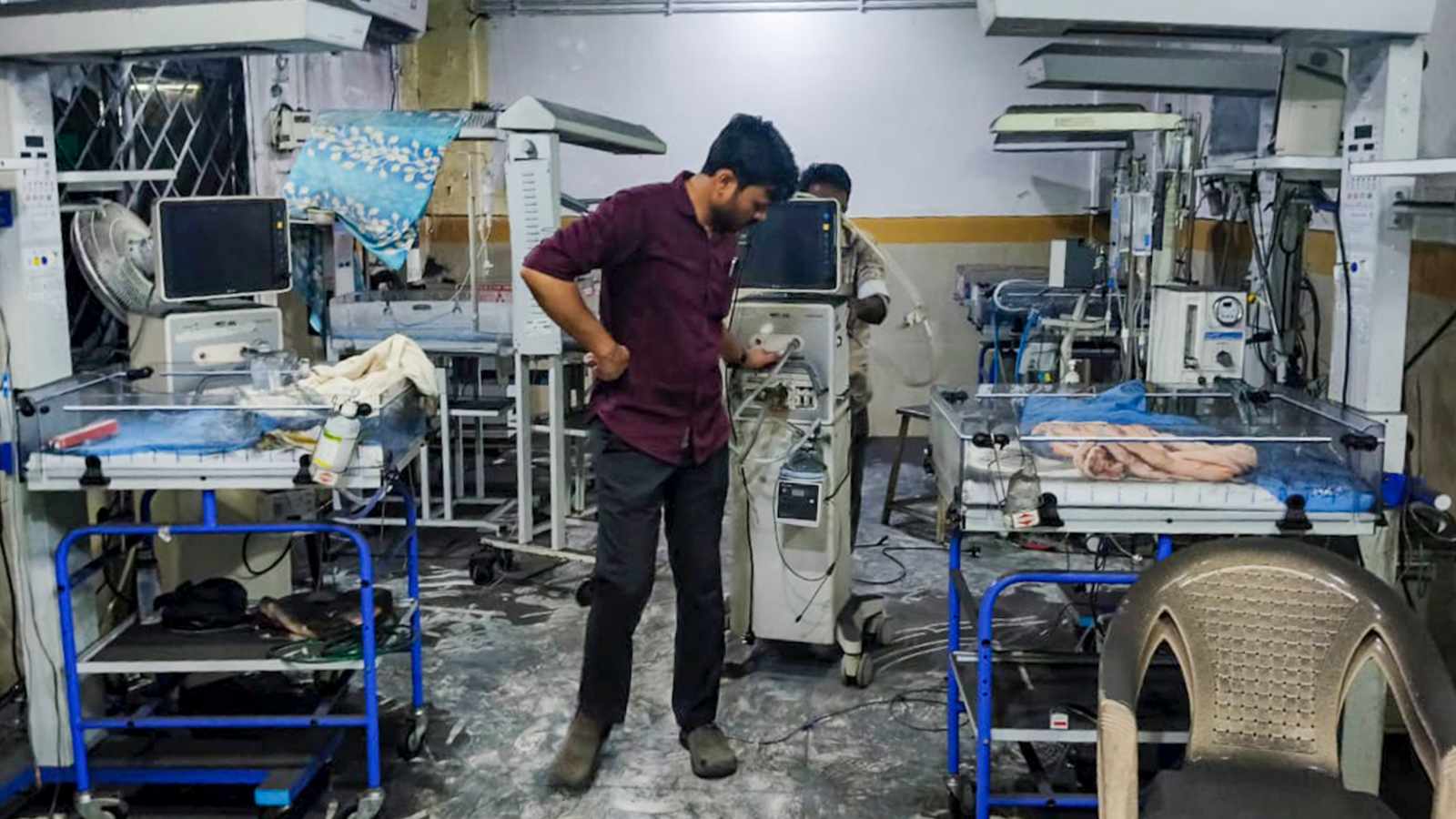
A fire at the Special Newborn Care Unit in Telangana's RIMS hospital has resulted in five infant deaths. While four doctors successfully rescued 25 other newborns, the incident highlights critical infrastructure vulnerabilities in state-run medical facilities.
Tragedy at RIMS: A Crisis in Neonatal Care
A devastating fire at the Rajiv Gandhi Institute of Medical Sciences (RIMS) in Telangana’s Adilabad district has culminated in a heart-wrenching loss of life. What began as a mechanical failure—an air conditioning unit bursting—escalated into a major disaster within the Special Newborn Care Unit (SNCU). Initially reporting three fatalities due to asphyxia, the death toll has sadly climbed to five, with two additional infants passing away on Wednesday despite medical intervention.
The Sequence of Failure and Heroism
The incident, which occurred on Monday night, placed the most vulnerable patients in the hospital in immediate peril. As the fire spread, the facility became a scene of chaotic urgency. Amidst the smoke and panic, a group of four duty doctors, supported by nurses and attendants, acted with remarkable bravery. Before fire tenders could arrive, these medical professionals managed to evacuate approximately 25 newborns, with one doctor even fainting from smoke inhalation during the rescue effort. Their swift actions undoubtedly prevented a much higher casualty count.
Medical Infrastructure Under Scrutiny
The tragedy highlights systemic vulnerabilities regarding the maintenance of critical medical infrastructure in state-run institutions. The fact that an AC unit malfunction could trigger a catastrophic fire in a high-dependency ward suggests a potential failure in routine safety audits and fire hazard prevention protocols. The reliance on aging or poorly maintained electrical infrastructure in neonatal units remains a significant risk factor that requires urgent systemic review.
The Impact on Families and Healthcare Systems
For the families involved, the loss of five infants—including a five-day-old female child who succumbed while being transferred to another hospital in Nirmal—is an irreparable trauma. This incident places immense pressure on the administration of RIMS and the Telangana health department to provide transparency regarding the cause of the fire and the adequacy of the emergency response protocols currently in place at the institute.
Future Trends and Necessary Reforms
Moving forward, the Adilabad incident serves as a grim reminder that neonatal safety is not just about clinical care but also about the physical safety of the environment. Future healthcare policy in the region must prioritize the installation of advanced fire suppression systems in SNCUs and implement more rigorous, recurring electrical safety inspections. Ensuring that state-run hospitals are equipped to handle such emergencies without relying solely on the physical bravery of individual staff members will be the key challenge for health authorities in the coming months.