Tesla opens Cybercab pre-orders ‘for personal use,’ with geo restrictions and a $299 monthly fee
Source Entity
Anthony Ha
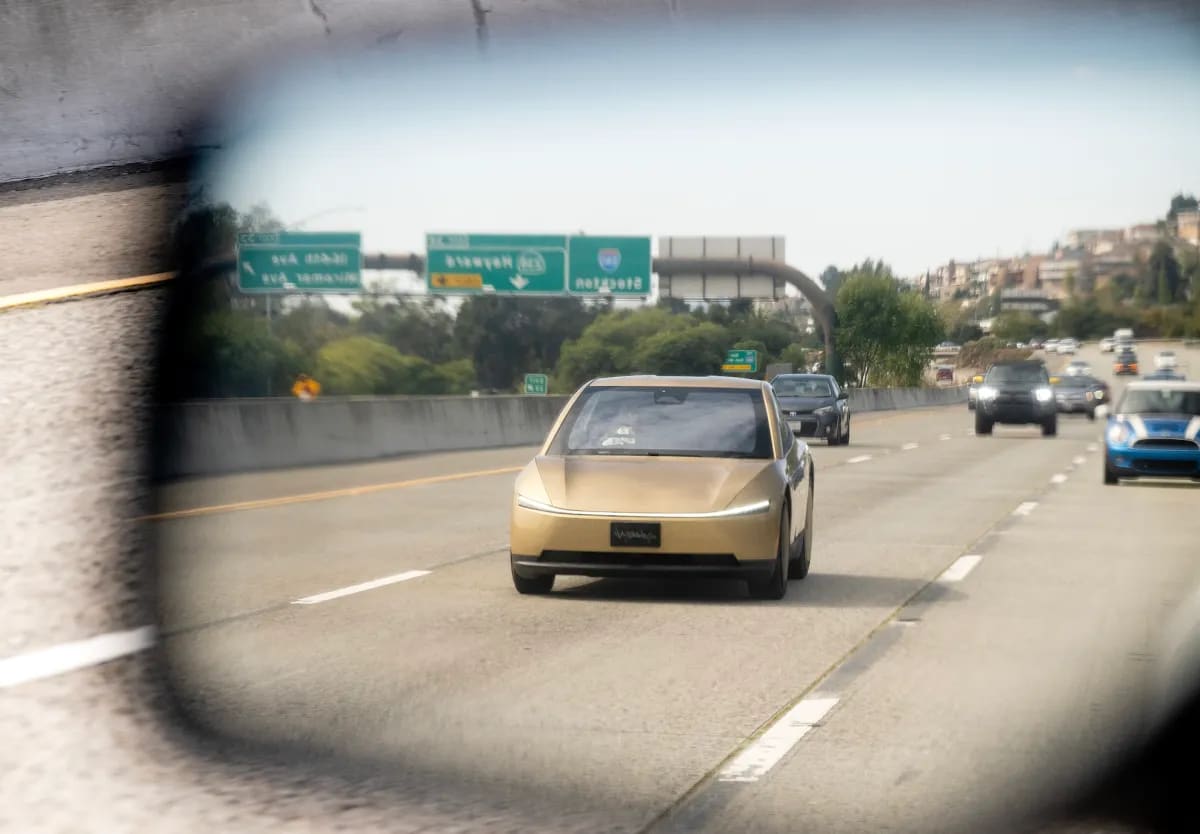
Tesla has opened pre-orders for its autonomous Cybercab to select customers, featuring a $29,990 price tag and a $299 monthly subscription fee. The vehicle is currently restricted to specific geofenced areas in Texas, with Elon Musk acknowledging the subscription cost is currently too high.
Tesla’s Cybercab Expansion: A New Frontier in Autonomous Mobility
Tesla has officially initiated the pre-order process for its highly anticipated, steering-wheel-free Cybercab. By inviting 'select customers' to purchase the vehicle for personal use, the company is attempting to transition its autonomous vision from theoretical concept to tangible consumer product. This move marks a pivotal moment in the automotive industry, as Tesla leans into its bold claims regarding a driverless future, despite the significant regulatory and logistical hurdles that remain.
The Economics of Autonomy
The financial structure surrounding the Cybercab rollout is as unconventional as the vehicle itself. With an entry price of $29,990, Tesla is positioning the unit as an accessible autonomous option. However, the introduction of a mandatory $299-a-month 'Autonomy Subscription' adds a layer of recurring cost that shifts the ownership model toward a service-based paradigm. Notably, even CEO Elon Musk has publicly signaled that this monthly fee is currently 'too high,' suggesting that the pricing model is still in flux as the company balances operational costs with consumer adoption goals.
Geofencing and Regulatory Realities
A critical component of this rollout is the strict geographic limitation placed on early adopters. Current pre-orders are restricted to specific cities where Tesla’s Robotaxi service is already operational, with a notable focus on Texas. This 'geofencing' strategy is a standard practice in the autonomous vehicle sector, allowing companies to gather data in controlled environments before scaling. Musk has clarified that nationwide availability will only occur once the company secures broader regulatory approval, highlighting the ongoing tension between technological readiness and legal compliance.
The Path to 2026
With an estimated delivery date of December 2026, Tesla has set a challenging timeline for itself. This window provides a two-year buffer to refine the vehicle’s software, improve the reliability of its autonomous systems, and negotiate the regulatory landscape across various jurisdictions. The success of the Cybercab will depend heavily on whether Tesla can prove the safety and efficiency of its platform during this period, particularly as critics and regulators scrutinize the removal of traditional manual controls.
Future Trends and Market Implications
The move to offer the Cybercab for 'personal use' suggests that Tesla is testing a hybrid model—part consumer vehicle, part service-managed fleet. If successful, this could fundamentally alter urban transportation by reducing the need for private vehicle ownership in favor of subscription-based, on-demand autonomous transit. However, the requirement for users to live in 'supported service areas' underscores that the transition to full autonomy will likely be a slow, fragmented process rather than a sudden, widespread shift.
Conclusion
Tesla’s latest move is an ambitious expansion of its autonomous strategy, balancing technical innovation with the hard realities of subscription economics and regional regulation. While the Cybercab represents a bold leap toward a driverless future, the path forward remains defined by iterative testing and the necessity of winning over both regulators and cost-conscious consumers. As the December 2026 deadline approaches, the industry will be watching closely to see if Tesla can bridge the gap between its current geofenced pilot programs and the promise of a truly national autonomous network.