Watch: Musk's Tesla unveils Roadster with flying-car-like features
Source Entity
AYUSH PANDEY
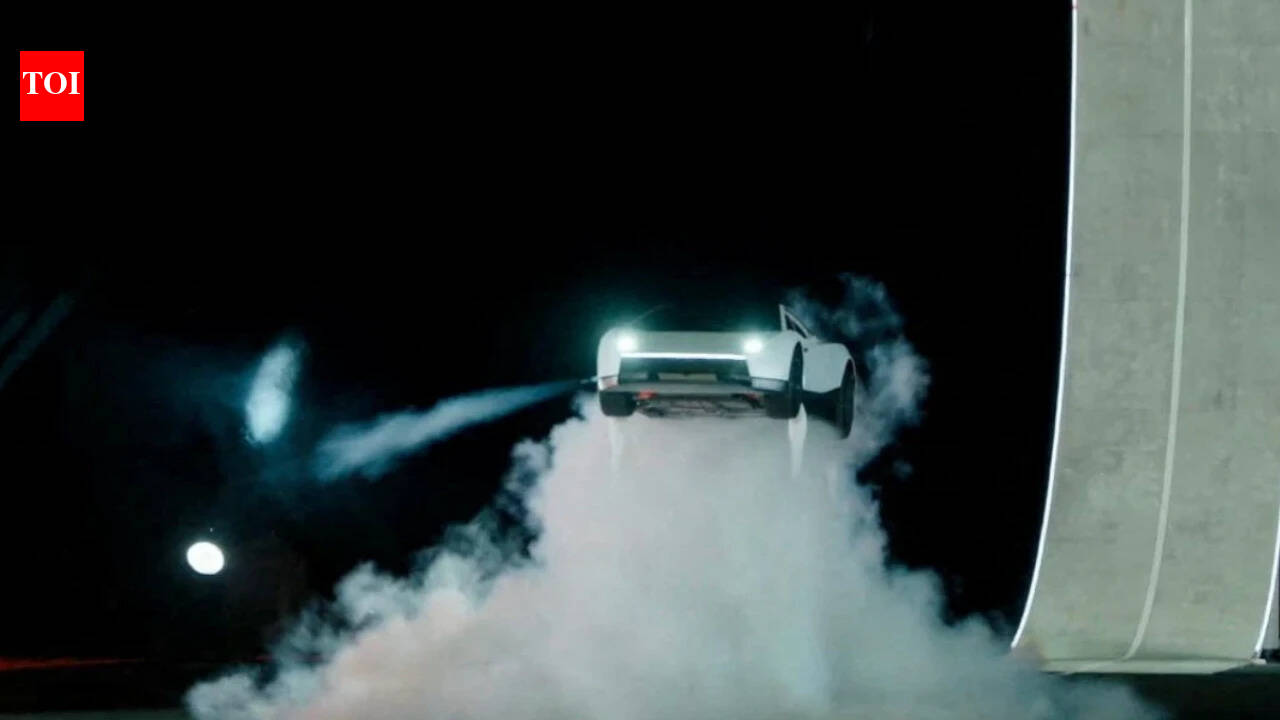
Tesla has debuted its long-awaited next-generation Roadster, featuring unprecedented performance capabilities including sub-one-second acceleration and flight technology. The vehicle, showcased at a SpaceX facility in Texas, represents a significant evolution from the original 2008 model.
The Evolution of the Tesla Roadster: From Concept to Reality
After nearly a decade of anticipation, delays, and mounting skepticism, Tesla has finally unveiled the next-generation Roadster. The reveal, held at a SpaceX test site in McGregor, Texas, marked a definitive shift in the narrative surrounding the vehicle, which was first teased in 2017. For years, the project remained in a state of purgatory, with Tesla repeatedly missing delivery targets and leaving deposit holders in limbo. This recent demonstration, however, served as a high-stakes proof of concept that sought to silence critics who doubted the company’s ability to turn Musk's ambitious promises into a functional machine.
Engineering the Impossible: Flight and Velocity
The most striking aspect of the reveal was the performance data. Tesla demonstrated the Roadster achieving a 0-60 mph acceleration time of under one second, a feat that pushes the boundaries of automotive engineering and tire traction physics. Perhaps even more radical was the inclusion of what appears to be SpaceX-derived thruster technology. The vehicle was shown not only driving upside down but also briefly achieving flight. This transition from a traditional electric sports car to a multi-modal vehicle represents a fundamental departure from the automotive industry's standard design philosophy.
Historical Context: From Lotus to SpaceX
To understand the significance of this moment, one must look back at the company’s origins. The original Tesla Roadster, launched in 2008 under founding CEO Martin Eberhard, was built upon a Lotus Elise chassis and served as the company's proof that electric vehicles could be desirable. While the original sold in small volumes through 2012, the new iteration is a clean-sheet design meant to showcase the zenith of Tesla’s technical capabilities. The shift from a boutique electric car to a vehicle capable of flight highlights how Tesla has evolved from a niche manufacturer into a company deeply integrated with aerospace engineering.
The Stunt Show vs. The Production Reality
Despite the spectacle, the event—which lasted less than 30 minutes—left many questions unanswered. The presentation felt more akin to a high-octane stunt show than a traditional product launch. There was no discussion of pricing, trim levels, or a concrete production timeline. This lack of logistical detail suggests that while the prototype is capable of extraordinary feats, the path to mass-market availability remains fraught with regulatory and manufacturing hurdles that have historically plagued the Roadster program.
Broader Implications for the EV Industry
The successful demonstration of the Roadster indicates a shift in the electric vehicle industry toward extreme performance and unconventional mobility. By integrating SpaceX thruster technology, Tesla is effectively blurring the line between automotive and aerospace sectors. If the Roadster reaches production, it will force competitors to reconsider the limits of electric powertrains. However, the industry remains wary: until these features are verified in a consumer-ready version, the Roadster remains a powerful symbol of Tesla's design ambition rather than a staple of the current automotive market.
Conclusion: A Bold Step Forward
The debut of the next-generation Roadster is a watershed moment for Elon Musk’s companies. By delivering on the promise of a "flying car," Tesla has managed to recapture public attention and validate years of development effort. While the road ahead will undoubtedly be complicated by safety regulations and production scalability, the event has successfully transformed a long-delayed concept into a tangible, awe-inspiring reality that challenges our fundamental understanding of transportation.
Multiple Citing Sources