Tesla secures $30B in new credit lines as it looks to scale Cybercab, Optimus
Source Entity
Sean O'Kane
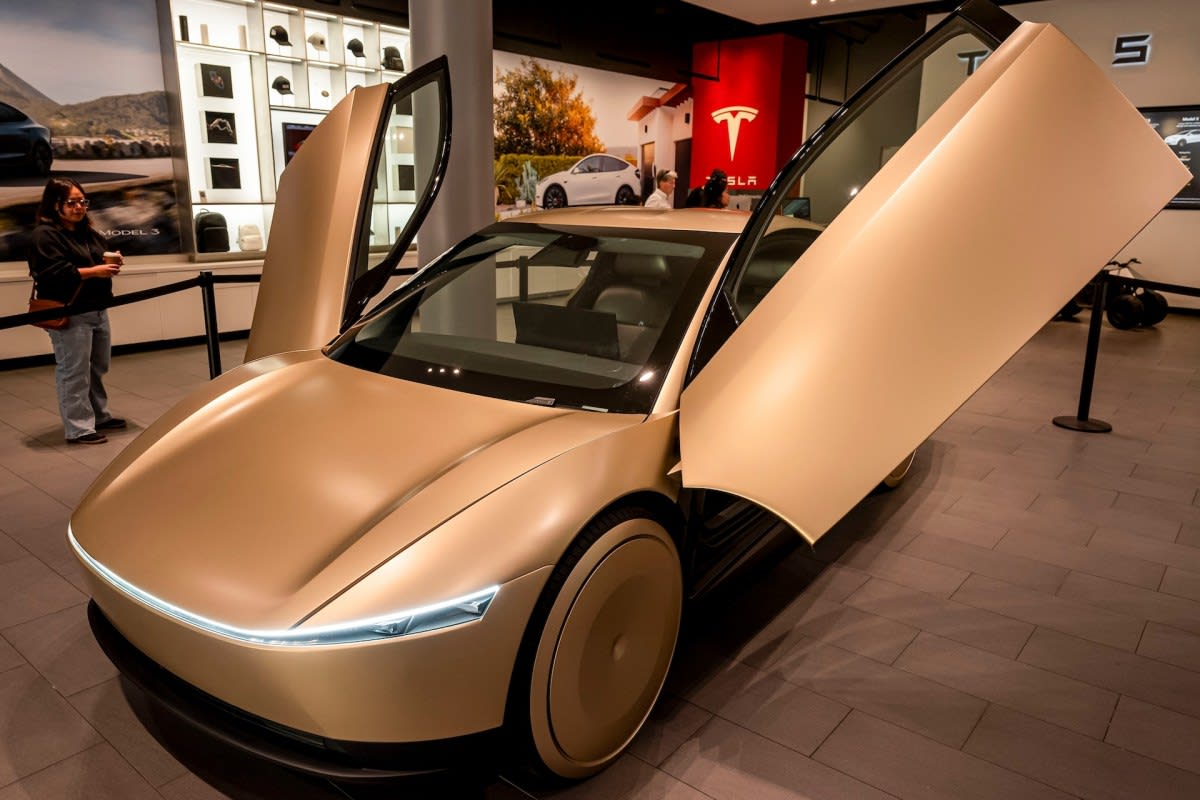
Tesla has secured $30 billion in new credit facilities from major banks to fund the scaling of its Cybercab, Optimus robot, and Semi projects. Despite current profitability challenges and slowing growth, the company maintains a strong cash position and does not intend to utilize these loans in the current year.
Tesla Secures $30 Billion Credit Facility to Drive Future Innovation
Tesla has officially secured $30 billion in new credit lines, a strategic move aimed at providing a financial safety net as the company pivots toward its next generation of products. The agreement includes a $20 billion three-year delayed-draw term loan from Citibank, an $8 billion five-year revolving credit facility from Wells Fargo, and an additional $2 billion 364-day revolving facility. This capital infusion is explicitly earmarked for the development and scaling of the Cybercab robotaxi, the Optimus humanoid robot, and the Tesla Semi, signaling a massive shift in the company's long-term production roadmap.
Financial Strategy Amidst Market Challenges
This influx of credit arrives at a critical juncture for Tesla. After years of rapid, consistent growth, the company faced a significant slowdown in 2024, recording a 1% decline in growth compared to the 38% increase seen in the prior year. The company’s profitability has been under pressure, with recent quarterly reports showing thin margins and a reliance on one-time items to maintain net gains. By securing these credit lines now, Tesla is essentially hedging against potential future volatility while ensuring that its ambitious R&D programs remain funded regardless of immediate operational cash flow.
Capital Expenditure and Liquidity
Despite the scale of the new debt facilities, Tesla has indicated in regulatory filings that it does not intend to draw on these funds within the current year. This is largely due to the company's robust balance sheet, which includes over $40 billion in cash and investments against roughly $9 billion in existing debt. Furthermore, Tesla has already committed to at least $25 billion in capital expenditures for 2026, demonstrating that the company remains in an aggressive investment phase despite the cooling of its historical growth trajectory.
The Shift Toward Robotics and Autonomous Transport
The pivot toward the Cybercab and Optimus represents a fundamental evolution in Tesla’s business model. Historically, the company’s valuation was tethered to its ability to scale electric vehicle sales at a rapid rate. Now, the company is betting that its future value lies in autonomous transport and robotics. The decision to secure $30 billion in credit reinforces the capital-intensive nature of these new ventures, which require significant upfront investment in AI, manufacturing infrastructure, and supply chain logistics before they can become profit-generating assets.
Broader Implications and Future Outlook
This move by Tesla highlights the tension between legacy growth and future innovation. While the company has transitioned from a period of near-infinite demand and explosive revenue growth to a more mature, volatile phase, it is leveraging its current liquidity to build a moat around its future technologies. As Tesla moves away from the pure-play EV manufacturer model, the success of these new credit-funded projects will be paramount in determining whether the company can return to its high-growth roots or if it will continue to struggle with the complexities of managing lower margins and high-stakes innovation in an increasingly competitive global market.