Who gets to have 'good debt'? A sociologist, theologian, philosopher and other experts weigh in
Source Entity
US Top News and Analysis
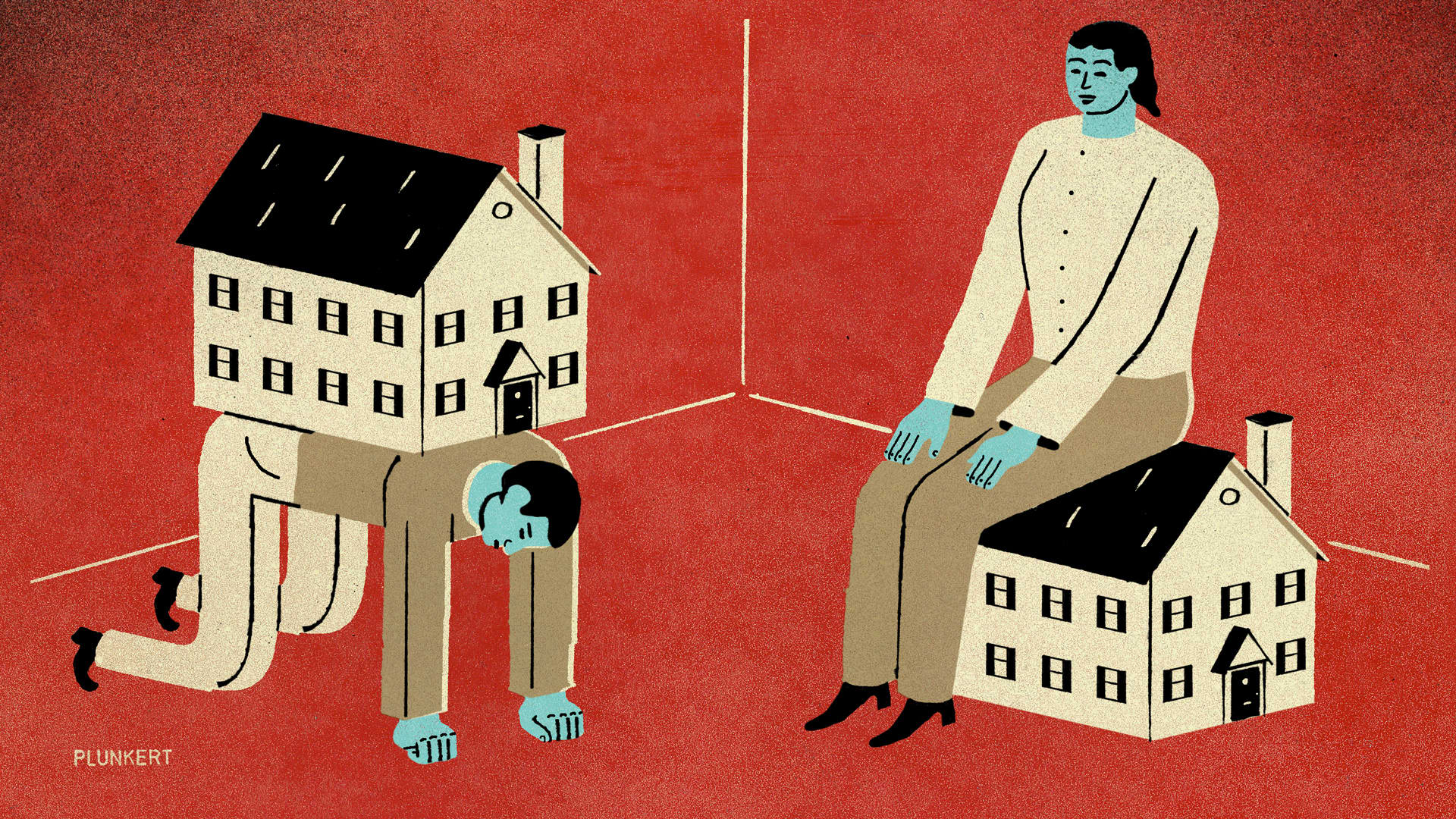
The traditional classification of mortgages and student loans as 'good debt' is being challenged by rising costs and financial instability. Experts suggest that borrowers must look beyond these labels to assess their true ability to manage risk and maintain liquidity.
The Deceptive Lure of 'Good Debt'
For decades, financial planners and society at large have categorized mortgages and student loans as "good debt." The logic is rooted in the idea that these liabilities are investments in assets—like property or future earning potential—that will eventually appreciate. However, this binary classification often masks the underlying reality: any debt, regardless of its label, carries a risk profile that can jeopardize personal financial security if the borrower lacks the necessary liquidity to weather unexpected economic shocks.
The Reality of Homeownership
The case of Bryanna Hambrick highlights the disconnect between the societal expectation of homeownership and the financial reality of maintaining a property. By purchasing a home in 2022, Hambrick sought to build wealth and control her living situation, yet she found herself immediately vulnerable. Unexpected property tax reassessments and interest rate volatility pushed her monthly payments beyond her initial budget. This scenario demonstrates that a mortgage is not a guaranteed wealth-builder; when repairs and taxes consume all available savings, the "good debt" of a home becomes a source of extreme financial stress, forcing the owner to live paycheck to paycheck.
Historical Context: From Execution to Industrialization
Humanity’s relationship with debt has always been fraught with moral and social implications. Historically, the consequences of default were severe, ranging from execution in ancient Rome to debtors' prisons in early America. By the 1920s, however, the cultural narrative shifted as industrial America began to view credit as a vital tool for consuming new technologies. This transition normalized debt as a mechanism for progress, but it also obscured the inherent risks that remain constant regardless of the era. Understanding this history reveals that the label of "good debt" is a modern construct designed to encourage participation in the economy, not necessarily to ensure individual financial safety.
The Rising Burden of Education Costs
Student loans, once considered a reliable pathway to a higher salary, have also undergone a transformation. Stephanie Thomas’s experience—where she successfully managed $20,000 in debt decades ago—contrasts sharply with the modern landscape. Today, the exponential rise in education costs has made the "good debt" of a degree far more difficult to manage. For families like the Thomases, the strategy has shifted from relying on loans to aggressive saving and cost-cutting, acknowledging that the return on investment for a degree is no longer guaranteed by the simple act of taking out a loan.
Assessing Risk Over Labels
Ultimately, the distinction between "good" and "bad" debt is a dangerous oversimplification. Borrowers should instead focus on their "margin of safety." A financial product is only as "good" as the borrower's ability to service that debt during a period of income loss or emergency. As we move forward, financial literacy must move away from endorsing specific types of debt and toward a more rigorous analysis of household cash flow, risk tolerance, and the genuine cost of servicing long-term financial obligations.