TSMC chip capacity is ‘fierce’ battleground for AI customers, amid record quarter
Source Entity
US Top News and Analysis
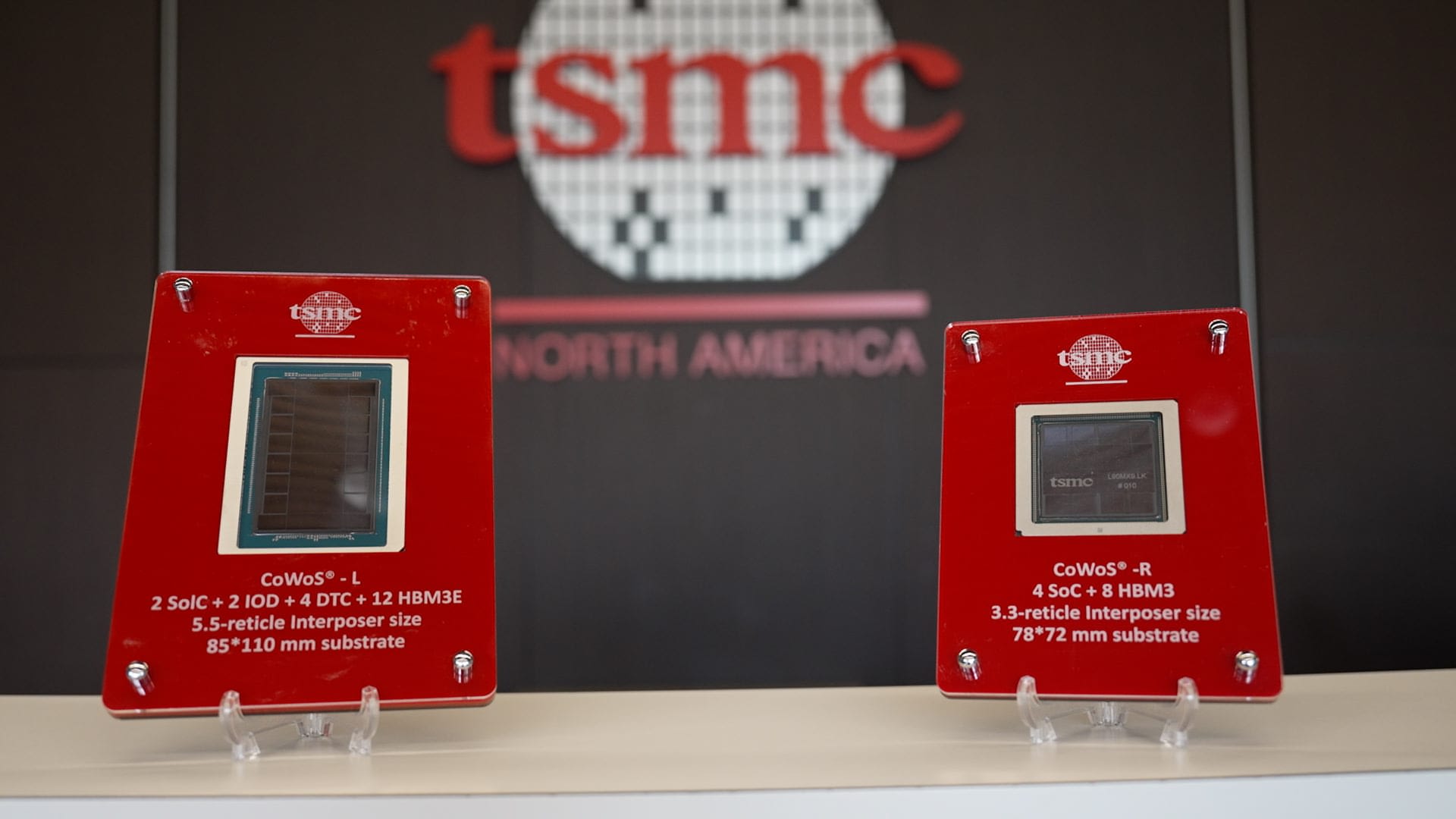
TSMC has reported a record-breaking third quarter with a 68.7% surge in net profit, driven by insatiable global demand for AI chips. Despite this success, the foundry faces intense supply constraints as tech giants like Nvidia and Apple compete for limited manufacturing capacity.
TSMC's Record-Breaking Quarter: A Testament to the AI Era
Taiwan Semiconductor Manufacturing Co. (TSMC) has solidified its position as the bedrock of the modern digital economy, reporting a historic third-quarter net profit of NT$763.1 billion. This achievement, which represents a 68.7% increase compared to the previous year, marks the sixth consecutive quarter of record-breaking financial performance. These results comfortably exceeded market expectations, underscoring the company's unrivaled dominance in the semiconductor foundry market and its central role in the ongoing artificial intelligence revolution.
The AI Engine Driving Growth
The primary catalyst for this unprecedented growth is the unrelenting global demand for advanced semiconductors required to power AI infrastructure. TSMC serves as the exclusive manufacturing partner for the world’s most sophisticated technology firms, including Nvidia, Apple, Broadcom, and AMD. As these corporations race to build out data centers and develop large language models, they have become increasingly dependent on TSMC’s cutting-edge fabrication processes. The sheer volume of orders from these giants has created a supply-demand imbalance that shows no immediate signs of easing.
The 'Fierce' Battle for Foundry Capacity
Despite TSMC's massive scale—having produced over 17 million 12-inch equivalent wafers last year—the company is struggling to keep pace with customer requirements. This has transformed TSMC’s production lines into a fiercely contested battleground. Industry analysts, including Jordan Klein of Mizuho Securities, have characterized the current environment as a high-stakes competition for supply chain leverage. Because TSMC produces the vast majority of the world's most advanced chips, any limitation in their capacity acts as a bottleneck for the entire global tech industry.
Financial Outperformance and Market Sentiment
TSMC’s financial results demonstrate a clear disconnect between broader macroeconomic uncertainties and the AI-specific chip sector. By outperforming LSEG SmartEstimates, which prioritize the most accurate historical forecasting, TSMC has signaled that the AI boom is not merely hype but a capital-intensive reality. With revenue reaching NT$1.49 trillion—surpassing the expected NT$1.47 trillion—the company has proven that its pricing power remains robust even as it scales its operations to meet overwhelming demand.
Future Implications and Industry Risks
Looking ahead, the primary challenge for TSMC is not demand generation, but rather capacity expansion. The company’s inability to manufacture chips as quickly as its customers desire poses a potential risk to the growth trajectories of the entire tech sector. As Nvidia and other chip designers continue to push the boundaries of silicon performance, the pressure on TSMC to invest in new fabrication facilities and advanced packaging technologies will only intensify. The coming quarters will likely be defined by how effectively TSMC can navigate these supply constraints while maintaining its technological lead.
Conclusion
TSMC’s third-quarter performance serves as a definitive indicator of the current state of the semiconductor industry. While the financial success is undeniable, the underlying narrative is one of extreme demand pressure. As the world continues to integrate AI into every facet of business and consumer technology, TSMC remains the essential gatekeeper, with its future growth inextricably linked to its ability to manage the global appetite for high-performance computing power.