Poetry sales are booming, so why do we keep calling it dead? Tishani Doshi explains
Source Entity
The Indian Express
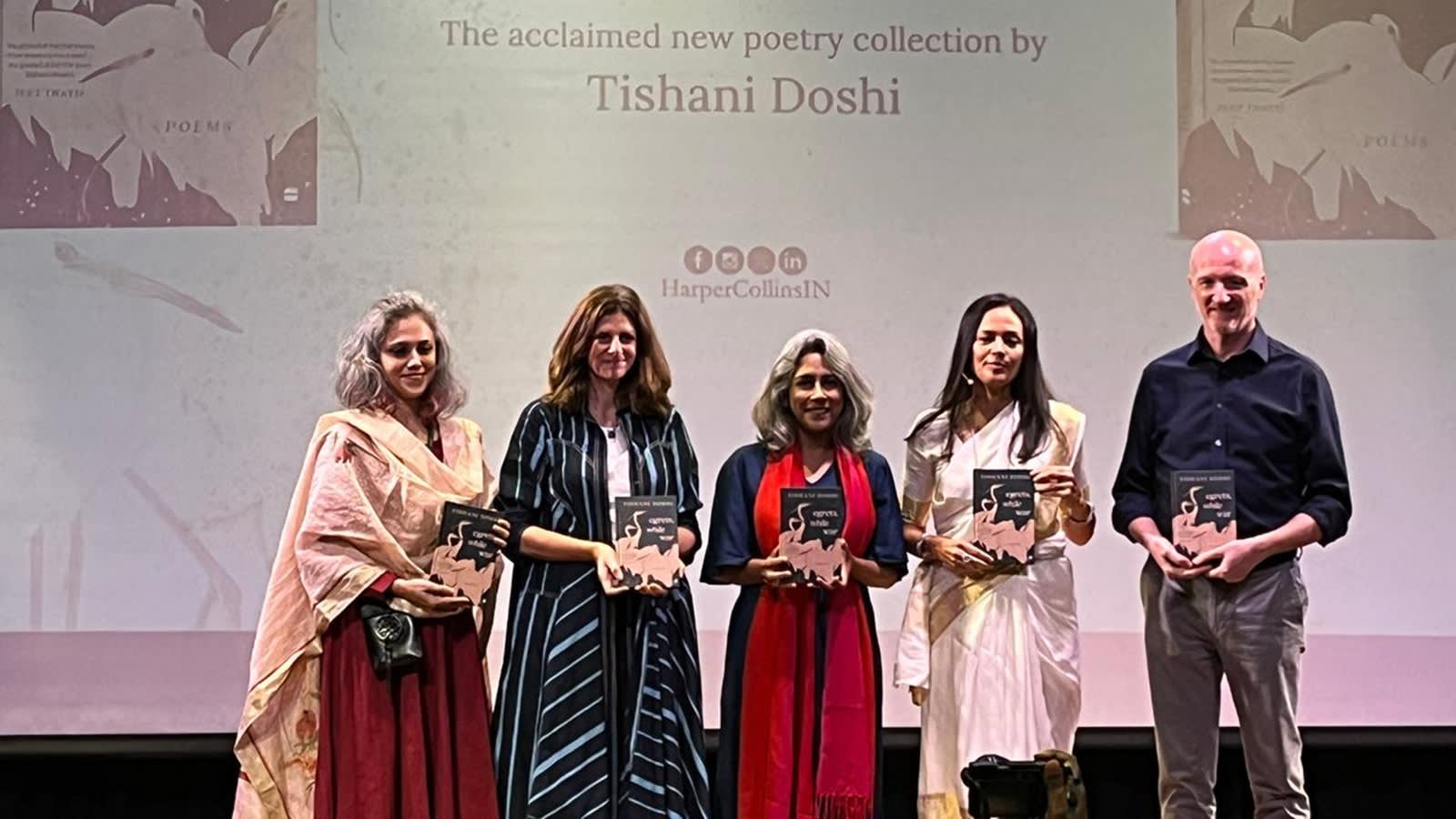
Poet Tishani Doshi argues that poetry remains essential to the human experience despite recurring claims of the genre's decline. Her insights, shared during a discussion on her latest anthology, highlight how verse serves as a vital tool during life's most significant transitions.
The Resilience of Verse: Why Poetry Endures
For decades, literary critics and cultural commentators have periodically signaled the 'death' of poetry. This narrative suggests that in an era dominated by rapid information consumption and prose-heavy media, the deliberate, often complex nature of verse has become obsolete. However, as poet Tishani Doshi recently articulated in a conversation with novelist Anuradha Roy, this perspective overlooks the fundamental human necessity for poetic expression. Despite the recurring obituaries written for the form, poetry continues to thrive precisely because it offers a linguistic sanctuary during life's most profound moments.
The Paradox of Intimidation and Necessity
There exists a curious contradiction regarding the status of poetry in contemporary society. It is frequently categorized as an intimidating, obscure, or even elitist literary form, often perceived as less 'useful' than the direct accessibility of prose. Yet, Doshi argues that this perceived difficulty is secondary to the emotional utility poetry provides. When ordinary language fails to capture the weight of grief, the intensity of joy, or the complexity of existential transitions, individuals instinctively turn to the rhythmic and metaphorical precision of verse to articulate their experiences.
Poetry as a Companion to Life’s Transitions
Reflecting on her latest anthology, Egrets, While War, Doshi highlighted how poetry serves as a constant companion during the critical milestones of human existence. From the solemnity of death to the collective trauma experienced during the Covid-19 pandemic, and the celebratory nature of births and marriages, poetry provides a framework for processing reality. This underscores the idea that poetry is not merely an academic exercise but a functional tool for navigating the human condition.
Cultural Context and the Modern Reader
The persistence of poetry in the digital age suggests a shift in how readers engage with literature. While traditional publishing models have evolved, the demand for poetry remains robust, driven by a search for deeper meaning in an increasingly fragmented world. Doshi’s observation suggests that as long as humans experience 'transitional moments,' the need for a form of language that transcends the literal will persist, effectively debunking the notion that the medium is fading into irrelevance.
Future Trends and Conclusion
Looking forward, the resurgence of interest in poetry—often amplified by social media platforms and the success of contemporary anthologies—points to a sustained relevance for the genre. As writers like Doshi continue to bridge the gap between complex themes and accessible emotional resonance, the 'death of poetry' narrative becomes increasingly difficult to sustain. Ultimately, poetry survives because it remains the most potent instrument for holding the space between the unspoken and the understood, ensuring its place in the literary future.