Can Trump Really Give Every American $5,000? Key Questions Answered
Source Entity
NDTV News Search Records Found 1000
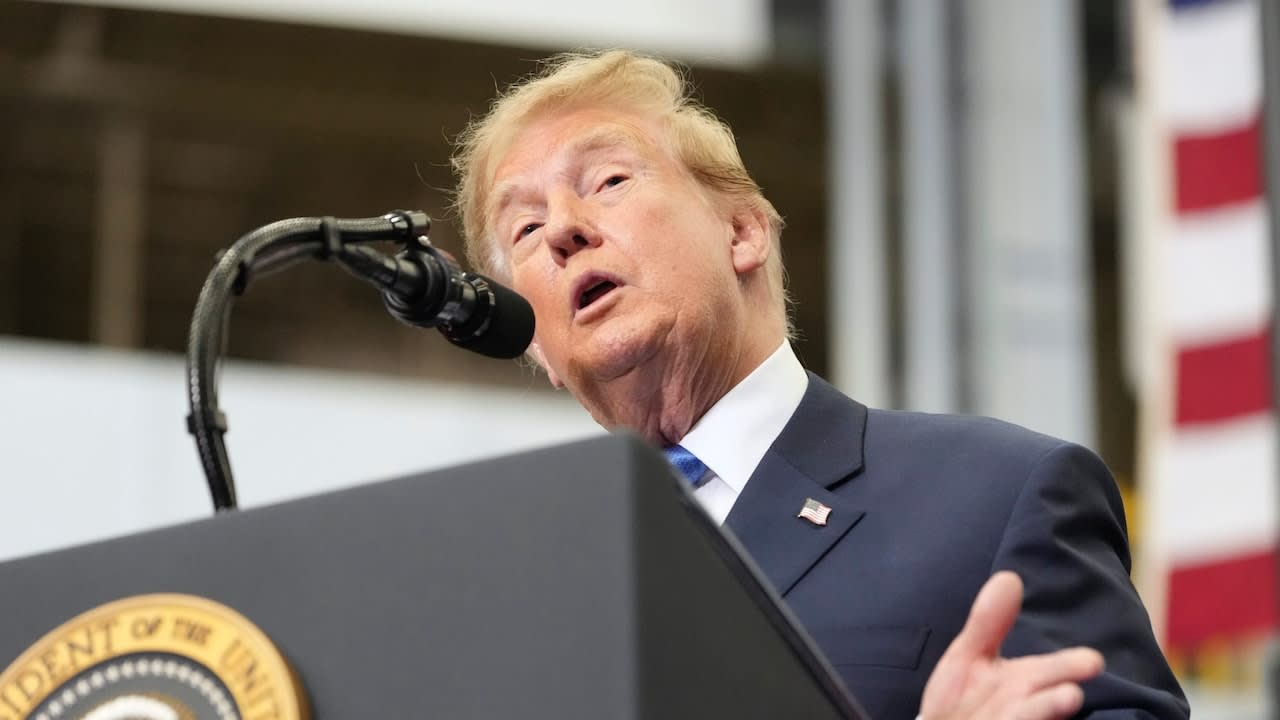
President Trump's campaign promise to provide $5,000 to every American adult has sparked debate regarding its legality, funding, and implementation. Legal experts note the distinction between a potential bribe and a policy pledge, while critics question the feasibility of Congressional approval and tariff-based funding.
The $5,000 Promise: Analyzing the Feasibility and Legality of a Bold Campaign Pledge
President Donald Trump’s recent campaign promise to provide a $5,000 payment to every American adult, contingent upon a Republican victory, has ignited a firestorm of debate. Announced at a convention in Texas, the proposal has drawn immediate scrutiny from political analysts and legal scholars who are questioning the economic viability, legislative path, and legal standing of such a massive direct cash transfer.
The Legal Tightrope: Bribe vs. Campaign Promise
At the heart of the controversy is the legal definition of bribery in an electoral context. Under U.S. federal law, it is strictly illegal to offer payments intended to influence an individual's vote. However, legal experts like Dr. Joan Mahoney of the University of Southampton suggest that the proposal might skirt these statutes if framed as a broad tax-cutting measure. Because the payment would theoretically be available to all citizens regardless of their personal vote, it functions more akin to a traditional campaign pledge rather than a targeted bribe, though its explicit nature is notably unconventional in American political discourse.
Legislative and Economic Hurdles
Beyond the legal framework, the proposal faces a significant hurdle in the form of the U.S. Congress. While President Trump has suggested that he does not believe Congressional approval is necessary to initiate these payments, the reality of the federal budget process typically requires legislative authorization for such massive expenditures. Critics, including many Democrats, have dismissed the offer as an "empty promise," highlighting the absence of a concrete plan for how the administration would distribute the funds or how the government would secure the necessary capital to finance a program of this magnitude.
The Role of Tariffs as a Funding Mechanism
One of the most debated aspects of the plan is the suggestion that tariffs could serve as the primary funding vehicle. Economic analysts are deeply skeptical of whether tariff revenue—which is subject to international trade volatility and economic retaliatory measures—could realistically support such a high-cost endeavor. Furthermore, the proposal includes a stipulation that the money must be spent within the United States, yet there is currently no clear mechanism for how the government could enforce or monitor such a restriction on private personal spending.
Broader Implications for Election Year Rhetoric
This proposal represents a shift in the scale of election-year promises. By tying a direct financial benefit to the outcome of the midterm elections, the administration is attempting to mobilize voters through direct economic incentives. However, this strategy carries political risk; if the proposal is perceived as unattainable or legally dubious by the electorate, it could bolster the narrative of opponents who argue that the plan is fiscally irresponsible and disconnected from the realities of the federal budget.
Future Trends in Political Campaigning
Looking ahead, this event signals a trend where candidates may increasingly lean on direct, populist economic proposals to cut through the noise of traditional policy debates. Whether or not this specific $5,000 promise becomes a cornerstone of fiscal policy or remains a campaign-trail talking point, it highlights the growing tension between executive ambition and the constitutional checks and balances inherent in the U.S. government. Ultimately, the proposal serves as a stress test for the boundaries of campaign finance and executive authority in the modern era.
Multiple Citing Sources
Verification Required?