Trump to address White House Correspondents' Dinner after April shooting scare
Source Entity
Latest News: Todays Latest News Headlines from India & World | Hindustan Times | Hindustan Times
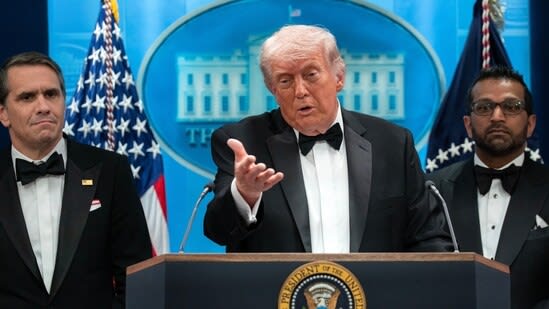
President Trump is addressing the rescheduled White House Correspondents' Dinner at the Waldorf Astoria following a security breach in April. The event marks a return to tradition while emphasizing heightened safety measures and the ongoing tension between the administration and the press.
The WHCA Dinner: A Rescheduled Return to Tradition
President Donald Trump is set to address the White House Correspondents’ Association (WHCA) Dinner this Friday, marking a significant return to a staple of Washington social and political life. This rescheduled event follows a traumatic interruption in April 2026, when an armed individual allegedly attempted to assassinate the President near the venue, forcing the immediate cancellation of the original proceedings. The return to the dinner, now held months later, serves as a symbolic attempt to restore normalcy to the relationship between the executive branch and the press corps.
A Shift in Venue and Security Protocols
The most notable change for this year’s iteration is the departure from the Washington Hilton, which had served as the traditional home for the dinner since 1972. Instead, the event is being hosted at the Waldorf Astoria on Pennsylvania Avenue. This relocation is not merely aesthetic; it is a direct response to the security failures experienced during the April incident. By moving to a smaller, more contained, and highly secure environment, the WHCA and federal law enforcement are prioritizing the safety of the President and the hundreds of media members in attendance.
Balancing Rhetoric and Press Relations
White House Press Secretary Karoline Leavitt has indicated that President Trump’s remarks will be a blend of traditional humor, sharp criticism, and direct references to the turbulent events of the past three months. This address comes at a time when the administration’s relationship with major news organizations remains strained. By appearing before the press following an attempted assassination, the President is navigating a precarious balance: asserting his authority while acknowledging the shared space of the First Amendment, even amidst ongoing media clashes.
The Broader Implications for Journalism
Beyond the political theater, the WHCA Dinner remains a vital fundraising mechanism for journalism scholarships. The event serves as a reminder of the historical importance of the press in the American political ecosystem. Despite the heightened security measures—which include extensive vetting and a controlled environment—the dinner still aims to celebrate the principles of press freedom, even as those principles are tested by a climate of intense polarization and physical danger.
Future Trends in Political Events
The April security breach has fundamentally altered how the federal government approaches public-facing events. The transition to venues like the Waldorf Astoria suggests a future where high-profile political gatherings will likely favor security-conscious architecture over the traditional, open-ballroom models of the past. As we look forward, the success of this rescheduled dinner will be measured not just by the content of the speeches, but by the ability of the Secret Service and local authorities to maintain order in an era of heightened domestic threats.
Conclusion
The rescheduled White House Correspondents’ Dinner is more than a social engagement; it is a testament to the resilience of the political process in the face of violence. As President Trump takes the stage, the event will serve as a focal point for the current state of American democracy, reflecting both the friction between the administration and the media and the shared necessity of maintaining public discourse in a secure environment.
Verification Required?