Still waiting for the free $1,000 to hit your child’s ‘Trump account’? Here’s what to know.
Source Entity
Andrew Keshner
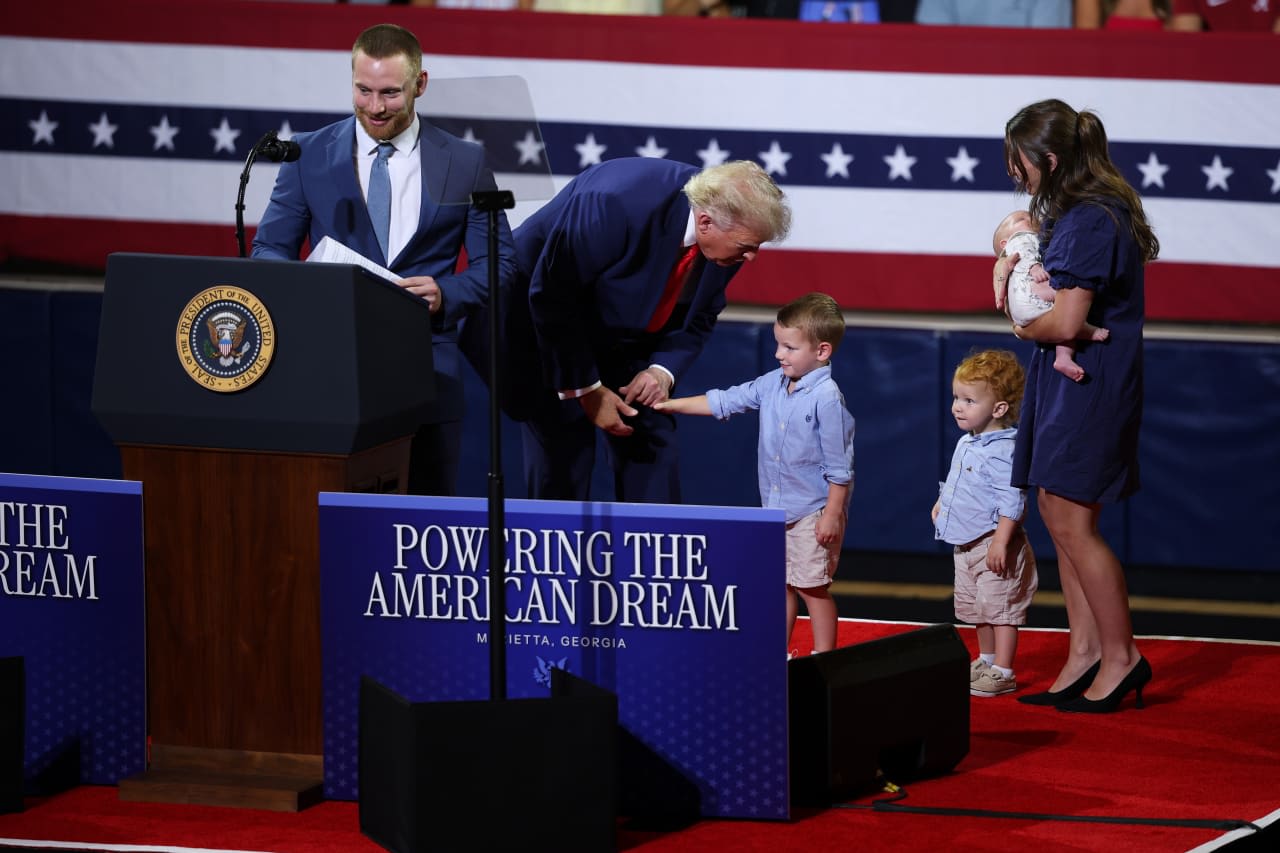
The U.S. Treasury Department has confirmed that $1.5 billion has been deposited into 'Trump accounts' for children since their recent launch. Despite the influx of funds, many families are reporting delays in receiving their specific payments.
Understanding the 'Trump Account' Disbursement Process
Recent reports from the U.S. Treasury Department confirm that approximately $1.5 billion has been successfully processed and deposited into newly established accounts for children, colloquially referred to as 'Trump accounts.' This initiative, which began earlier this month, represents a significant logistical undertaking by federal agencies tasked with distributing these funds to eligible households across the nation. While the total volume of disbursed capital is substantial, the sheer scale of the program has naturally led to questions regarding the timeline and eligibility criteria for those who have yet to see these specific deposits reflected in their accounts.
Analyzing the Treasury Department's Role
The involvement of the Treasury Department in managing these disbursements highlights the administrative complexity inherent in large-scale government financial aid programs. When a program of this magnitude is launched, the Treasury must coordinate with various banking institutions and data systems to verify account information and ensure funds are securely transferred. The fact that $1.5 billion has already moved through these channels is an indicator that the infrastructure is functional, even if individual delivery speeds vary due to banking processing times and verification protocols.
Addressing Public Concerns and Delays
Many families have expressed frustration over the perceived delay in receiving the promised $1,000 per child. In the context of government-led financial distributions, such delays are often attributed to the verification of identity, the accuracy of banking information on file, and the batch-processing methods used by financial institutions. It is essential for recipients to understand that while the program is active, the transition from federal authorization to individual bank account availability is rarely instantaneous, especially when dealing with millions of unique household profiles.
Broader Economic and Political Implications
The introduction of these accounts serves as a focal point in current fiscal discourse, reflecting a broader effort to provide direct economic support to families. By injecting $1.5 billion into the economy in such a short window, the program aims to provide immediate liquidity to households. This strategy is reflective of modern fiscal policies that prioritize direct-to-consumer transfers to stimulate local demand and mitigate the impact of rising costs of living on families with children.
Future Trends in Government Disbursement
Looking ahead, the success of this disbursement program will likely serve as a case study for future federal aid initiatives. The Treasury Department's ability to scale this distribution will influence how future programs are designed, particularly regarding the use of digital banking integration and automated verification systems. As the program continues to roll out, monitoring the speed of these deposits will be critical for assessing the overall efficacy of the current administrative approach to economic support.
Verification Required?