Trump mistakes Brazil for India, says 125 million voted today in 'India's Presidential Election'
Source Entity
Latest News: Todays Latest News Headlines from India & World | Hindustan Times | Hindustan Times
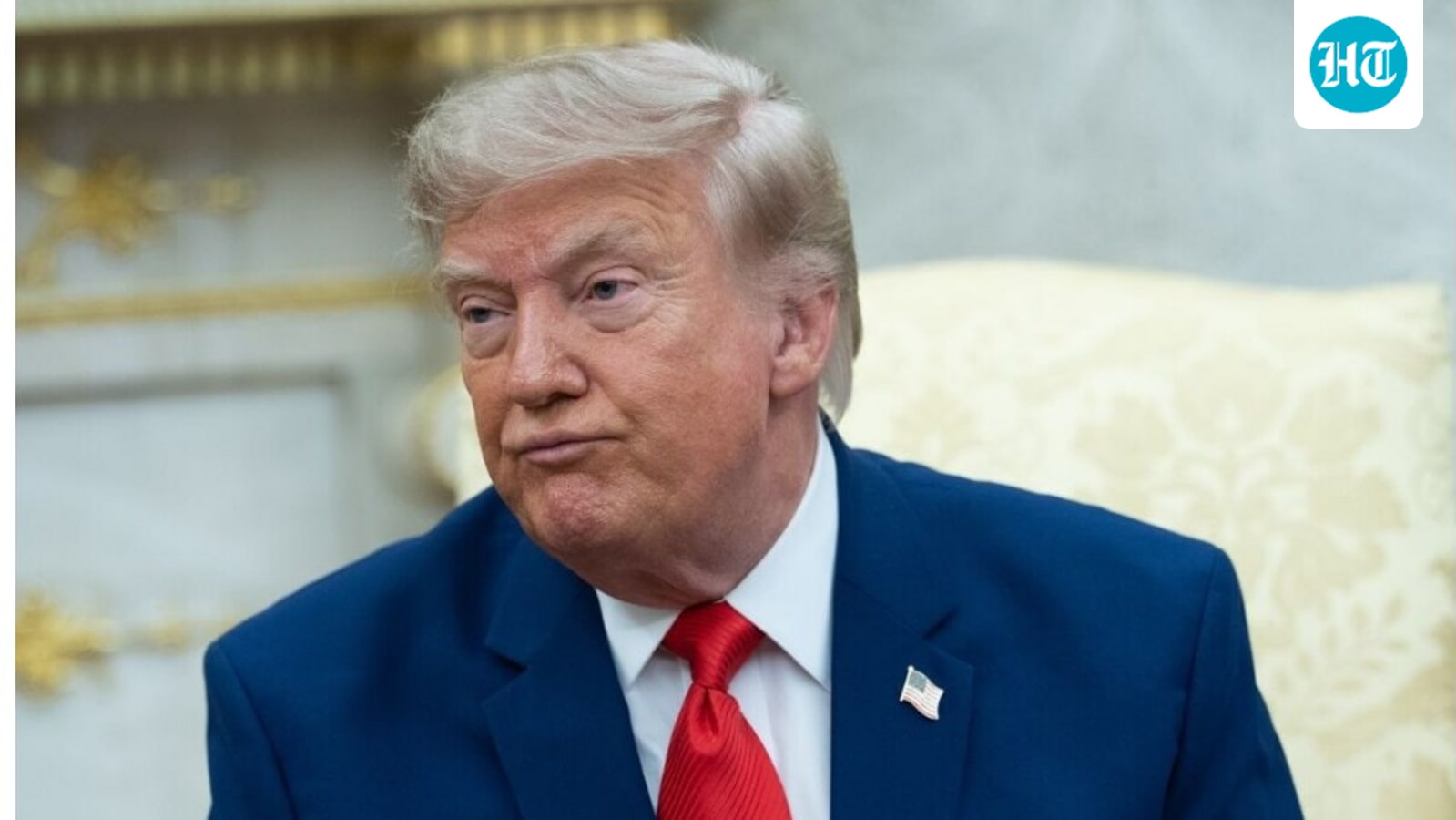
Former President Donald Trump mistakenly claimed 125 million people voted in India's presidential election, confusing it with Brazil's recent electoral event. He used this inaccurate comparison to criticize the American voting system's speed and integrity.
The Geography of Misinformation: Analyzing the Trump Gaffe
A Case of Mistaken Identity
In a recent post on the social media platform Truth Social, former U.S. President Donald Trump claimed that 125 million people had participated in the "first round of India’s Presidential Election." This statement, which quickly drew widespread attention, was factually inaccurate as the event in question was actually the first round of Brazil’s presidential election, held on Sunday, October 4. The confusion of two of the world's largest democracies highlights a significant disconnect in the dissemination of international political information.
The Context of the Brazilian Election
To understand the magnitude of the error, one must look at the actual electoral event that transpired. Brazil, a nation of over 200 million people, did indeed see approximately 125 million citizens cast their ballots in a highly anticipated presidential contest. The efficiency of the Brazilian electronic voting system allowed for results to be tabulated and reported shortly after polls closed. It is this specific detail—the speed of the results—that served as the catalyst for the former president’s subsequent commentary.
Weaponizing Electoral Comparisons
Donald Trump utilized this perceived "success" in Brazil to launch a renewed critique of the American electoral process. By contrasting the swift tallying of Brazilian votes with the slower reporting timelines in major U.S. cities like Detroit and Philadelphia, the former president sought to cast doubt on the integrity of domestic elections. He explicitly labeled the American voting system as "CORRUPT," signing off his post as "President DJT," a move intended to bolster his long-standing narrative regarding electoral fraud and administrative inefficiency.
The Role of Social Media in Political Discourse
This incident serves as a primary example of how social media platforms, specifically Truth Social, function as echo chambers for high-profile political figures. By bypassing traditional fact-checking mechanisms, the former president was able to broadcast a claim that conflated two distinct global powers—India and Brazil—to serve a domestic political agenda. The rapid spread of this misinformation underscores the vulnerability of digital discourse to errors that prioritize political messaging over geographical and factual accuracy.
Public Reaction and Digital Accountability
Following the post, the reaction was swift and critical. Social media users and political observers were quick to point out the blatant confusion between the Indian and Brazilian elections. This backlash highlights an increasing expectation for political figures to maintain a baseline of factual accuracy, even when using international examples to support local arguments. The incident has since become a focal point for critics who argue that the former president’s rhetoric is often disconnected from objective reality.
Broader Implications for Political Narratives
Ultimately, this event illustrates the ongoing challenge of maintaining integrity in political debate. When global events are misidentified or misattributed, it complicates the public's ability to engage in informed discourse. As the former president continues to use his platform to question the legitimacy of the American electoral system, incidents like this suggest that the strategy of using international comparisons—whether accurate or not—will remain a core component of his political communication strategy moving forward.
Verification Required?