Trump's 'guardian' fee: How much would supertanker have to pay to cross Hormuz
Source Entity
TOI BUSINESS DESK
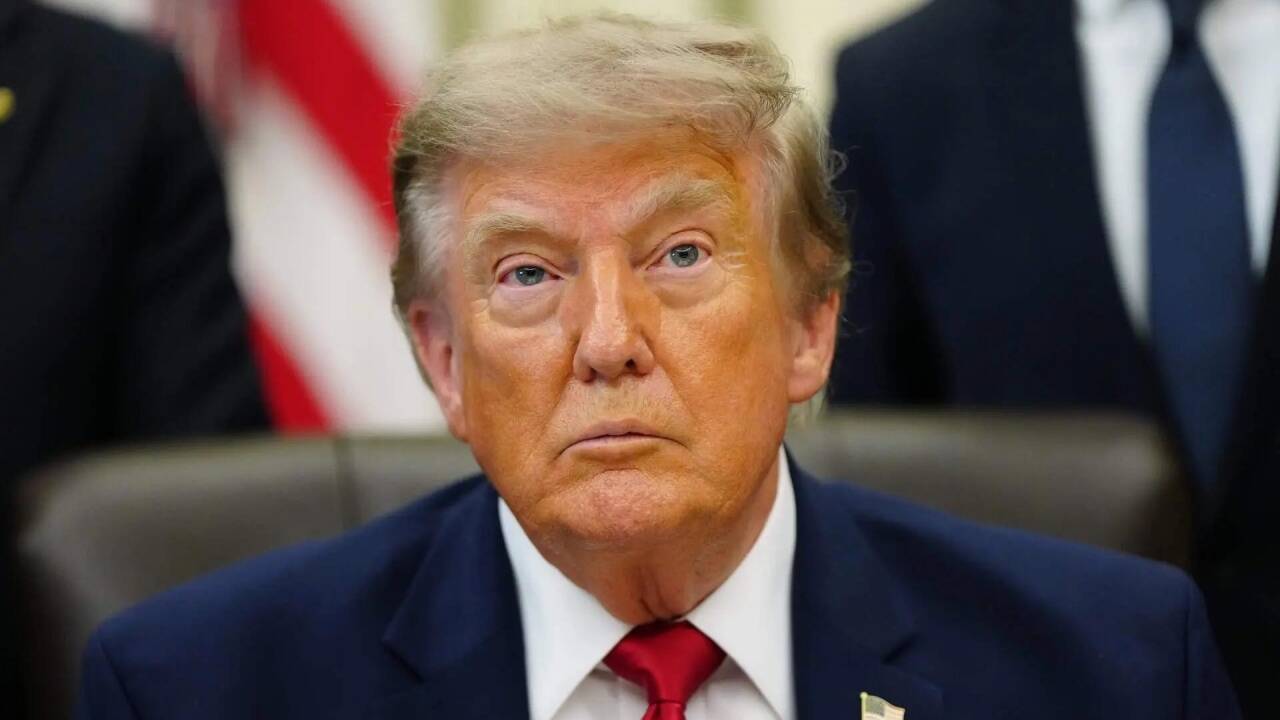
An analysis of the proposed 'guardian fee' for supertankers crossing the Strait of Hormuz, contrasting the nature of natural international waterways with man-made canals and exploring the geopolitical and economic ramifications.
The 'Guardian Fee' Proposal: Redefining Maritime Transit in the Strait of Hormuz
The proposal of a "guardian fee" for vessels traversing the Strait of Hormuz represents a provocative shift in the traditional understanding of maritime law and international trade. Unlike the Suez or Panama Canals, which are man-made infrastructure projects owned and operated by sovereign states that levy tolls for maintenance and administration, the Strait of Hormuz is a natural waterway. Historically, natural straits—including the Strait of Malacca and the Strait of Gibraltar—have remained free of transit fees to ensure the fluid movement of global commerce. The suggestion to monetize the security provided by a naval presence (the "guardian" aspect) challenges the long-standing status quo of the high seas.
The Economic Friction of Natural vs. Artificial Waterways
To understand the gravity of this proposal, one must distinguish between sovereign infrastructure and international straits. Man-made canals are essentially bridges of water that require constant dredging and mechanical upkeep, justifying the substantial tolls charged by Egypt and Panama. In contrast, the Strait of Hormuz is a geographical feature. Introducing a fee here would essentially be a charge for security rather than infrastructure. For supertankers carrying millions of barrels of crude oil, such a fee could introduce significant volatility into global energy markets. Because these costs are rarely absorbed by the shipping companies, they would likely be passed down the supply chain, potentially inflating the global price of oil and affecting inflation rates worldwide.
Legal Hurdles and the UNCLOS Framework
From a legal perspective, the implementation of a transit fee in a natural strait would likely collide with the United Nations Convention on the Law of the Sea (UNCLOS). The principle of "transit passage" allows ships and aircraft the right to continuous and expeditious transit through straits used for international navigation. While the United States has not ratified UNCLOS, it generally recognizes the right of transit passage as a matter of customary international law. Attempting to levy a fee could be viewed as an illegal restriction on this passage, potentially triggering diplomatic crises and legal challenges from major trading nations that rely on the strait's openness.
Geopolitical Implications and Regional Stability
The Strait of Hormuz is one of the world's most volatile chokepoints, bordered by Iran and Oman. Any attempt by an external power to impose a "guardian fee" could be perceived by regional actors, particularly Iran, as an act of hegemony or an illegal occupation of international waters. This could lead to a retaliatory escalation, where regional powers might attempt to impose their own restrictions or fees, or worse, threaten the physical security of the tankers. The "guardian" role, intended to provide safety, could paradoxically become the catalyst for the very instability it seeks to mitigate, turning a commercial waterway into a contested political zone.
Future Trends in Maritime Security Monetization
Looking forward, this proposal signals a potential trend toward the "securitization" of trade routes. If the precedent is set that naval protection of natural waterways can be monetized, we may see similar demands in the South China Sea or the Strait of Malacca. This would mark a transition from a global commons model to a "protection racket" model of maritime security, where the safety of global trade is contingent upon payment to the dominant naval power in the region. Such a shift would fundamentally alter the economics of shipping and the geopolitical balance of power.
Conclusion
In summary, while the concept of a "guardian fee" aims to offset the costs of maintaining naval security in a high-risk zone, it ignores the fundamental distinction between natural straits and man-made canals. The proposal risks destabilizing the legal framework of international waters, inflating global energy costs, and provoking regional conflicts. The Strait of Hormuz remains a critical artery for the global economy; treating it as a toll road could have repercussions far beyond the immediate financial gain, potentially compromising the very stability the fee is intended to support.