Trump's Helicopter May Have Come Too Close To Plane: Report
Source Entity
NDTV News Search Records Found 1000
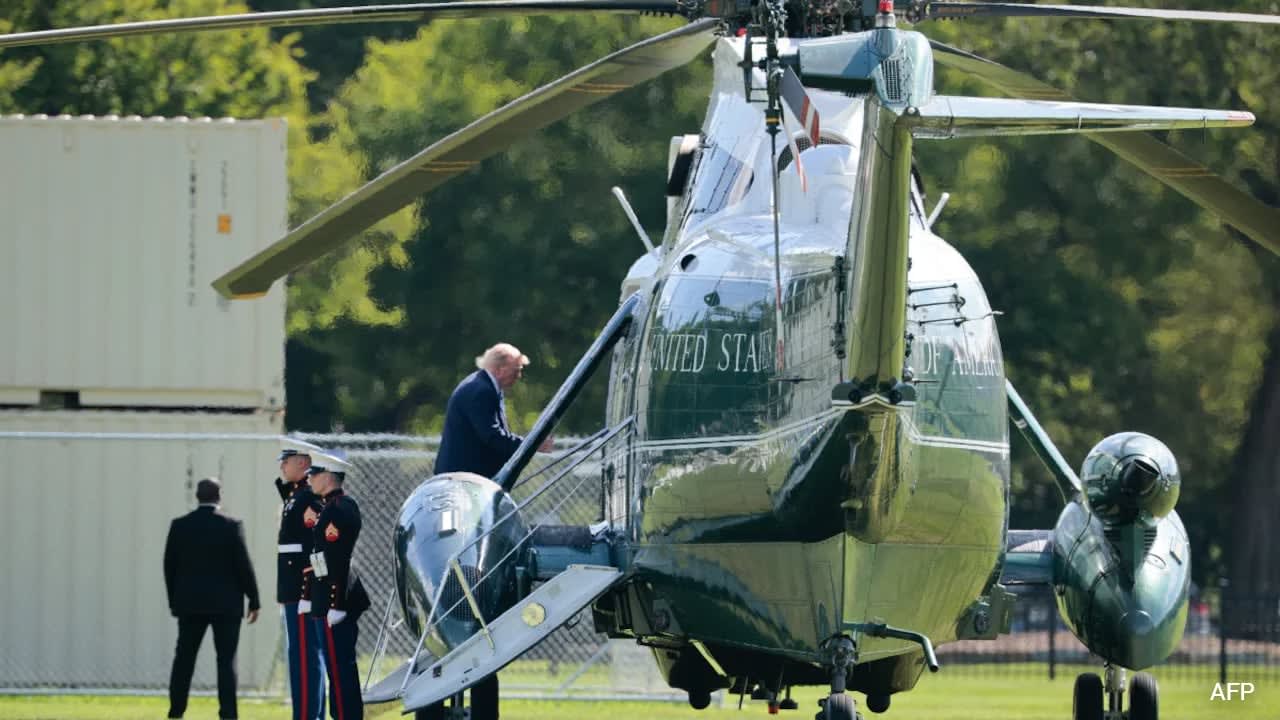
US authorities are investigating a mid-air 'loss of separation' incident involving Marine One and a commercial jet near Washington. The White House has officially stated that President Trump was never in danger during the flight.
Investigation Launched into Marine One Near-Miss
US authorities, including the National Transportation Safety Board (NTSB), have initiated a formal investigation following reports of a significant mid-air safety incident involving Marine One, the presidential helicopter. The incident, characterized as a 'loss of separation,' occurred when the helicopter, which was transporting President Donald Trump to Andrews Air Force Base, reportedly flew within less than one mile of a commercial passenger jet over the Washington D.C. airspace.
The Role of Communication Failures
According to reports from the New York Times, the primary factor contributing to this dangerous proximity appears to be garbled communication between the flight crew and air traffic controllers. In the complex, highly regulated airspace surrounding the nation's capital, clear and precise communication is the cornerstone of aviation safety. When these channels are compromised, the risk of technical or human error increases, necessitating immediate scrutiny of standard operating procedures.
Official White House Stance
Despite the gravity of a 'loss of separation' event, the White House issued a statement on Wednesday explicitly asserting that President Trump was never in danger. This official response serves to manage public perception and mitigate concerns regarding the safety protocols surrounding presidential travel. By emphasizing the security of the Commander-in-Chief, the administration seeks to maintain confidence in the military transport operations that facilitate the president’s movements.
Implications for Aviation Safety Standards
This incident highlights the inherent vulnerabilities in managing dense airspace where specialized government aircraft interact with commercial traffic. The NTSB investigation will likely focus on whether the breakdown was isolated to equipment issues or if there were systemic failures in the coordination protocols between military aviation units and civilian air traffic control. These investigations are critical for refining safety buffers and ensuring that such proximity events do not recur.
Broader Context of Presidential Security
Marine One operations are subject to some of the most rigorous security and safety protocols in the world. While the 'loss of separation' incident is undeniably serious, it highlights the constant pressure of coordinating high-security presidential movements within busy commercial flight paths. As the NTSB continues its probe, the outcome will likely influence future communication standards and traffic management strategies for VIP air travel.
Conclusion and Future Outlook
The investigation into the incident near Andrews Air Force Base remains ongoing. While the White House maintains that the president was safe, the NTSB's findings will be pivotal in determining the exact cause of the communication failure. As the aviation industry continues to modernize, this event serves as a stark reminder of the importance of maintaining clear, uninterrupted communication channels in even the most secure flight environments.
Verification Required?