Trump's accounts traded Nvidia shares 44 times this year, records show
Source Entity
BBC News
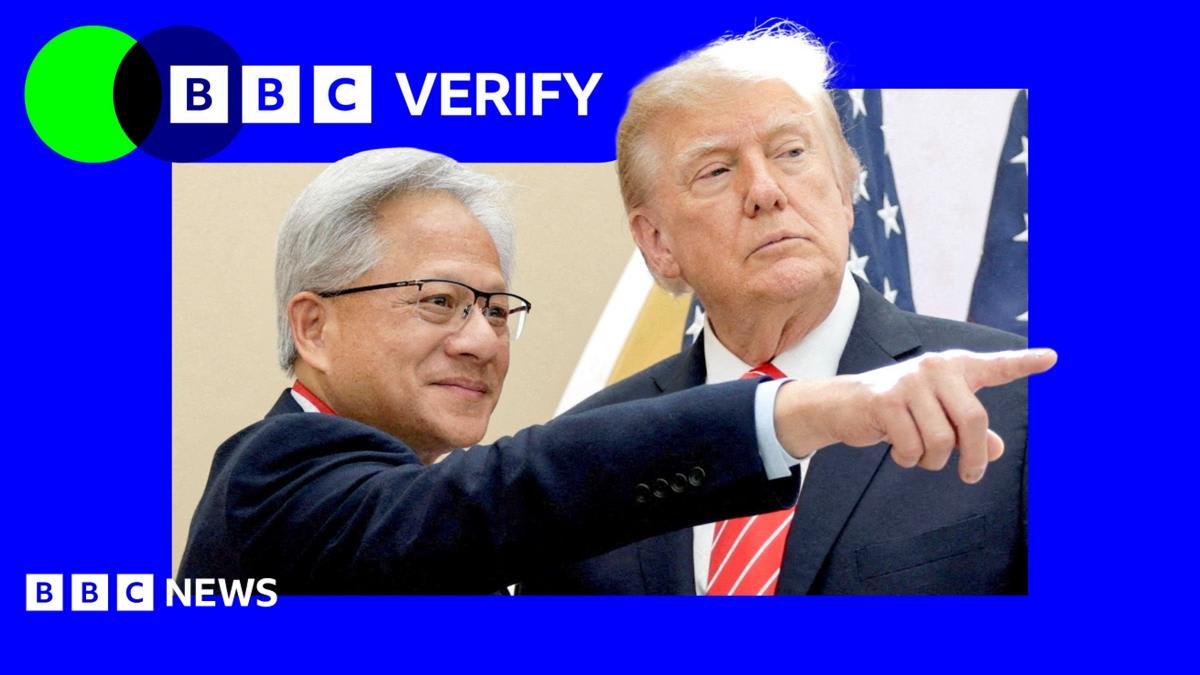
Financial disclosures reveal President Trump's portfolio traded Nvidia shares 44 times this year, totaling millions in value. This activity has drawn scrutiny from late-night comedians regarding his recent intervention in the company's leadership crisis.
The Intersection of Executive Power and Portfolio Management
A recent review of financial disclosures filed with the Office of Government Ethics has brought to light the significant, frequent trading of Nvidia shares within President Donald Trump’s investment portfolios. Throughout the first nine months of 2025, these portfolios executed 44 separate transactions involving the chipmaker, totaling millions of dollars in purchases and sales. This level of activity, while legal under current financial disclosure frameworks, highlights the complex interplay between a sitting president's personal wealth and the massive influence of his administrative decisions on the global stock market.
The Scale of Investment
The disclosed figures offer a window into the magnitude of these holdings. Between January and September 2025, the portfolios acquired between $5.2 million and $17 million in Nvidia stock, while selling between $4.4 million and $12 million. By the end of 2025, the portfolios held a significant stake valued between $12.5 million and $58 million. Because these disclosures utilize broad ranges rather than exact amounts, the precise financial exposure remains opaque, yet the sheer volume of 44 transactions underscores a highly active management strategy in one of the world's most critical technology sectors.
Leadership Disputes and Presidential Intervention
Beyond the raw financial data, the situation has been complicated by President Trump’s recent involvement in the leadership structure of Nvidia. Following the removal of CEO Jensen Huang—an ouster prompted by allegations of personal misconduct and security concerns involving a suspected Chinese intelligence asset—the President reportedly intervened to facilitate Huang's return to the company. This move has sparked intense debate regarding the motivations behind such high-level administrative involvement in private corporate governance.
Media Scrutiny and Public Perception
Late-night television hosts, including Jimmy Kimmel and Seth Meyers, have capitalized on the perceived conflict of interest. Their broadcasts have highlighted the irony of a presidential intervention occurring simultaneously with heavy personal investment in the company. Meyers, in particular, raised questions about whether the administration’s policy or personnel-related actions regarding Nvidia might be influenced by the President's personal financial stakes, rather than strictly by national security or economic stability considerations.
The Broader Implications for Governance
The controversy surrounding Nvidia serves as a case study for the risks associated with presidential wealth management. When a leader holds significant assets in a company that is simultaneously subject to federal oversight, trade restrictions, or market-shifting political intervention, the potential for perceived or actual conflicts of interest grows exponentially. While the current disclosures provide transparency into the transactions, they do not alleviate the public concern regarding the alignment of private profit motives and public duty.
Future Trends in Financial Ethics
Looking forward, this event is likely to fuel calls for stricter divestment requirements or blind trust mandates for sitting presidents. As the tech industry continues to play an outsized role in national security—particularly concerning semiconductor supply chains—the expectation for a firewall between the Oval Office and individual stock portfolios will likely intensify. The Nvidia case demonstrates that in the modern era, financial transparency is no longer just a regulatory formality, but a central component of political accountability.