Trump pressures Netanyahu to pull Israeli forces out of Syria, Lebanon
Source Entity
TOI WORLD DESK
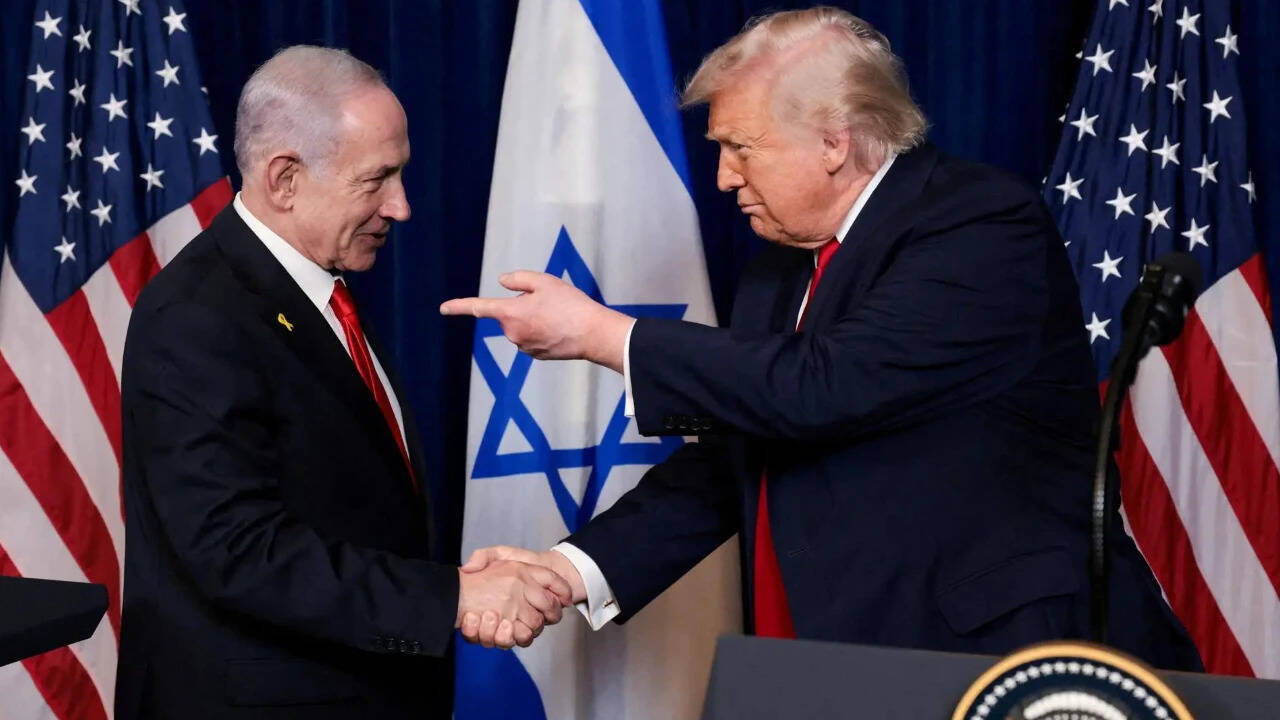
President Trump is pressuring Prime Minister Netanyahu to withdraw Israeli military forces from Syria and Lebanon, proposing a mutual security arrangement. Netanyahu has resisted the call, citing critical border security needs amidst rising regional tensions, while mediators attempt to find a resolution in Rome.
Diplomatic Friction: The US-Israel Standoff over Syria and Lebanon
The current geopolitical tension between the United States and Israel has reached a critical juncture as President Trump exerts significant pressure on Prime Minister Benjamin Netanyahu to retract Israeli military presence from Syria and Lebanon. This request represents a strategic pivot in US foreign policy, attempting to transition from a posture of unconditional military support to one of mediated regional stability. The friction highlights a fundamental disagreement between the US administration's desire for a diplomatic exit strategy and Israel's perception of immediate existential threats along its northern and eastern borders.
The US Strategy: Seeking a Mutual Security Arrangement
President Trump's advocacy for a "mutual security arrangement" between Israel and Syria suggests a desire to institutionalize peace through formal agreements rather than relying on military deterrence alone. By pushing for a withdrawal, the US likely aims to reduce the risk of a direct, large-scale conflict that could draw American forces deeper into the Levant. This approach reflects a broader diplomatic trend of seeking bilateral frameworks to manage conflict, attempting to replace active military occupation or incursions with a negotiated security architecture that ensures stability through mutual guarantees.
Netanyahu's Security Imperative
In contrast, Prime Minister Netanyahu remains steadfast in his refusal to withdraw, grounding his position in the doctrine of proactive border security. From the Israeli perspective, the presence of military forces in Syria and Lebanon is not an act of aggression but a necessary buffer against external threats. The Israeli leadership views these regions as primary conduits for proxy warfare and the movement of advanced weaponry. For Netanyahu, any withdrawal without ironclad, verifiable security guarantees would be perceived as a strategic vulnerability, potentially emboldening adversaries in the region.
Escalation in Southern Syria and Lebanon
The urgency of this diplomatic clash is compounded by the escalating incidents reported in southern Syria and Lebanon. These flashpoints serve as a reminder of the volatility of the region, where minor skirmishes can rapidly spiral into wider confrontations. The increase in activity in these sectors provides Netanyahu with the empirical evidence needed to justify his resistance to the US request. The volatility in these border zones suggests that the security vacuum created by a premature withdrawal could be filled by hostile actors, further destabilizing the Levant.
The Role of Rome as a Diplomatic Hub
Amidst this deadlock, the progression of negotiations in Rome indicates that international mediators are attempting to bridge the gap between Trump's vision and Netanyahu's security requirements. Rome has historically served as a neutral ground for complex Mediterranean and Middle Eastern diplomacy. The fact that negotiations are moving forward suggests that there may be a middle ground—perhaps a phased withdrawal linked to specific security benchmarks or the implementation of an international monitoring force—that could satisfy both the US desire for de-escalation and Israel's need for safety.
Broader Implications and Future Outlook
This standoff signals a potential shift in the US-Israel relationship, moving toward a more transactional and conditional partnership. If the US continues to pressure Israel to withdraw without providing an alternative security guarantee that satisfies the Israeli cabinet, it could lead to a diplomatic rift. Conversely, if the Rome negotiations succeed, it could create a new blueprint for conflict resolution in the Middle East, proving that mutual security arrangements can replace military presence. The future of regional stability now hinges on whether the mediators in Rome can translate the US's diplomatic ambition into a practical security reality for Israel.
Summary
The clash between President Trump's push for Israeli withdrawal and Prime Minister Netanyahu's insistence on border security underscores the delicate balance between diplomacy and defense. While the US seeks a negotiated peace via a mutual security arrangement, Israel remains wary of the escalating threats in Syria and Lebanon. The ongoing negotiations in Rome represent the final hope for a compromise that avoids further regional escalation.