India, China, Canada & more: 10 countries still under Trump's tariff squeeze and why
Source Entity
TRISHA MAHAJAN
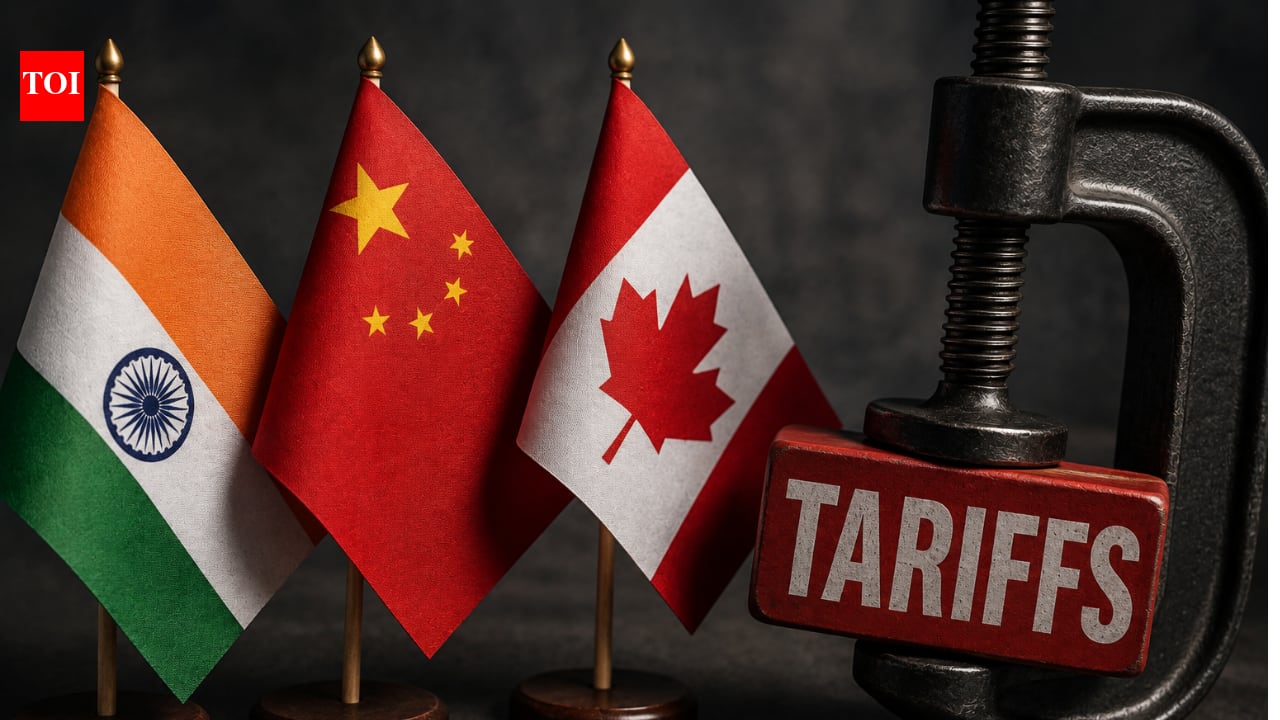
The Trump administration's expansive tariff and sanctions strategy continues to create global economic uncertainty. By linking trade policy to issues like migration, narcotics, and security, the U.S. is pressuring key allies and rivals alike.
The New Era of Geoeconomic Statecraft
The global trade landscape is undergoing a profound transformation as the Trump administration increasingly utilizes tariffs and sanctions not merely as economic levers, but as tools of broader geopolitical statecraft. By moving beyond traditional trade deficits, the current U.S. strategy explicitly ties economic policy to domestic and security concerns, including migration, narcotics control, and foreign policy alignment. This approach has left governments across the globe, from key allies like Canada and the European Union to strategic rivals like China and Russia, navigating a highly volatile environment where trade status is constantly subject to political leverage.
The Security-Trade Nexus
A defining characteristic of this policy shift is the weaponization of trade in response to non-trade grievances. For instance, the administration has utilized the threat of tariffs against Canada and Mexico, citing concerns over fentanyl trafficking and migration. This represents a significant departure from historical trade norms, where economic agreements were largely insulated from peripheral social and security issues. By holding trade relations hostage to these domestic policy imperatives, the U.S. is challenging the stability of North American economic integration and forcing its closest neighbors to recalibrate their internal policy priorities to avoid economic sanctions.
Strategic Challenges: The India and EU Equation
For major economies like India and the European Union, the U.S. tariff net has created a complex diplomatic environment. In the case of India, the equation involves a delicate balance of energy security—specifically regarding Russian oil imports—and immigration policy. While both nations remain in active talks to finalize trade deals, the looming threat of tariffs adds a layer of friction that complicates bilateral cooperation. Similarly, the European Union finds itself caught in a multi-front pressure campaign where trade concessions are being linked to security commitments and the broader containment of Russian influence, effectively turning trade policy into a component of security strategy.
Economic Warfare and Global Containment
In the cases of Iran, Russia, and China, the application of tariffs and sanctions has escalated into what can be described as economic warfare. For Iran, the focus remains on its nuclear program and oil exports, pushing the country toward an 'economic D-Day' scenario. Russia faces a similar intensity of pressure due to the ongoing conflict in Ukraine, where sanctions are designed to isolate its economy from global markets. Meanwhile, China faces a unique challenge where the control of fentanyl precursors has been elevated to a trade weapon, signaling that the U.S. is willing to disrupt vital supply chains to achieve specific law enforcement and security objectives.
Navigating Future Volatility
Looking ahead, the sustained use of these economic tools suggests a long-term trend of 'de-globalization' or at least a fragmentation of international trade systems. Businesses and governments are being forced to adapt to a 'new normal' characterized by high uncertainty and the potential for sudden policy pivots. As the U.S. continues to prioritize domestic security and political objectives over traditional market access, the international community must prepare for a future where trade agreements are increasingly fragile and subject to the shifting tides of geopolitical friction. The lasting impact will likely be a more cautious, protectionist global economy where national sovereignty takes precedence over the efficiency of global markets.