Trump threatens EU with 'substantial TARIFF' for 'ROBBING' U.S. tech giants
Source Entity
US Top News and Analysis
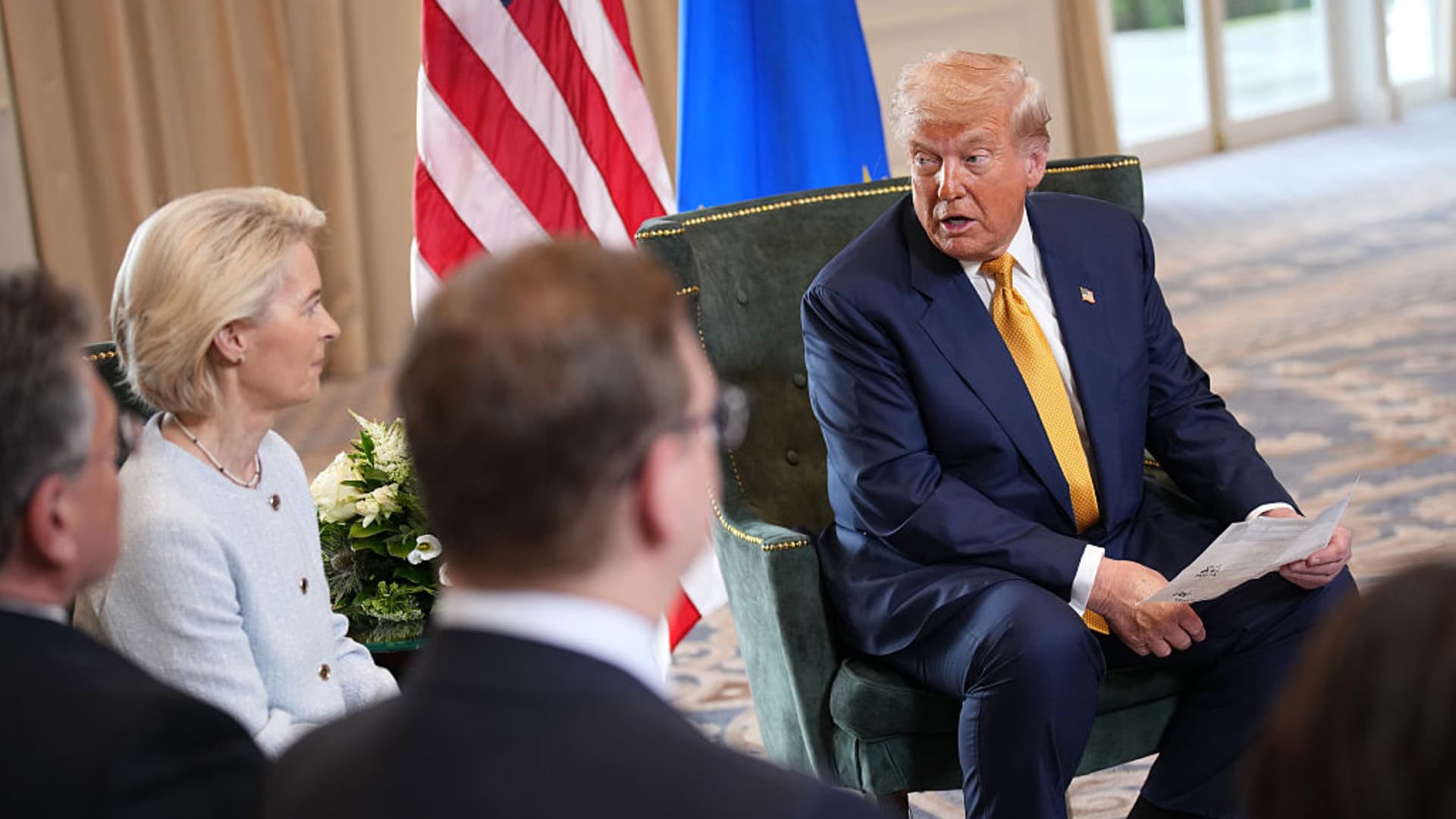
President Donald Trump has threatened the European Union with substantial tariffs following a $1 billion antitrust fine imposed on Google. The administration plans to launch a probe into EU trade practices, which Trump describes as discriminatory against major American tech companies.
Tensions Escalate: U.S.-EU Trade Relations Under Strain
Following a recent $1 billion fine levied against Google by the European Union, President Donald Trump has initiated a confrontational stance toward the 27-member bloc. Citing a pattern of what he characterizes as the "robbing" of American tech giants, President Trump announced on Friday that his administration will launch a formal trade probe. This move signifies a major shift in transatlantic economic policy, moving from the cooperative tone of the July 2025 Turnberry trade agreement toward a period of punitive protectionism.
The Catalyst: Antitrust Fines and Economic Sovereignty
The immediate trigger for this diplomatic friction is the European Union’s regulatory approach to Big Tech. The EU has increasingly utilized its antitrust framework to penalize companies like Google, Apple, Meta, and Amazon, alleging monopolistic practices and unfair market dominance. According to President Trump, Google alone has faced over $18 billion in fines, with additional billions levied against Apple and Meta. Trump has framed these actions not as regulatory oversight, but as a systematic campaign to extract wealth from U.S. corporations, explicitly stating that the U.S. will no longer function as a "piggybank" for Europe.
Strategic Retaliation: The Threat of 'Substantial' Tariffs
President Trump’s strategy involves a two-pronged approach: a formal investigation into the EU's regulatory conduct and the threat of "substantial" retaliatory tariffs. By labeling the EU’s actions as "illegal and highly unethical," the administration is setting the stage for a trade war that could disrupt global supply chains and digital service markets. This marks a departure from standard diplomatic discourse, utilizing the rhetoric of "GREAT American Companies" to rally support for a protectionist agenda intended to shield U.S. firms from foreign legal oversight.
Historical Context of Transatlantic Trade Disputes
This dispute occurs against a complex historical backdrop of transatlantic trade relations. While the U.S. and EU have long collaborated on economic standards, the rise of the digital economy has created a significant regulatory gap. The EU’s focus on privacy, consumer protection, and competition law often conflicts with the U.S. model of market-driven innovation. Previous administrations have navigated these tensions through multilateral negotiations, but the current escalation suggests a pivot toward unilateralism and direct economic coercion.
Broader Implications and Future Trends
Should the U.S. move forward with these tariffs, the implications for the global economy could be profound. International tech firms operating within the EU may find themselves caught in the middle of a regulatory tug-of-war, facing both European fines for compliance issues and American tariffs for their "perceived" victimization. Analysts predict that this conflict could lead to a fragmented digital landscape, where companies are forced to choose between adhering to stringent EU regulations or facing punitive measures from their home government. The outcome of this probe will likely dictate the tone of U.S.-EU economic cooperation for the remainder of the decade.