Cuba Diplomats Stage Walk Out After Trump's Island "Will Fall" Remark At UN
Source Entity
NDTV News Search Records Found 1000
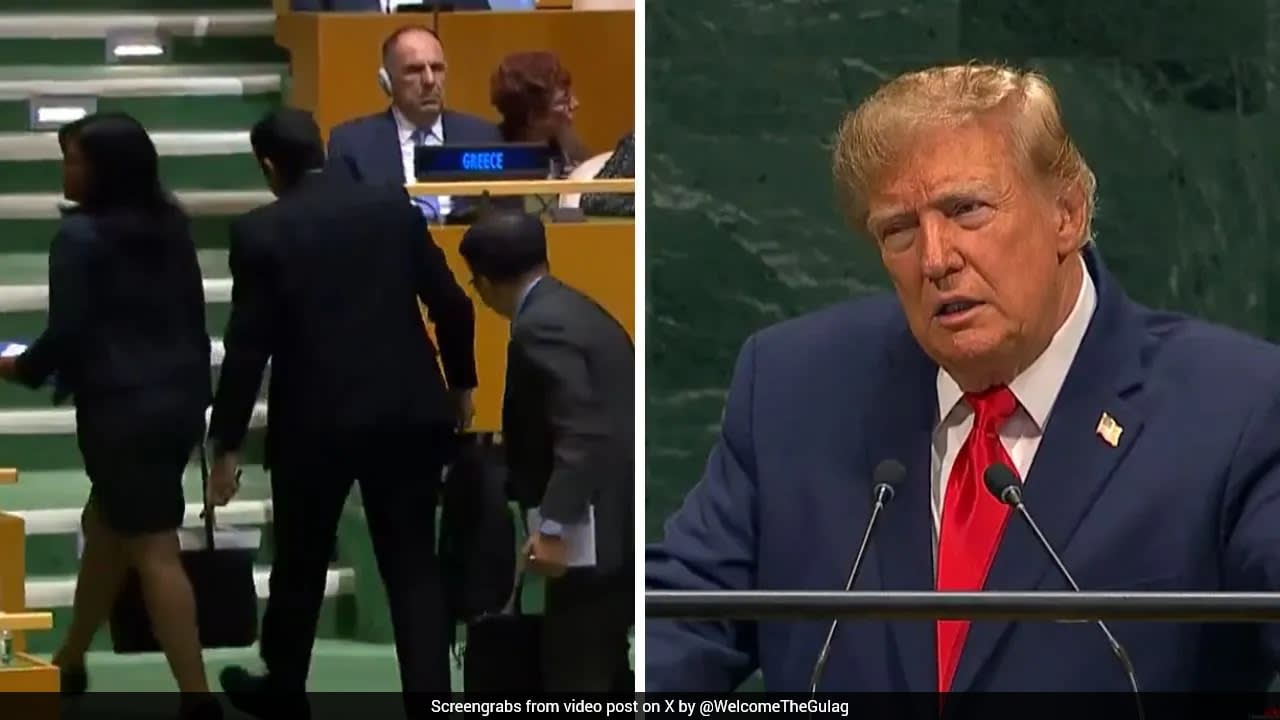
During his UN General Assembly address, President Trump issued strong warnings to Cuba and Iran while calling for nations to exit the International Criminal Court. The speech prompted a walkout by Cuban delegates and drew significant international attention to U.S. foreign policy stances.
Tensions Flare at the UN: A Diplomatic Confrontation
The recent United Nations General Assembly in New York served as the stage for a high-stakes diplomatic confrontation, as President Donald Trump utilized his platform to deliver aggressive rhetoric regarding U.S. foreign policy. Central to the drama was a pointed remark concerning Cuba, in which the President suggested the island nation "will fall." This provocative assertion immediately triggered a formal protest, as Cuban delegates staged a walkout, signaling a profound collapse in diplomatic decorum and highlighting the deep-seated grievances between the two nations.
The Western Hemisphere Doctrine
President Trump’s address was underscored by a strict adherence to the Monroe Doctrine, as he explicitly stated that the United States would no longer tolerate threats gaining a foothold within the Western Hemisphere. By framing Cuba and other regional actors as direct security threats, the administration signaled a departure from previous diplomatic overtures, moving instead toward a posture of containment and economic pressure. This rhetoric is consistent with a broader strategy of isolationism and unilateralism that has defined the administration's approach to Latin American affairs.
Escalation in the Middle East
The President’s speech also addressed the ongoing conflict with Iran, which has now entered its eighth month. Trump defended the U.S. military engagement, characterizing it as a necessary measure to prevent the Islamic Republic from developing a nuclear arsenal. His rhetoric oscillated between the prospect of a future diplomatic deal and the threat of total annihilation, reflecting a volatile "maximum pressure" strategy. By suggesting that a resolution hinges on the outcomes of domestic electoral cycles, the President underscored the extent to which internal political dynamics are currently influencing international crisis management.
Challenges to Global Institutions
Beyond specific nation-state conflicts, the President utilized the UN forum to challenge the legitimacy of international legal bodies, specifically labeling the International Criminal Court (ICC) a "rogue institution." The U.S. stance, anchored in the fact that it has never ratified the Rome Statute and is not a member of the ICC, reflects a long-standing ideological skepticism toward supranational judicial oversight. This rejection of the ICC is part of a wider effort to prioritize national sovereignty over global governance frameworks.
Broader Implications and Future Trends
The implications of these developments are significant for the future of international relations. The open hostility toward established global institutions, combined with a willingness to engage in brinkmanship with regional rivals, suggests a period of prolonged instability. As the U.S. continues to distance itself from multilateral agreements and institutions, the global order faces a potential shift toward a more fragmented system where bilateral power dynamics supersede international law. Experts suggest that such rhetoric will likely harden the positions of adversaries, potentially leading to further diplomatic standoffs and a weakening of the United Nations as a mediator of global peace.
Multiple Citing Sources
Verification Required?