Trump threatens to 'annihilate' Iran in UN speech as officials meet on sidelines
Source Entity
BBC News
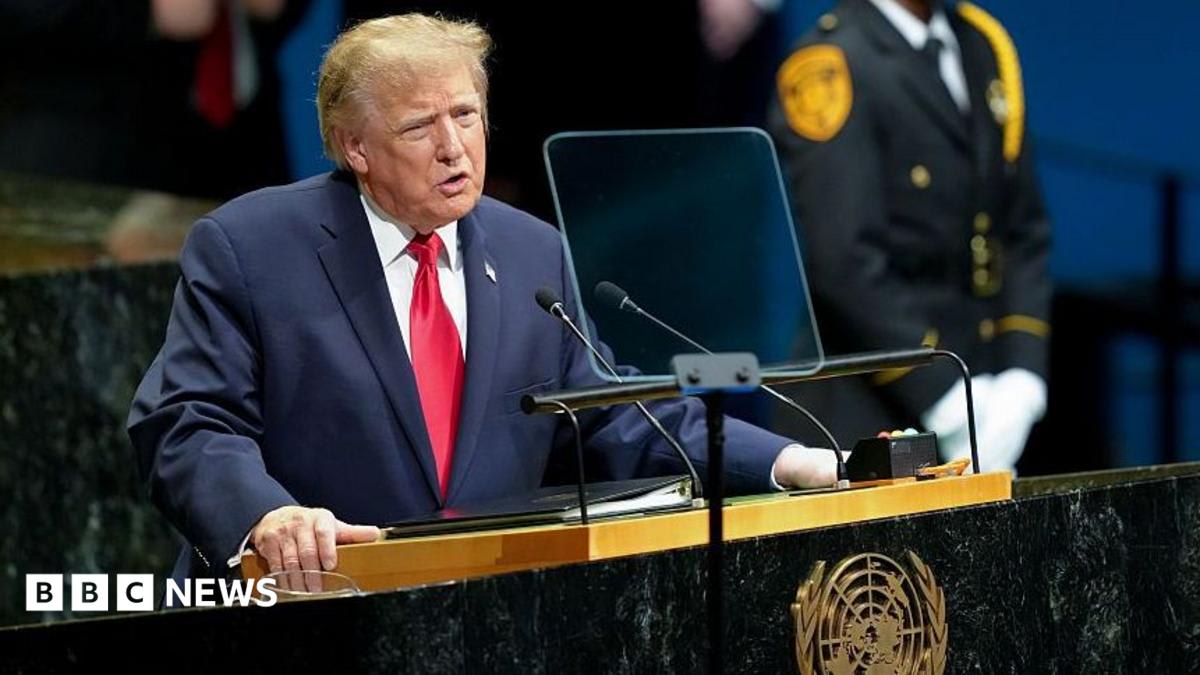
At the UNGA, President Trump presented a stark binary choice for Iran: a diplomatic deal or total annihilation. This rhetoric highlights his dual-track approach of combining aggressive military threats with potential future negotiations.
The Iran Ultimatum: Diplomacy or Destruction
At the United Nations General Assembly (UNGA), President Donald Trump framed the United States' current relationship with Iran as a defining binary choice: a potential for future economic prosperity through a negotiated deal or the threat of total annihilation. This rhetoric underscores a high-stakes diplomatic strategy that juxtaposes the promise of Iran becoming a global power against the looming risk of catastrophic military intervention.
The Strategic Binary: Deal vs. Annihilation
The core of President Trump’s message rests on the idea that Iran stands at a crossroads. By explicitly stating that he is mulling over whether to secure a deal or "drive them into hell," the President is employing a classic "madman theory" approach to international relations. This strategy aims to force Tehran into concessions by demonstrating that the United States remains prepared to utilize its full military might if diplomatic avenues are exhausted or rejected.
The UNGA Platform and Diplomatic Tensions
The setting of the UNGA served as the primary stage for this messaging, designed to signal to the international community that the U.S. is not merely a bystander but a primary actor in the conflict. The walkout of the Iranian delegation during the address serves as a visual testament to the profound diplomatic chasm between the two nations. Despite this outward display of hostility, reports suggest that Iran has signaled a degree of openness to negotiations, indicating that back-channel communications may be more active than public posture suggests.
Linking Global Conflicts
President Trump’s address also drew a parallel between the Iranian situation and the ongoing Russia-Ukraine conflict. By positioning himself as a mediator capable of resolving both, the President is attempting to cultivate an image of a "deal-maker" who can manage global crises through direct, high-level engagement. While he expressed confidence in a quick resolution to the conflict in Ukraine, his focus on Iran remains tied to the explicit condition of nuclear non-proliferation and regional stability.
Future Implications and Domestic Timing
An interesting facet of the President's analysis is the timeline for these potential breakthroughs. By suggesting that a deal with Iran could materialize following the November midterm elections, Trump is signaling to both domestic and international audiences that his foreign policy is deeply intertwined with the U.S. political calendar. This suggests that the current "annihilation" rhetoric may serve as a pressure-building tactic meant to yield results that can be presented as a victory after the electoral cycle.
Conclusion: The Path Forward
The international community remains wary of the volatility inherent in this "deal or annihilation" stance. While the potential for a diplomatic resolution exists, the high-pressure environment created by the threat of military intervention leaves little room for error. The coming months will be critical in determining whether this rhetoric leads to a de-escalation of tensions or a deepening of the geopolitical crisis in the Middle East.
Multiple Citing Sources