Putin scores ‘massive win’ at first trilateral meeting, rebuilding standing as Ukraine war grinds on
Source Entity
US Top News and Analysis
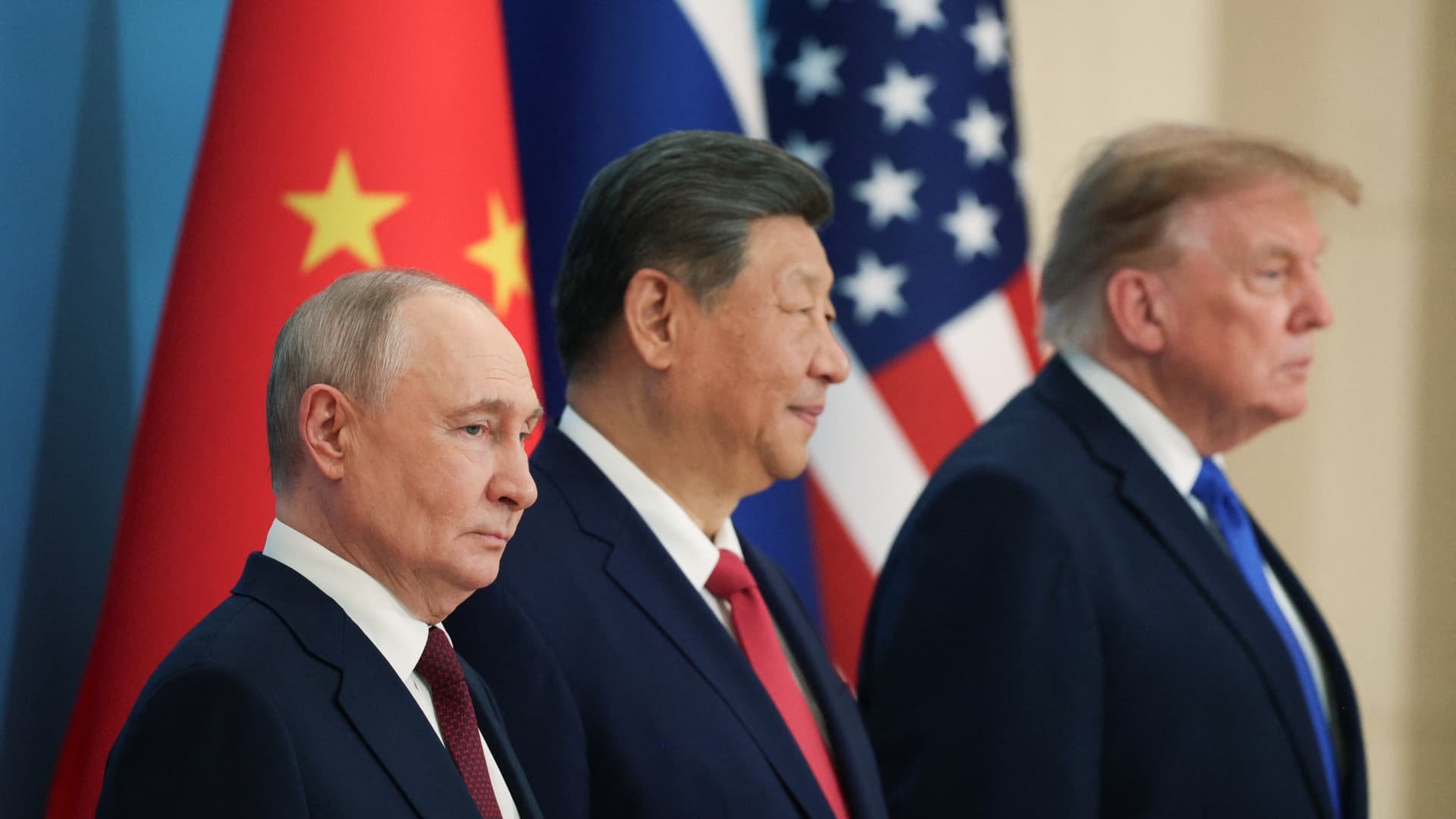
US President Donald Trump, Chinese President Xi Jinping, and Russian President Vladimir Putin are meeting in Shenzhen to discuss nuclear arms control and regional conflicts. This high-stakes summit, occurring alongside the APEC leaders' meeting, aims to address global instability including the ongoing wars in Ukraine and Iran.
A New Geopolitical Pivot: The Shenzhen Trilateral
The convergence of US President Donald Trump, Chinese President Xi Jinping, and Russian President Vladimir Putin in Shenzhen marks a historic moment in international diplomacy. Taking place alongside the APEC Economic Leaders Summit, this trilateral meeting serves as a critical forum for addressing the most pressing security challenges of the modern era. By bringing together the world's three most influential nuclear powers, the summit attempts to navigate the complexities of a fractured global order.
The Challenge of Nuclear Proliferation
At the core of the agenda is the urgent need for nuclear arms control. President Trump has identified the establishment of three-way talks as a top priority for this trip, acknowledging the inherent difficulty in aligning the strategic interests of Washington, Moscow, and Beijing. As global tensions rise, the necessity for a framework that includes all three nations—rather than the traditional bilateral approaches of the past—has become paramount to preventing an uncontrolled arms race.
Navigating Regional Conflicts
Beyond nuclear security, the leaders are tasked with addressing two significant ongoing conflicts: the Russia-Ukraine war and the nine-month-old war in Iran. These conflicts are not merely regional; they are exerting significant pressure on global energy markets and international stability. The Shenzhen meeting provides a rare venue where the primary stakeholders in these geopolitical theaters can engage in direct negotiation, potentially seeking pathways to de-escalation that have remained elusive in other diplomatic channels.
Economic and Technological Rivalries
Adding layers of complexity to the security discussions are deep-seated trade disputes and the intensifying race for technological dominance. With Washington’s scrutiny of Nvidia’s chip sales to China and the broader challenges regarding tech security, the leaders must balance economic competition with the need for strategic cooperation. These tensions create a fragile backdrop for the summit, as economic policy is now inextricably linked to national security and global influence.
Historical Parallels and Future Implications
The comparison to the Yalta Conference of 1945 is not merely symbolic; it reflects the gravity of the current moment. Much like the post-WWII era, the world is witnessing a transition where the established rules of engagement are being tested. Whether this summit can produce a new 'Shenzhen consensus' remains to be seen, but the outcome will undoubtedly dictate the trajectory of global diplomacy for years to come.
Conclusion: Assessing the Path Forward
The success of this trilateral meeting will be measured by its ability to move beyond personal relationships and address the hard strategic interests of each nation. As the skyline of Shenzhen lights up for the APEC Summit, the focus remains firmly on whether these three leaders can reconcile their divergent paths to restore a semblance of predictability to an increasingly volatile global landscape.
Multiple Citing Sources