Trump, Xi end 3-day summit with tea, stability pledge & little progress on key disputes
Source Entity
AYUSH PANDEY
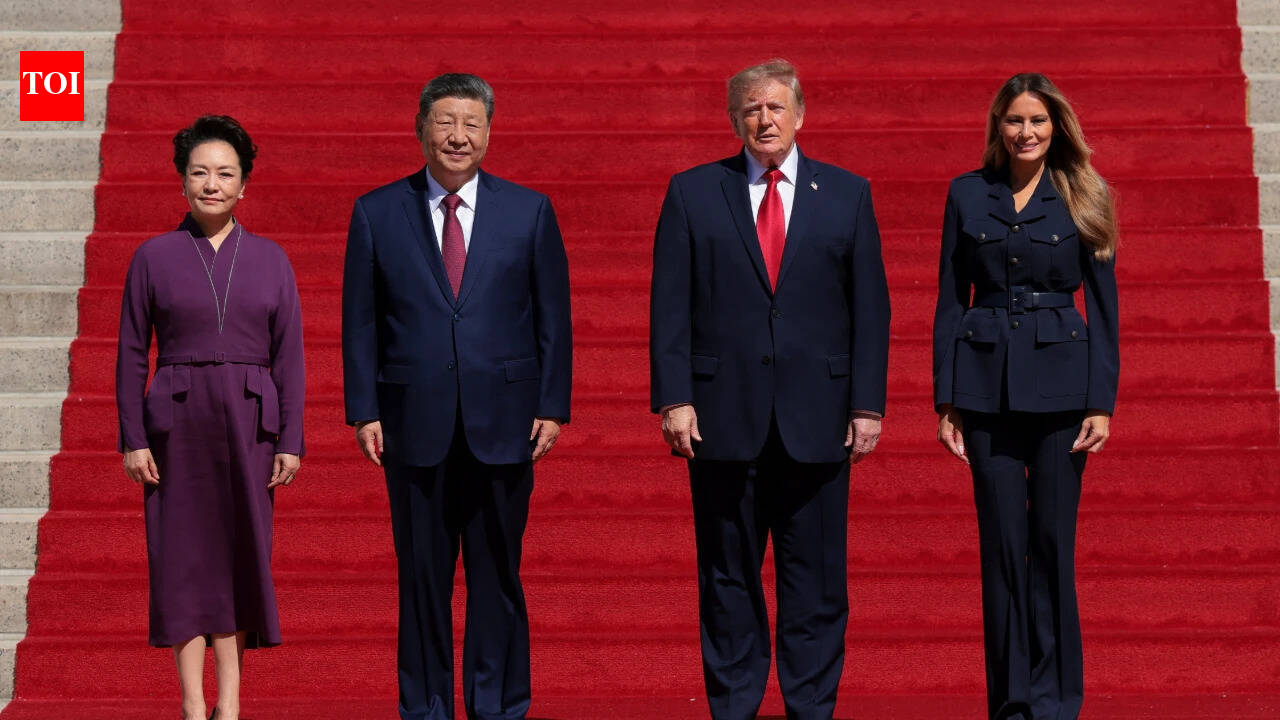
US President Trump and Chinese President Xi concluded a three-day summit in Washington with symbolic gestures but limited concrete policy breakthroughs. While the leaders discussed trade, Taiwan, and Iran, the meeting emphasized personal diplomacy over substantive resolution of major geopolitical disputes.
A Symbolic Summit: Analyzing the Trump-Xi Washington Meeting
The recent three-day summit between U.S. President Donald Trump and Chinese President Xi Jinping, held in Washington, served as a high-profile exercise in personal diplomacy. Marked by ceremonial events, including a visit to the National Archives Museum alongside their respective spouses, the summit aimed to project an image of stability in one of the world's most consequential bilateral relationships. However, the heavy emphasis on optics and state protocol appeared to overshadow the resolution of deep-seated structural tensions between the two global powers.
The Trade Deficit and Economic Friction
While the administration signaled that progress was made regarding trade negotiations, the lack of specific details remains a point of contention for analysts and market observers. Trade remains the cornerstone of the U.S.-China relationship, yet the summit concluded without a definitive roadmap to address the grievances that have fueled ongoing economic friction. Critics argue that without concrete, enforceable commitments, the pledge for stability may prove insufficient to mitigate the long-term volatility inherent in the current trading environment.
The Unresolved Status of Taiwan
Perhaps most notable was the continued stalemate regarding Taiwan. As a core interest for Beijing and a critical strategic partner for the United States, Taiwan remains a flashpoint that complicates every aspect of U.S.-China relations. The failure to reach a breakthrough on this issue underscores the fundamental ideological and strategic divide between the two nations, suggesting that while the leaders seek to manage competition, they remain far from a consensus on regional security architecture.
Emerging Cooperation in Artificial Intelligence
In a shift toward future-looking policy, the summit highlighted artificial intelligence (AI) as a potential area for bilateral cooperation. Given the rapid acceleration of AI development and the associated ethical and security concerns, this acknowledgment represents a rare point of alignment. By identifying AI as a collaborative priority, both nations may be attempting to create guardrails around a technology that will define the next century of military and economic competition.
Global Security and Diplomatic Challenges
Beyond bilateral trade and regional security, the leaders engaged in discussions regarding Iran. This inclusion reflects the necessity of coordinating on global security challenges, even when foundational disagreements persist elsewhere. By keeping lines of communication open on third-party geopolitical issues, both administrations are signaling that they view the bilateral relationship as a vehicle for global stability, despite the lack of public breakthroughs on other fronts.
Conclusion: Assessing the Path Forward
Ultimately, the summit underscored the limitations of personal diplomacy in the face of systemic geopolitical competition. While the visit successfully projected an atmosphere of professional engagement, the lack of substantive outcomes leaves many observers questioning the efficacy of the current diplomatic approach. Future trends suggest that while the rhetoric may remain focused on stability, the underlying structural issues—ranging from trade to regional sovereignty—will continue to challenge the durability of the U.S.-China relationship.