Wall Street Balks at TSMC’s $100 Billion Bet on Growing AI Demand
Source Entity
Yahoo Finance
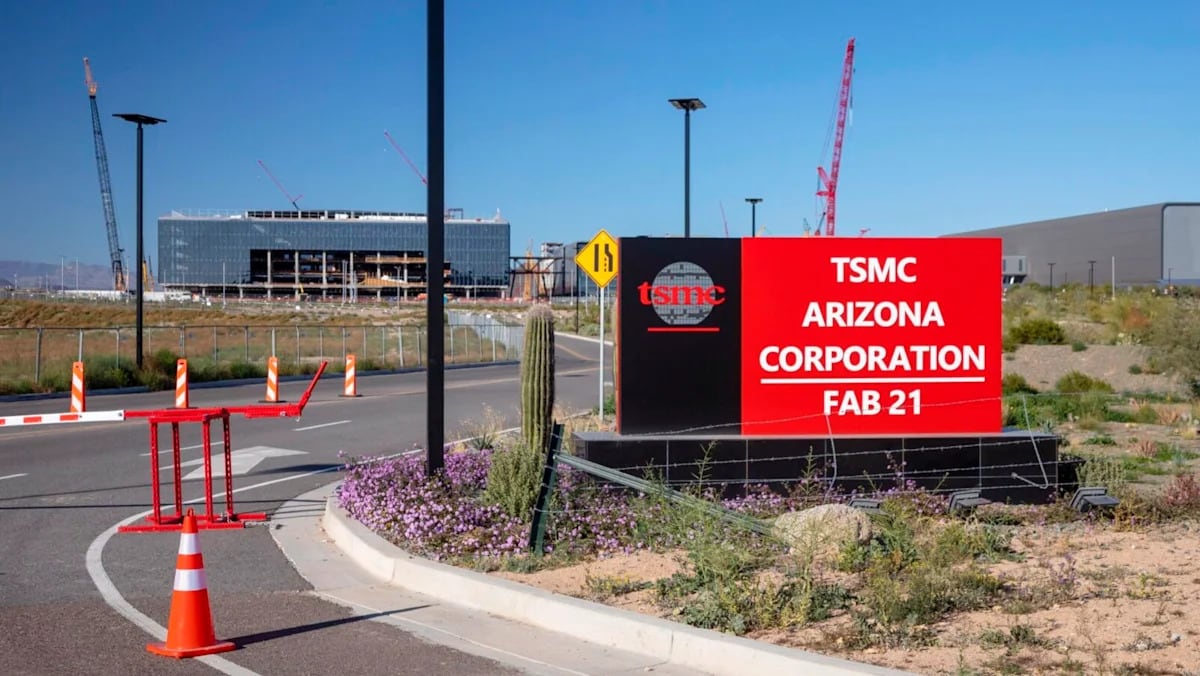
TSMC's stock dipped following a massive $100 billion capital expenditure announcement for its Arizona facilities, despite reporting record-breaking Q2 earnings. Investors are signaling skepticism regarding the sustainability of the current AI-driven spending boom.
The Market Paradox: TSMC’s Growth vs. Investor Anxiety
Taiwan Semiconductor Manufacturing Company (TSMC) has long been the bedrock of the global technology sector, serving as the primary foundry for the world's most sophisticated AI chips. However, the company's recent second-quarter earnings report, which highlighted record revenue of $40 billion and a staggering 77% year-over-year increase in net income, was overshadowed by market apprehension. Despite these robust financial metrics, the company's US-listed shares fell by more than 2% following the announcement, illustrating a widening disconnect between operational performance and investor sentiment.
The $100 Billion Capital Expenditure Gamble
The primary driver of this market friction is TSMC’s commitment to an additional $100 billion investment in its Arizona-based semiconductor manufacturing facilities. While this expansion is strategically aligned with global efforts to diversify the semiconductor supply chain and localize production, Wall Street has responded with significant hesitation. The market's reaction suggests that investors are increasingly sensitive to the sheer scale of capital expenditure (capex) required to sustain the current AI infrastructure boom, raising questions about long-term return on investment.
Assessing the AI 'Bubble' Narrative
This market reaction reflects a growing trend of 'AI fatigue' among institutional investors. As companies across the tech sector pour billions into data centers and high-end processors, the immediate translation of that spending into sustainable, broad-based corporate profitability remains a subject of intense debate. TSMC’s decision to commit such a massive sum of capital indicates that the foundry is betting heavily on the long-term persistence of AI demand, a view that Wall Street is currently viewing through a more cautious, risk-averse lens.
Geopolitical and Supply Chain Implications
The expansion of TSMC’s Arizona fabs is not merely a corporate decision; it is a critical component of Western efforts to mitigate risks associated with the concentration of semiconductor manufacturing in Taiwan. By investing $100 billion into US-based operations, TSMC is effectively acting as the guarantor of the global AI supply chain. However, the market’s negative reaction highlights the economic difficulty of this transition, as building high-end chip fabs in the United States involves significantly higher operational costs compared to operations in East Asia.
Future Trends and Market Sustainability
Looking ahead, the tension between TSMC’s growth strategy and investor caution will likely define the semiconductor sector's performance for the next several quarters. If the demand for AI chips continues to outpace supply as projected, TSMC’s massive capex could eventually be viewed as a visionary investment that solidified its market dominance. Conversely, if the AI market experiences a cooling period or if the expected demand fails to materialize at the projected scale, the company may face sustained pressure from shareholders to rationalize its spending and focus on immediate profit margins.
Concluding Summary
Ultimately, TSMC finds itself at a crossroads where operational excellence is being weighed against the macroeconomic risks of capital over-allocation. While the company’s financials remain exceptionally strong, the market’s reaction serves as a warning that investors are no longer willing to provide a blank check for AI-related expansion. The coming months will be crucial in determining whether the semiconductor industry can bridge the gap between heavy infrastructure spending and the realization of long-term, scalable AI profits.