TSMC is accelerating Arizona factory buildout to capitalize on AI 'megatrend,' CFO says
Source Entity
US Top News and Analysis
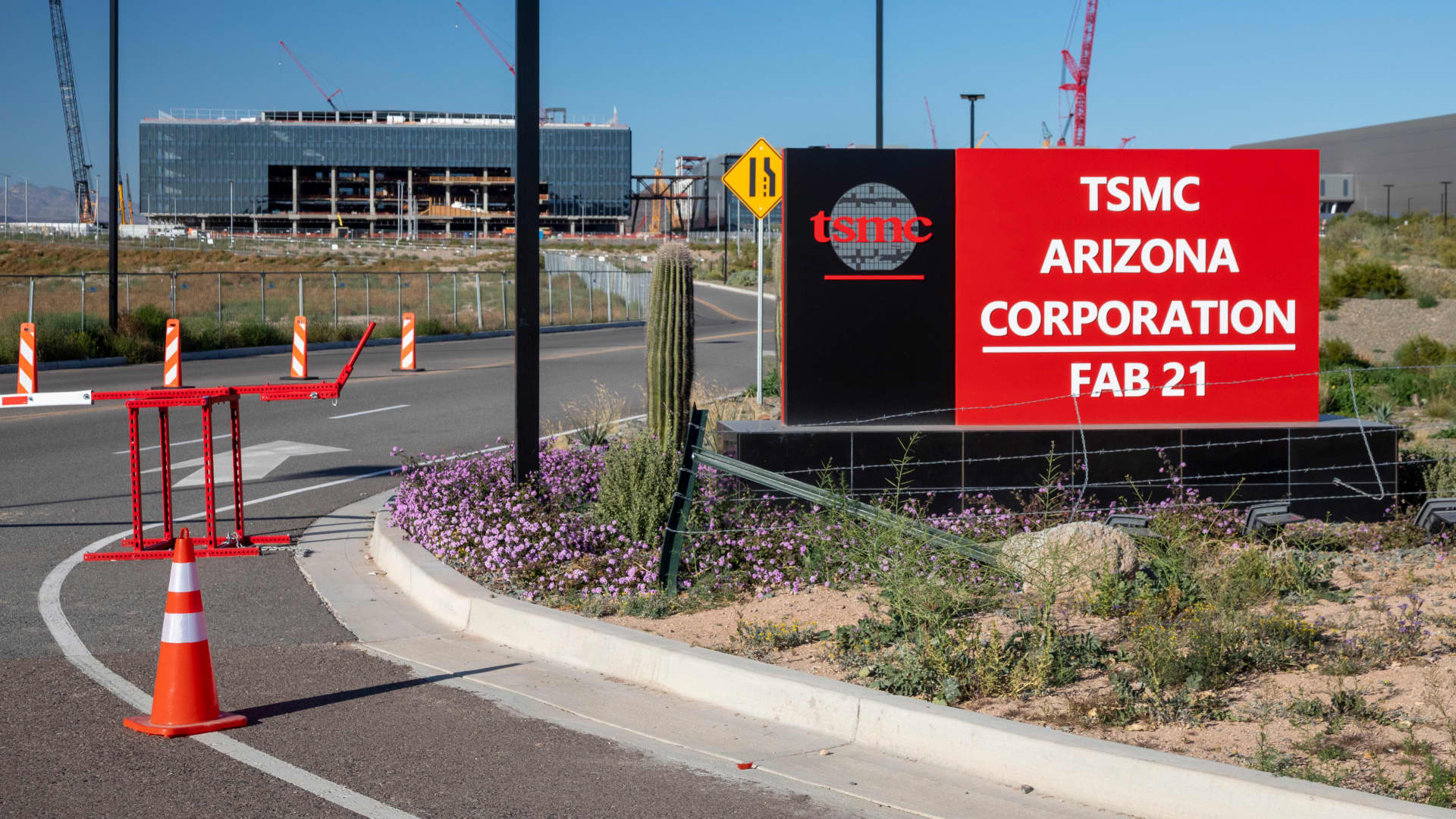
TSMC is accelerating its Arizona factory expansion with an additional $100 billion investment to meet soaring AI demand. This brings the company's total U.S. investment pipeline to $265 billion.
TSMC Accelerates U.S. Expansion to Meet AI Demand
TSMC's announcement of a massive capacity acceleration in Arizona marks a pivotal moment in the global semiconductor race. Chief Financial Officer Wendell Huang's revelation that the company is committing an additional $100 billion underscores the sheer scale of the AI-driven transformation currently sweeping the tech industry. This move is not merely an incremental expansion but a strategic surge to ensure that the infrastructure for the next generation of computing is firmly established within the United States, reacting directly to robust customer demand.
The AI Megatrend as a Growth Engine
At the heart of this expansion is what Huang describes as a "multi-year demand mega trend." The proliferation of generative AI and large language models has created an unprecedented need for high-performance computing (HPC) chips. Because TSMC is the primary manufacturer for the world's leading AI chip designers, the structural demand for their advanced fabrication processes has shifted from a cyclical spike to a long-term requirement. This ensures that the Arizona facilities will be critical in maintaining the supply chain for AI accelerators and high-end processors.
Financial Magnitude and Capital Intensity
The financial scale of this commitment—bringing the total investment pipeline in Arizona to a staggering $265 billion—reflects the extreme capital intensity of modern semiconductor fabrication. Building "fabs" (fabrication plants) requires extreme precision and astronomical costs. By adding $100 billion to the existing budget, TSMC is signaling that the cost of inaction—potentially missing out on the AI wave—far outweighs the risks of massive capital expenditure. This aggressive scaling is designed to capitalize on the "surging multi-year structural demand" identified by the CFO.
Strategic Scaling of the U.S. Footprint
Expanding the U.S. chipmaking footprint is a strategic move to diversify production and bring capacity closer to the primary customers who are driving the AI trend. By accelerating the Arizona buildout, TSMC is reducing potential logistics bottlenecks and aligning its production capabilities with the regional demands of the North American tech ecosystem. This acceleration suggests a race against time to secure market share and ensure that the "megatrend" is met with immediate, scalable capacity that can keep pace with rapid AI evolution.
Future Outlook for Global Semiconductor Supply
Looking ahead, this investment predicts a future where AI hardware becomes the foundational backbone of all industrial and consumer technology. The shift toward a $265 billion investment pipeline suggests that TSMC expects the AI boom to persist for several more years, potentially evolving into a new baseline for global computing. As these Arizona plants come online, they will likely serve as a benchmark for how the industry handles the transition from general-purpose computing to AI-centric architectures, cementing the U.S. as a critical node in the advanced chip supply chain.
Conclusion
In summary, TSMC's decision to aggressively expand its Arizona presence is a direct response to the tectonic shifts caused by AI. Through the leadership of Wendell Huang and a massive financial commitment, the company is positioning itself to remain the indispensable foundry of the digital age. This move not only secures TSMC's dominance in the market but also reinforces the strategic importance of domestic semiconductor manufacturing in the face of global technological competition.