Why Uncertain Israel Election May Keep Donald Trump On Edge
Source Entity
NDTV News Search Records Found 1000
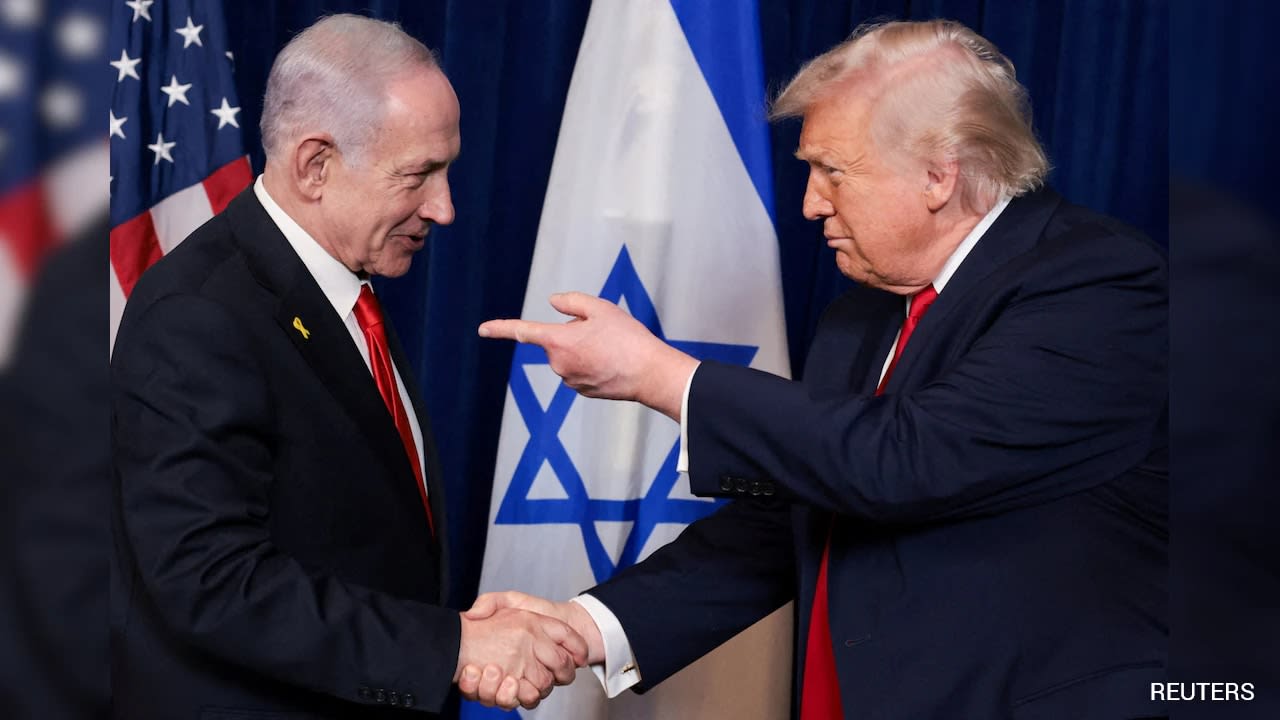
The uncertain outcome of Israel's recent elections carries significant implications for the future of US-Israeli diplomatic relations. This political ambiguity creates a challenging landscape for international stakeholders, including the Trump administration.
The Intersection of Israeli Electoral Volatility and US Foreign Policy
The current political climate in Israel, characterized by electoral uncertainty, has created a complex ripple effect that extends far beyond domestic borders. As the nation grapples with the task of forming a stable government, international observers—particularly in Washington—are monitoring the situation with heightened scrutiny. The fundamental challenge lies in the fact that a government's stability is often a prerequisite for the continuity of long-standing bilateral agreements and strategic alliances.
The Impact on US-Israeli Strategic Relations
Historically, the US-Israeli relationship has been defined by deep institutional ties that transcend individual administrations. However, the current uncertainty introduces a variable that complicates diplomatic predictability. When a partner nation faces prolonged electoral deadlock, the ability to negotiate long-term treaties or coordinate on regional security initiatives is significantly hindered. For the United States, this means that major policy shifts or support for specific initiatives may be put on hold until a clear governing mandate emerges in Jerusalem.
Challenges for the Trump Administration
For an administration like that of Donald Trump, which has historically prioritized personal diplomatic rapport and transactional foreign policy, a fragmented Israeli government presents a unique set of risks. The inability to identify a singular, stable point of contact can disrupt the pace of diplomatic momentum. If the Israeli electorate remains divided, the US administration faces the risk of its regional initiatives being stalled by the necessity of Israel focusing exclusively on internal coalition building rather than external policy objectives.
Historical Context of Political Instability
This is not the first time that Israeli political cycles have influenced international relations. Throughout history, periods of political transition in Israel have frequently led to a 'wait-and-see' approach from the White House. The current situation, however, is exacerbated by a global environment where regional threats and economic pressures require decisive and rapid responses. The lack of a clear legislative majority in the Knesset makes the implementation of robust, long-term foreign policy strategies increasingly precarious.
Predicting Future Diplomatic Trends
Looking ahead, the trajectory of US-Israeli relations will likely be defined by how quickly the Israeli political system can resolve its current impasse. If the stalemate persists, we can expect a period of diplomatic stagnation where both nations avoid making bold, irreversible policy decisions. Conversely, should a stable coalition emerge, it will likely seek to immediately reaffirm its alignment with Washington to restore a sense of normalcy and predictability to the partnership.
Conclusion
In summary, the uncertainty surrounding the Israeli election is more than a local political event; it is a critical factor in the broader framework of Middle Eastern geopolitics. The outcome will inevitably dictate the tone and effectiveness of future US-Israeli cooperation. As the situation develops, the ability of both nations to navigate this transition will be essential to maintaining the structural integrity of their long-standing strategic alliance.
Verification Required?