Small undersea volcanoes may unleash outsized tsunamis
Source Entity
Yook Ji Hun
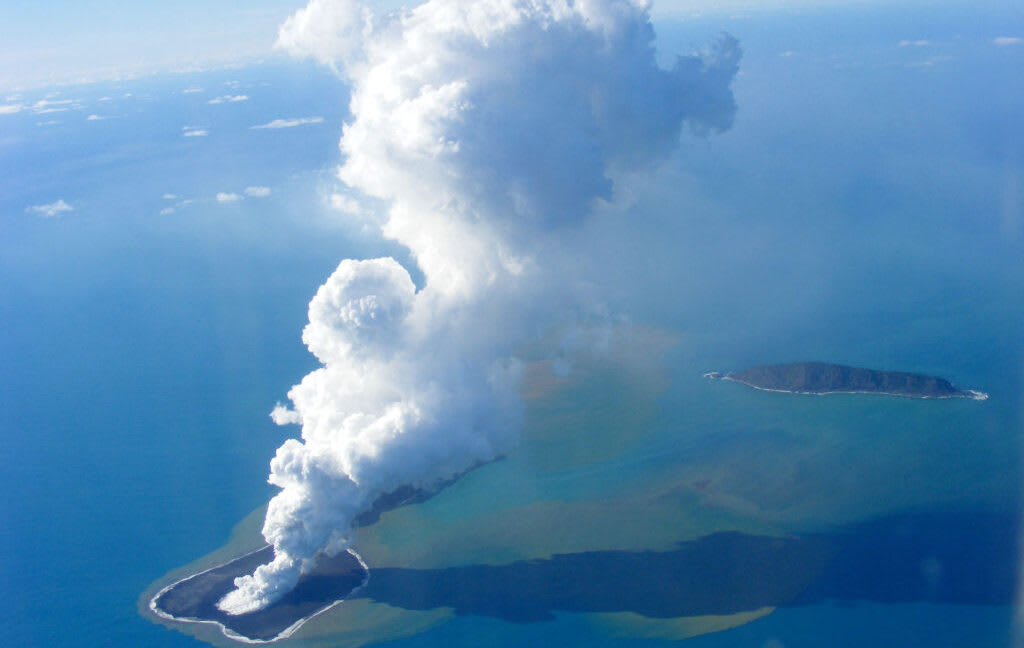
Recent analysis of the Hunga caldera collapse reveals how undersea volcanoes can trigger devastating tsunamis. Scientists are working to better understand the pressure-related dynamics that lead to these lethal oceanic events.
The Hidden Threat: Undersea Volcanic Tsunamis
Recent scientific investigations into the collapse of the Hunga caldera have shed new light on the mechanisms behind undersea volcanic eruptions and their capacity to generate tsunamis. While historical events like the 1883 eruption of Krakatau in Indonesia, which claimed over 30,000 lives, demonstrated the lethal potential of volcanic activity, much of the public focus has traditionally remained on terrestrial debris. However, the data from the Hunga caldera suggests that the tsunami—not the eruption itself—is often the primary driver of catastrophe.
The Physics of Oceanic Eruptions
The behavior of an undersea volcano is dictated largely by the depth at which it resides. In the deep ocean, the immense hydrostatic pressure acts as a natural suppressant, stifling the explosive potential of magma meeting seawater. This creates a deceptive sense of safety regarding deep-sea volcanic activity, as the environment effectively contains the energy that would otherwise be released in a violent, surface-level explosion.
Depth as a Critical Factor
As volcanic activity moves closer to the surface, the dynamic changes drastically. The reduction in water pressure, combined with the extreme heat of volcanic materials, creates a volatile environment where violent steam-driven explosions become likely. These explosions are significant because they displace massive volumes of water, the primary precursor to a tsunami. Understanding the transition point between suppressed deep-sea activity and explosive shallow-water activity is essential for modern hazard mitigation.
Lessons from Historical Precedents
The 1883 Krakatau eruption serves as a somber reminder of the danger posed by these events. While many people associate volcanic threats with lava flows or ash clouds, the hydro-acoustic and physical displacement caused by sub-aqueous eruptions can propagate waves across vast distances. The recent imaging of the Hunga caldera provides a modern dataset that allows researchers to move beyond historical anecdotes and into predictive modeling.
Future Research and Implications
Despite the progress in imaging technology, scientists acknowledge that they still do not fully understand the specific, granular conditions that dictate when a volcanic event will trigger a tsunami. Ongoing research aims to bridge this knowledge gap by analyzing the structural collapse of calderas. By identifying the precursors to these collapses, the scientific community hopes to develop better early warning systems for coastal communities situated near active volcanic zones.
Conclusion
The study of undersea volcanoes represents a critical frontier in geology and disaster management. By shifting the focus toward the complex interaction between volcanic heat and seawater pressure, researchers are working to transform our understanding of maritime hazards. As we continue to analyze events like the Hunga caldera, the goal remains clear: to decode the signatures of these underwater threats before they manifest as devastating waves.