Understanding Positional Embeddings in Modern LLMs
Source Entity
Hacker News
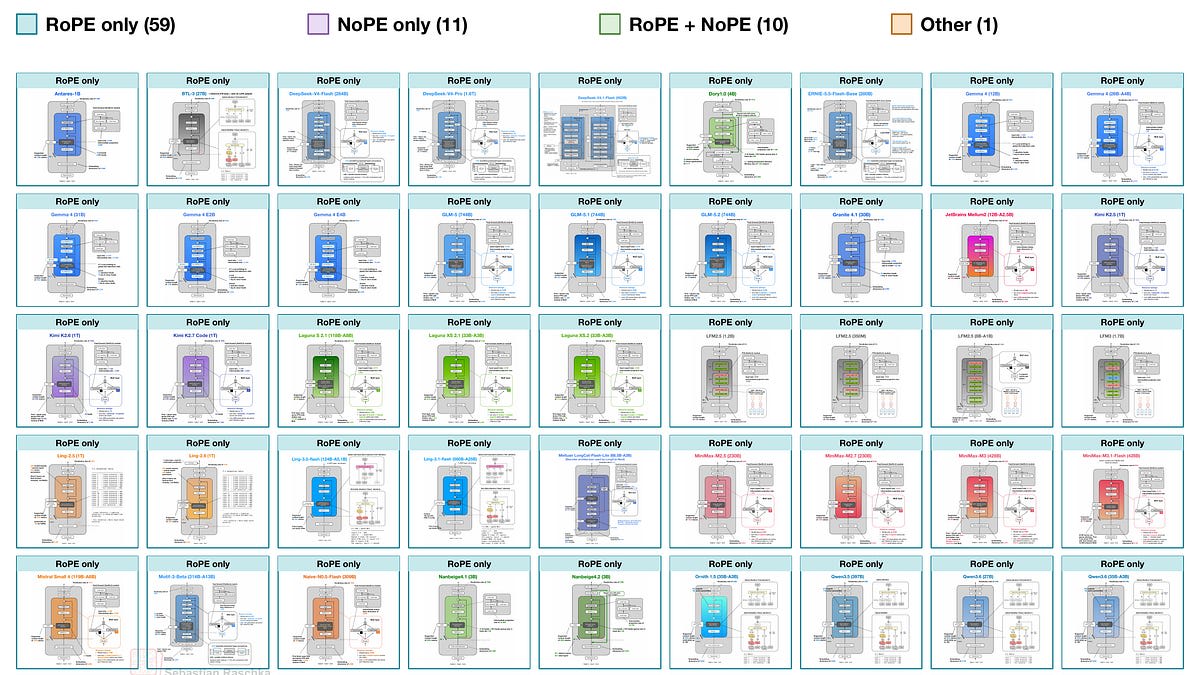
This technical analysis explores the evolution of positional embeddings in Large Language Models, focusing on mechanisms like RoPE. It examines how 2026 architectures implement or omit these encodings to improve model performance and sequence processing.
The Architecture of Sequence Understanding: Positional Embeddings
In the rapidly evolving landscape of Large Language Models (LLMs), the ability to process the order of tokens is fundamental to understanding context. Unlike traditional Recurrent Neural Networks (RNNs) that processed data sequentially, the Transformer architecture utilizes a self-attention mechanism that is inherently order-agnostic. To rectify this, modern LLMs employ positional embeddings, which inject information about the sequence index into the input representation, allowing the model to distinguish between the word 'cat' appearing at the start versus the end of a sentence.
The Evolution from Absolute to Relative Encoding
Early Transformer models relied on absolute positional encodings, where each position was assigned a fixed vector. However, these methods struggled with sequence length generalization. The industry has since shifted toward more robust, dynamic methods like Rotary Positional Embeddings (RoPE). RoPE functions by applying a rotation matrix to token vectors, effectively encoding relative positions through rotation angles. This shift has proven critical for modern models, as it allows for better extrapolation to sequence lengths beyond those seen during initial training.
Analyzing the 2026 Landscape
As of 2026, the diversity in architectural choices reflects a maturation in model design. The provided data highlights a gallery of 2026 open-weight models, categorized specifically by their positional encoding strategies. This taxonomy reveals that there is no longer a 'one-size-fits-all' approach; rather, designers are selecting specific encoding schemes based on the intended use case, computational constraints, and the desired context window size for the model.
Beyond Explicit Encodings
Interestingly, the discourse now includes an examination of architectures that opt to omit explicit positional encodings entirely. This design trend suggests that some modern architectures are finding ways to implicitly learn or derive positional information through other structural mechanisms, such as causal attention masking or specialized architectural modifications. By removing explicit embeddings, researchers aim to reduce parameter overhead and potentially simplify the training objective.
Practical Implementation and Future Trends
Understanding these mechanisms requires a synthesis of visual intuition, mathematical rigor, and practical implementation, often demonstrated via frameworks like PyTorch. As we move forward, the focus is shifting toward efficiency—minimizing the computational cost of these encodings while maximizing the model's ability to maintain coherence over long-range dependencies. The ongoing research into these 'minor' build details is, in fact, a major driver of the performance gains seen in the latest generation of LLMs.
Conclusion
The study of positional embeddings remains a cornerstone of LLM development. By dissecting the shift toward methods like RoPE and observing the varied implementation choices in 2026, we gain a clearer picture of how machines are being taught to perceive the sequential nature of human language. As architecture design continues to iterate, the refinement of these encoding strategies will be essential for creating more capable, efficient, and context-aware artificial intelligence systems.