Unitree surges in Shanghai debut, a milestone for China's humanoid robotics sector
Source Entity
Yahoo Finance
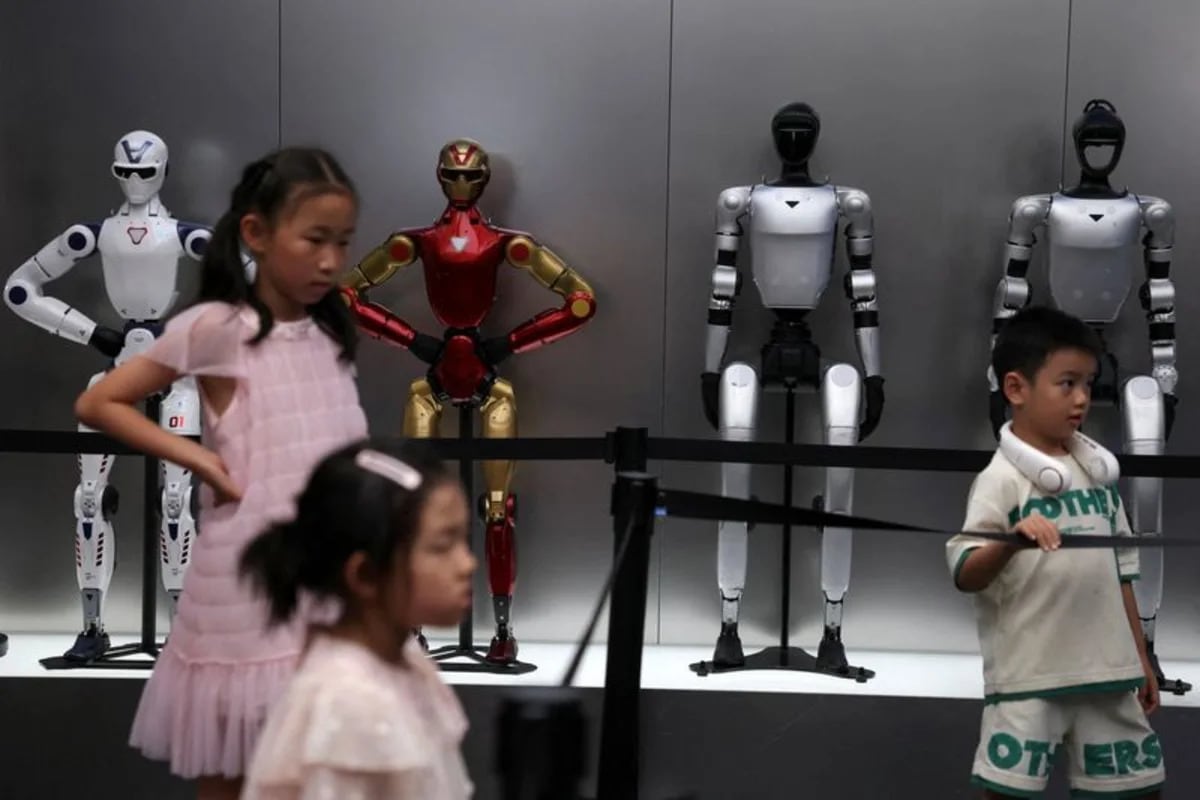
Unitree Robotics founder Wang Xingxing predicts a 'ChatGPT moment' for humanoid robots is still a decade away. Despite a successful market debut and impressive demonstrations, the industry is transitioning from hype to practical commercial application.
The Future of Humanoid Robotics: Hype vs. Reality
Recent developments at the World Robot Conference in Beijing and the World Internet Conference in Xi'an have cast a spotlight on the rapidly evolving humanoid robotics sector in China. While the industry is experiencing a surge in investor confidence, highlighted by the massive 460% market debut of Unitree Robotics, a more nuanced reality is emerging regarding the actual capabilities of these machines. Wang Xingxing, the founder of Unitree, has provided a sobering timeline, suggesting that a true technological breakthrough—comparable to the generative AI revolution sparked by ChatGPT—remains approximately a decade away.
The Gap Between Demonstration and Utility
At the heart of the current discourse is the transition from "crowd-pleasing" displays to functional, commercial utility. Recent exhibitions have featured robots performing tasks such as boxing, sorting parcels, and packing mobile phones. While these demonstrations are visually striking and showcase significant advancements in motor control and hardware integration, they underscore a persistent challenge: the gap between performing a controlled task in a conference setting and operating effectively in unpredictable, real-world environments. As noted in reports, while the government and investors are betting on robots to drive economic growth, the current generation of machines still faces limitations in performing complex, autonomous work.
Scaling the Industry: Market Performance and Expectations
Unitree’s recent $905 million IPO, which saw shares close at more than five times the offer price, is a testament to the immense capital flowing into the sector. This investor frenzy reflects a broader geopolitical and economic strategy in China, where the government views humanoid robotics as a critical pillar for future industrial growth. By hosting massive events like the World Robot Conference, which featured over 300 companies and 2,000 exhibits, China is positioning itself at the epicenter of the global robotics race. However, the disconnect between soaring stock prices and the current functional limitations of the robots presents a risk of market volatility if the technology does not mature at the pace investors expect.
The 'ChatGPT Moment' Explained
When Wang Xingxing speaks of a "ChatGPT moment," he is referring to the threshold where robotics moves from rigid, task-specific programming to adaptive, intelligent interaction. Just as Large Language Models changed the paradigm of software interaction, a similar breakthrough in robotics would require a fusion of advanced sensory perception, real-time decision-making, and physical dexterity. Achieving this level of autonomy is inherently more difficult than software-based AI because it must contend with the physical constraints of the material world and the high cost of mechanical failure.
Strategic Implications and Future Outlook
Looking ahead, the next decade will likely be defined by a shift from the "hype cycle" to a focus on vertical-specific applications. Companies are under pressure to demonstrate that their robots can provide tangible value in manufacturing, logistics, and eventually domestic settings. The current strategy of showing off robots in Beijing and beyond is clearly an attempt to normalize the technology, but the ultimate test will be the integration of these systems into the workforce. For investors and industry observers alike, the key indicator of success will not be the ability of a robot to spar with a human, but its ability to perform high-value, reliable labor at a scale that justifies the current multibillion-dollar valuations.
Conclusion
The humanoid robotics industry is at a critical juncture. While the hardware is advancing at a record pace, the intelligence required for widespread commercial adoption is still in its infancy. As the industry matures, the focus will inevitably shift from the spectacle of the conference floor to the practicalities of the factory floor. By acknowledging the decade-long timeline for a true breakthrough, leaders like Wang Xingxing are setting realistic expectations for a sector that holds immense promise but requires sustained, long-term development to fulfill its potential.
Multiple Citing Sources