UPSC Essays 2027: How to decode philosophical topics and build strong arguments
Source Entity
The Indian Express
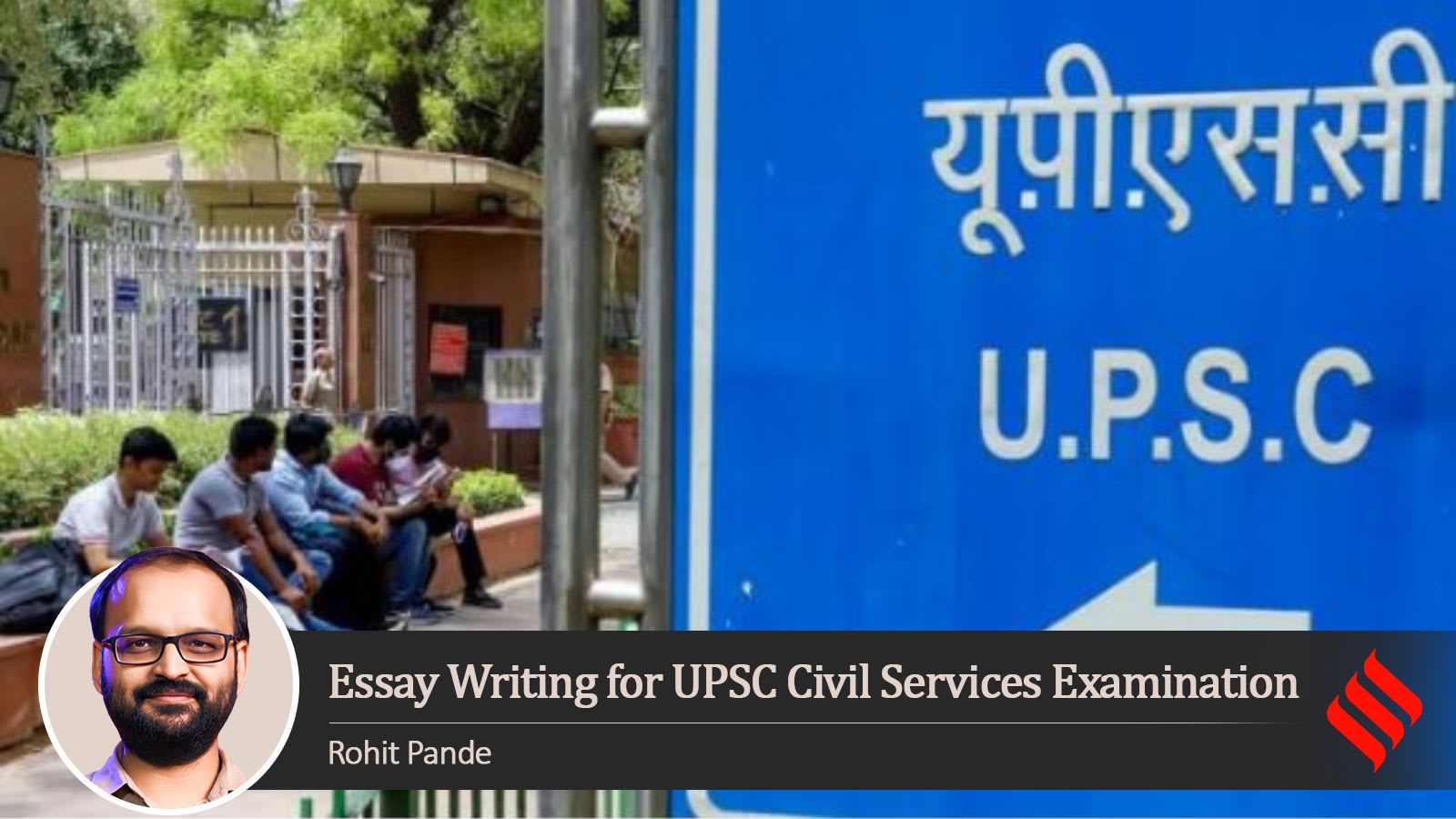
The UPSC essay format has shifted from policy-based questions to complex philosophical inquiries. Aspirants must now master the ability to challenge conventional wisdom by identifying historical exceptions to common proverbs.
The Evolution of UPSC Essay Writing: A Philosophical Shift
The Union Public Service Commission (UPSC) examination, widely regarded as one of the most rigorous testing mechanisms in the world, has undergone a significant pedagogical transformation. For years, the essay section functioned as an extension of General Studies, focusing on concrete policy issues like the digital economy or Centre-state fiscal relations. However, since 2021, the examination has pivoted sharply toward abstract, proverb-based topics, marking a definitive departure from rote knowledge retrieval toward subjective, critical thinking.
The Nature of Philosophical Inquiry
Unlike policy essays, which rely on factual data and administrative frameworks, philosophical topics demand an exploration of human experience and ethical nuance. When the UPSC presents a proverb, it invites the candidate to engage in a dialectical process. These prompts are designed to test the depth of a candidate's maturity, requiring them to analyze the underlying logic of a statement rather than simply agreeing with its face value.
Deconstructing the Proverb: The Importance of Exception
To excel in this new format, candidates must understand that proverbs often represent idealized societal norms rather than universal truths. The analysis of a proverb requires a "tension"-based approach—acknowledging the rule while simultaneously identifying where it fails. History serves as the ultimate laboratory for this exercise; for instance, the proverb "Honesty is the best policy" faces a stark historical contradiction when juxtaposed with the lives of figures like Galileo, who suffered house arrest for his scientific honesty, or Nikola Tesla, who died in poverty despite his monumental contributions to humanity.
Building Strong Arguments
Success in the 2027 UPSC essay paper will depend on a candidate's ability to hold two opposing ideas in their mind simultaneously. Strong arguments are built by acknowledging the merit of a proverb while providing a critical "counter-narrative" rooted in historical or contemporary reality. This demonstrates to the examiners that the candidate possesses the nuance required for high-level administrative decision-making, where black-and-white solutions are rarely sufficient.
Future Trends in Civil Services Preparation
As the UPSC continues to favor philosophical reflections, the coaching industry and individual aspirants must shift their preparation strategies. The focus must move away from memorizing policy templates and toward cultivating a broader understanding of humanities, literature, and history. Candidates who can effectively synthesize these disparate fields to challenge the validity of conventional wisdom will be best positioned to succeed in this evolving testing environment.
Conclusion
The transition to philosophical essay topics is a deliberate move to filter for intellectual depth. By forcing aspirants to grapple with the contradictions inherent in human experience, the UPSC is ensuring that future civil servants are capable of critical reflection, empathy, and the ability to navigate complex, non-linear problems in the real world.